25 Famous Florence Landmarks You Can’t Miss On Your First Visit
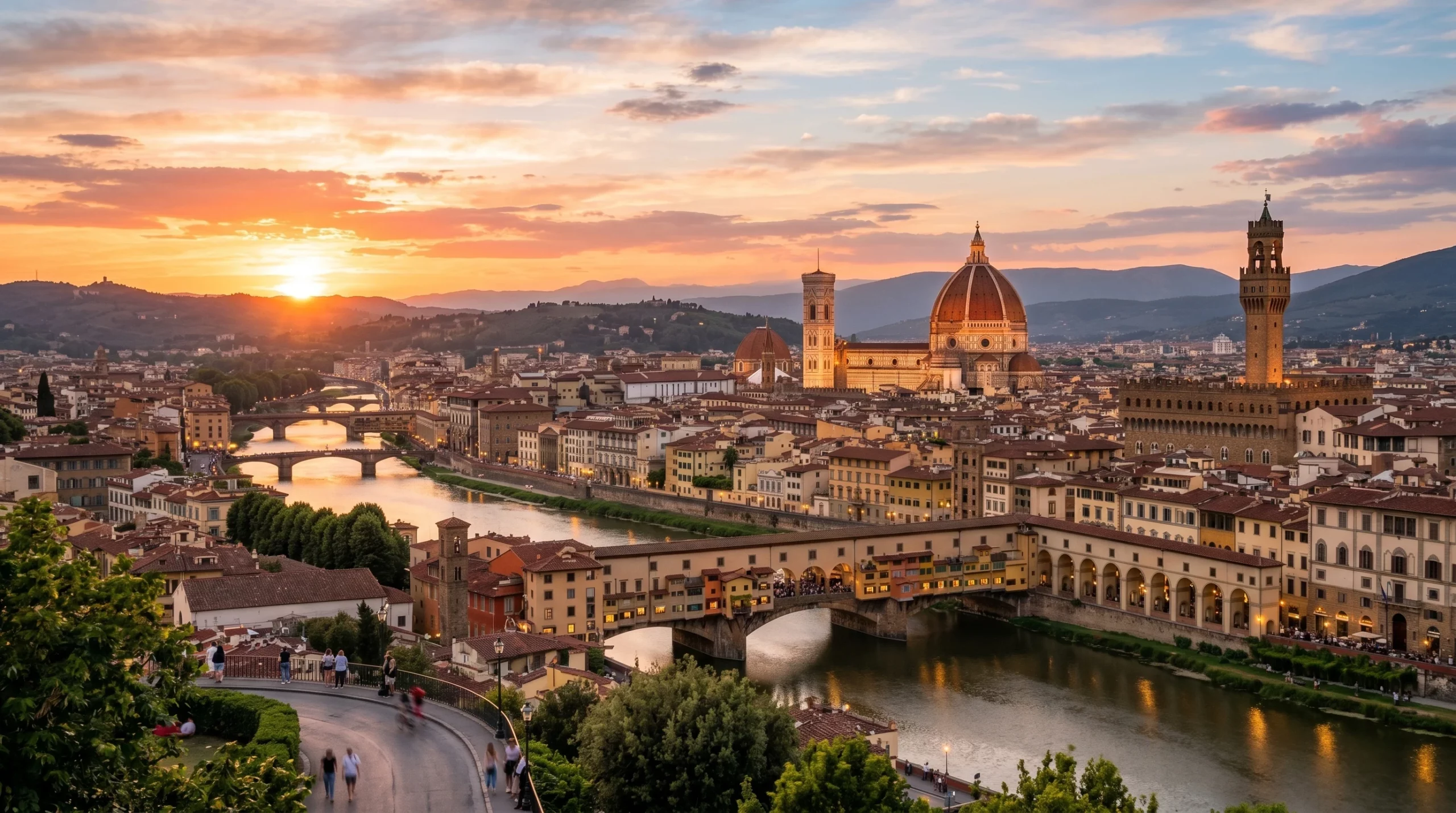
Florence is a historic city in Italy and the capital of the Tuscany region, known for its Renaissance architecture and concentration of cultural landmarks. Its UNESCO-listed historic center contains major attractions such as the Florence Cathedral, Uffizi Gallery, and Ponte Vecchio, most of which are located within walking distance.
That part was fine but the real surprise came from places nearby that were not crowded. It seems many visitors miss these. The guide puts together famous spots along with walking ideas and some lesser known areas that are easy to overlook at first.
If you’re planning your first trip to Florence and want to make the most of every moment, keeping track of the city’s top sights can feel a little overwhelming.
Florence’s historic heart is packed with landmark after landmark, but it’s also full of secret corners and lesserknown gems. Whether you’re into Renaissance art, architecture, or stunning city views, I’ve got you covered with this guide to Florence’s can’t miss landmarks.
- The most famous Florence landmarks
- Hidden gems worth adding to your itinerary
- Insider tips for avoiding crowds
- Suggested walking routes
- Where to stay near the main attractions
TL;DR
If you’re short on time, don’t miss:
- Florence Cathedral (Duomo)
- Ponte Vecchio
- Piazza della Signoria
- Uffizi Gallery
- Palazzo Vecchio
- Piazzale Michelangelo
These are perfect for a 1–2 day Florence itinerary.
What Most Florence Guides Don’t Tell You
Most Florence itineraries look similar on paper, but the real experience depends heavily on timing, walking order, and crowd flow. For example, the Duomo complex becomes significantly more crowded after 10:00 AM, while Ponte Vecchio is often busiest between 11:00 AM and 6:00 PM. Early morning and late evening visits completely change the experience of the city.
Florence Landmarks at a Glance
Florence contains 25 major landmarks concentrated in the historic center, including churches, museums, squares, and viewpoints. Key attractions include Florence Cathedral, Uffizi Gallery, Piazza della Signoria, and Piazzale Michelangelo, offering a mix of Renaissance art, architecture, and panoramic city views.
| Landmark | Time Needed | Cost | Best Time to Visit |
|---|---|---|---|
| Duomo | 2–3 hrs | Paid climb | Early morning |
| Uffizi Gallery | 2–4 hrs | Paid | Opening time |
| Ponte Vecchio | 30 min | Free | Sunrise |
| Piazzale Michelangelo | 1 hr | Free | Sunset |
| Boboli Gardens | 2 hrs | Paid | Late afternoon |
| Santa Croce | 1 hr | Paid | Morning |
Florence Landmarks Map
Having a map of Florence’s main landmarks makes a big difference. You’ll find the most famous sights clustered in the historic center, but there’s a bunch to see across the Arno in the Oltrarno neighborhood and from the hilltop viewpoints too. You can use a Google Map (search: “Florence landmarks map”) to plot out all 25 locations for easy route planning.
- Historic Center: Duomo, Uffizi, Piazza della Signoria
- Oltrarno: Pitti Palace, Boboli Gardens, Santo Spirito
- Hilltops: Piazzale Michelangelo, San Miniato al Monte
Not only does a well marked map help with directions, but it also gives you the freedom to explore at your own pace, popping into cafés or shops en route between city icons or lesserknown spots.
Join Road Voyagist
Subscribe to Road Voyagist and get updates on the latest posts, trip tips and more from Bella of Road Voyagist straight to your inbox.
Quick History of Florence: Why This City Became the Heart of the Renaissance
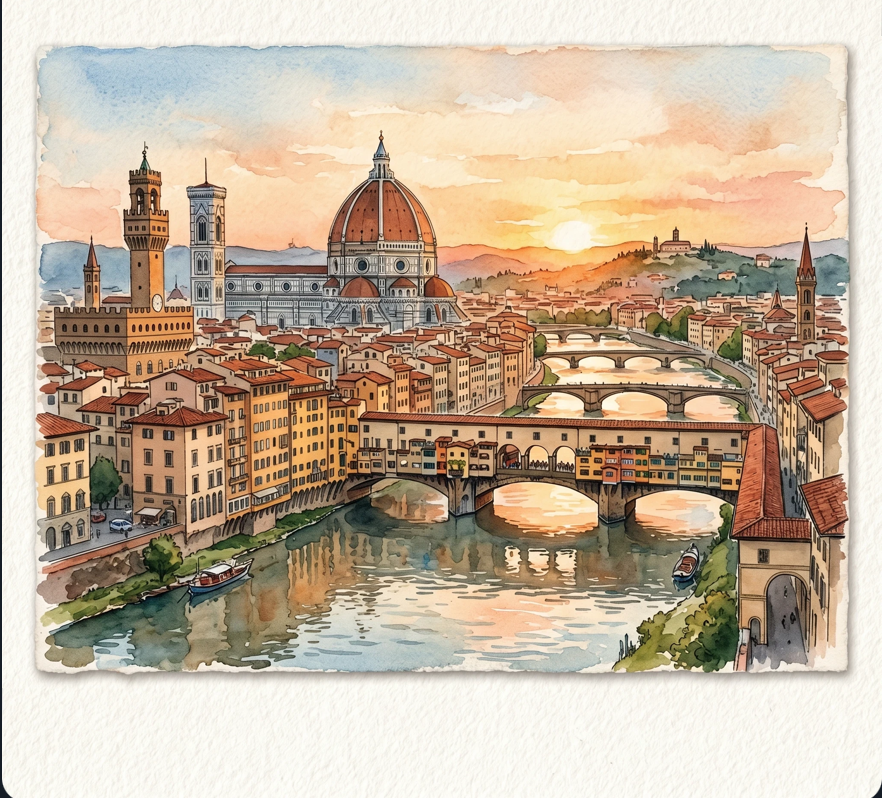
Florence is not just a city filled with beautiful landmarks, it is one of the most influential cultural centers in European history. To understand why places like the Duomo, Uffizi Gallery, and Ponte Vecchio are so significant, it helps to understand how Florence became the birthplace of the Renaissance.
The Rise of Florence as a Cultural Powerhouse
Florence began growing in importance during the Middle Ages thanks to its strong banking and trade economy. By the 13th and 14th centuries, the city had become one of the wealthiest in Europe. This wealth wasn’t just stored, it was invested into art, architecture, and public works that still define the city today.
Unlike many other medieval cities, Florence’s elite families saw cultural investment as a form of power and legacy. This created the perfect environment for artists, architects, and thinkers to thrive.
The Medici Family and Their Influence
No discussion of Florence’s history is complete without the Medici family. Rising to power in the 15th century, the Medicis were bankers who became political rulers and some of the most important patrons of the arts in history.
They supported legendary figures such as:
- Leonardo da Vinci
- Michelangelo
- Botticelli
- Brunelleschi
Their financial support allowed these artists to push boundaries in painting, sculpture, and architecture. Many of Florence’s most famous landmarks exist today because of Medici patronage.
The Medici influence can still be seen across the city, in palaces, chapels, and even street layouts that reflect their vision of Florence as both a political and artistic capital.
The Birth of the Renaissance
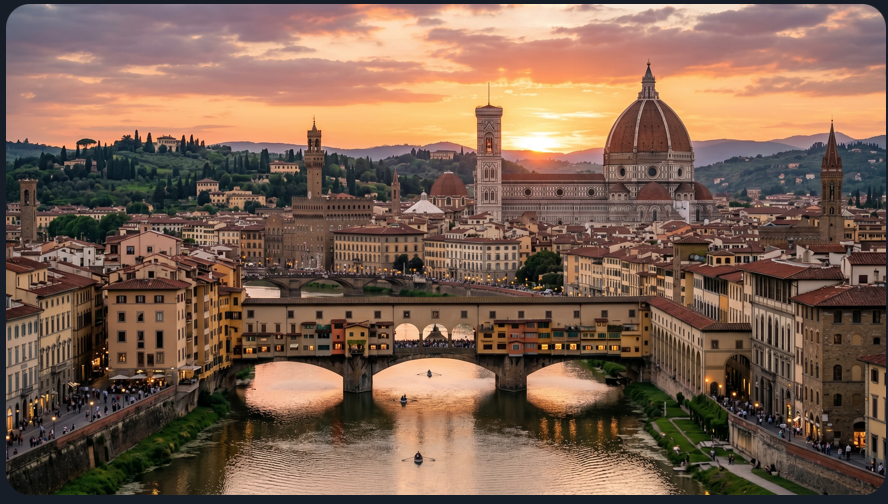
Florence is widely considered the birthplace of the Renaissance, a cultural movement that marked the transition from the Middle Ages to modern Europe.
This period emphasized:
- Humanism and individual expression
- Scientific observation and innovation
- Realism in art and perspective
- Revival of classical Greek and Roman ideas
One of the most important breakthroughs happened in Florence’s architecture. Filippo Brunelleschi designed the dome of Florence Cathedral, solving engineering challenges that had stumped builders for decades. His work became a symbol of Renaissance ingenuity and remains one of the most iconic features of the city.
Florence as an Open-Air Museum
Walking through Florence today feels like stepping into a living museum. Unlike cities where historical monuments are isolated, Florence’s Renaissance architecture is integrated into everyday life.
You will find:
- Palaces turned into museums
- Churches filled with world-famous artwork
- Public squares that once hosted political debates and festivals
- Bridges that have survived for centuries along the Arno River
This blending of daily life and historical preservation is what makes Florence unique among European cities.
UNESCO World Heritage Recognition
In 1982, Florence’s historic center was designated a UNESCO World Heritage Site. This recognition highlights the city’s extraordinary cultural value and ensures the preservation of its architectural and artistic heritage.
The designation protects landmarks such as the Duomo complex, Uffizi Gallery, and Ponte Vecchio, ensuring future generations can experience Florence much as it was during the Renaissance.
Why This History Is Still Important Today
Understanding Florence’s history changes the way you experience the city. The landmarks are not just tourist attractions, they are the result of centuries of artistic ambition, political power, and cultural innovation.
When you stand in Piazza della Signoria or look up at Brunelleschi’s dome, you are seeing the legacy of a city that helped shape modern Western culture.
Florence is not just a destination. It is a story still being told through its streets, buildings, and artworks.
The 25 Most Famous Florence Landmarks
The most important Florence landmarks include the Florence Cathedral (Duomo), Uffizi Gallery, Ponte Vecchio, and Piazza della Signoria. These sites represent the city’s Renaissance heritage, combining religious architecture, world-famous art collections, and historic civic spaces.
1. Florence Cathedral (Duomo)
This iconic cathedral grabs your attention from anywhere in the city. Brunelleschi’s gigantic dome is still the largest masonry dome ever built, standing as the ultimate Florence symbol. Don’t miss climbing the dome for an epic panoramic view.
Highlights:
- The Dome, breathtaking frescoes, and cathedral interior
- Brunelleschi’s Dome
- Cathedral interior
- City skyline views from the top
- Tip: Buy your entry tickets ahead of time if you want to climb the dome
Best Time to Visit
- Before 9:00 AM: The square is at its quietest, making it easier to photograph the cathedral without crowds.
- Late afternoon: Warm sunlight highlights the marble façade beautifully.
- Avoid 10:00 AM–3:00 PM: This is when tour groups and cruise excursions create the longest lines.
Hidden Gem Nearby
Visit the Biblioteca delle Oblate rooftop café just a few minutes away for one of the best free Duomo skyline views without climbing or crowds.
Quick Facts
- Location: Historic Center
- Time Needed: 1.5–3 hours
- Entry Cost: Free (cathedral), paid for dome climb
- Best For: Architecture, skyline views
- Family Friendly: Yes
- Accessibility: Partial (dome climb not accessible)
Common Mistake
Most visitors only stay in Piazza del Duomo and never enter side streets like Via dei Servi, which offer far better framing angles of the dome with fewer people in the shot.
Better Alternative Nearby
If the dome climb is sold out, head up Giotto’s Bell Tower instead. You’ll get one major advantage: a spectacular view of Brunelleschi’s dome itself.
2. Giotto’s Bell Tower
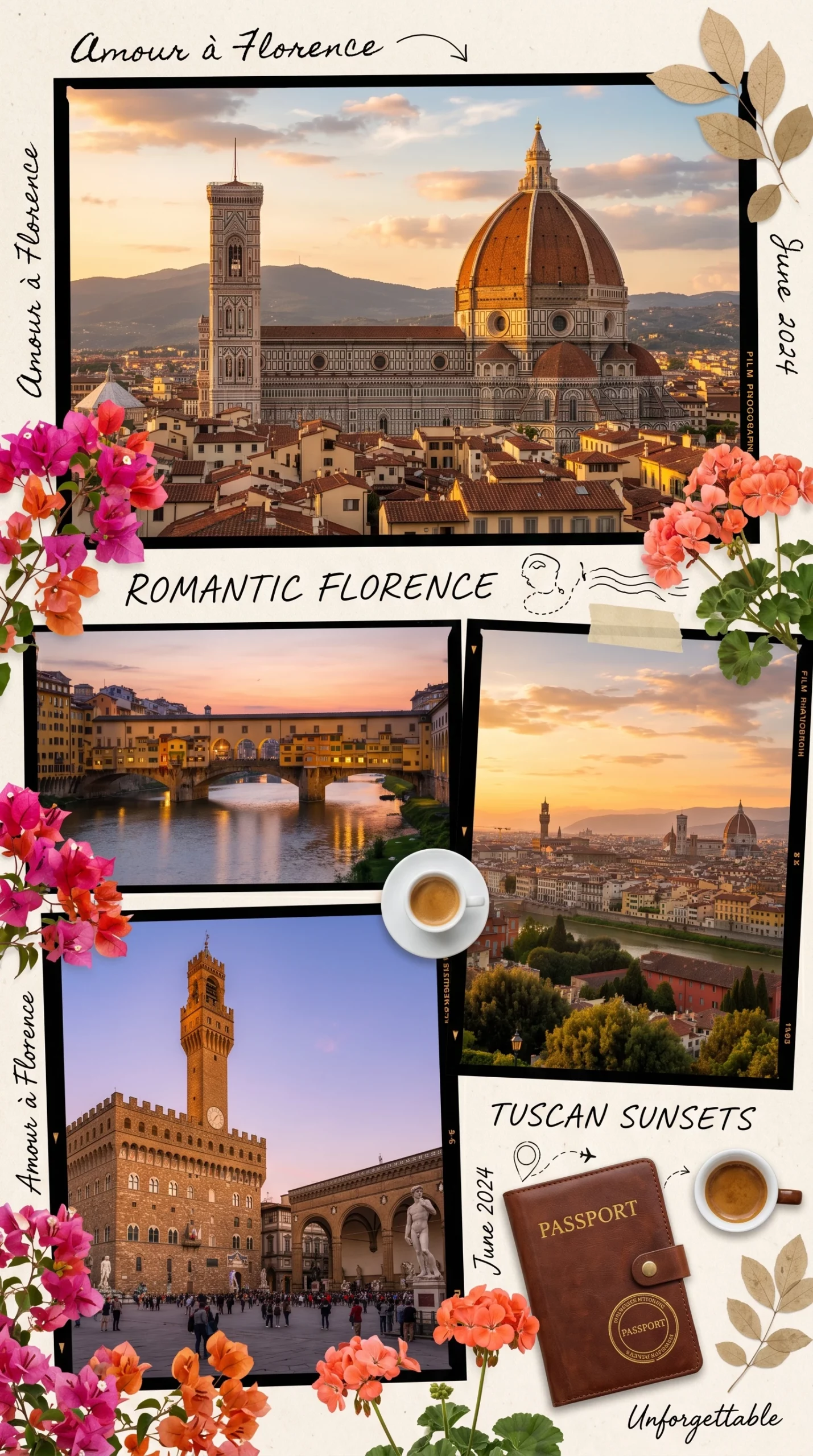
This colorful tower sits right beside the Duomo and looks absolutely eye catching, especially at sunrise. Climbing its 414 steps gets you another top notch view across Florence’s rooftops.
Highlights:
- Ornate tiles and inlays, incredible city views
- 414-step climb
- Ornate marble design
- Duomo viewpoint
Best Time to Visit
- Morning: fewer crowds and better climbing conditions
- Sunset: best light over Florence rooftops
- Avoid midday: heat and queues can be intense
Hidden Gem Nearby
Step into the Museo dell’Opera del Duomo right behind the cathedral, it houses original sculptures and offers a quieter, museum-level perspective of the complex.
Quick Facts
- Location: Piazza del Duomo
- Time Needed: 45–60 minutes
- Entry Cost: Paid ticket required
- Best For: Panoramic views
- Family Friendly: Moderate (stairs required)
- Accessibility: Not wheelchair accessible
Common Mistake
Many visitors climb both the Bell Tower and the Dome on the same day. Unless you’re a serious architecture enthusiast, one climb is usually enough.
Better Alternative Nearby
If you’re short on time, visit the Museo dell’Opera del Duomo. It offers extraordinary views of the cathedral complex with far less physical effort.
3. Baptistery of St. John
One of the city’s oldest buildings, famous for its bronze doors, especially the so called “Gates of Paradise.” Its interior is jaw dropping, with golden mosaics that sparkle in the sunlight.
Highlights
- Byzantine-style mosaics
- Gates of Paradise doors
- Historic religious significance
Best Time to Visit
- Morning: quietest time for interior viewing
- Midday: better lighting for mosaics
- Avoid weekends: higher tourist congestion
Hidden Gem Nearby
Walk to the Libreria Brunelleschi courtyard nearby for a peaceful architectural contrast and fewer tourists.
Quick Facts
- Location: Piazza del Duomo
- Time Needed: 20–40 minutes
- Entry Cost: Paid ticket or combo pass
- Best For: Mosaics & history
- Family Friendly: Yes
- Accessibility: Limited
GET YOUR City Cards & Passes in Florence
Common Mistake
Trying to see every room. The museum is enormous and visitor fatigue is real. Most people stop appreciating the artwork after a few hours.
Better Alternative Nearby
If you prefer smaller museums, visit the Bargello Museum. It contains world-class Renaissance sculpture with a fraction of the crowds.
4. Piazza del Duomo
This big, lively square puts the Duomo, Baptistery, and Bell Tower all within a few steps of each other. It’s the place for photos and people watching. After admiring the architecture, grab a coffee and soak in the scene, you’re in the heart of the city.
Highlights
- Duomo, Bell Tower, Baptistery ensemble
- Street photography hotspot
- Café atmosphere
Best Time to Visit
- Sunrise: peaceful and crowd-free photos
- Evening: beautiful golden lighting
- Midday: most crowded tourist hub in Florence
Hidden Gem Nearby
Slip into the side street cafés on Via dei Calzaiuoli for Duomo views with a coffee and significantly fewer crowds.
Quick Facts
- Location: Historic Center
- Time Needed: 30–60 minutes
- Entry Cost: Free
- Best For: Photography & sightseeing
- Family Friendly: Yes
- Accessibility: Fully accessible
Common Mistake
Stopping in the middle of the bridge for photos. This causes congestion and doesn’t actually provide the best view.
Better Alternative Nearby
Walk to Ponte Santa Trinita. It offers Florence’s most famous panoramic view of Ponte Vecchio and the Arno River.
5. Piazza della Signoria
This bustling square is full of statues, fountains, a copy of Michelangelo’s David, and the grand Palazzo Vecchio. This is also where political life in Florence played out for centuries. Street musicians add a fun vibe and there’s always something to check out, even at night.
Highlights
- Statue of David replica
- Palazzo Vecchio exterior
- Loggia dei Lanzi sculptures
Best Time to Visit
- Morning: best for photography and fewer crowds
- Evening: lively atmosphere with street performers
- Night: dramatic lighting on statues
Hidden Gem Nearby
Just behind the square, explore the Via dei Gondi alleyways for medieval Florence streets most tourists completely miss.
Quick Facts
- Location: Historic Center
- Time Needed: 30–60 minutes
- Entry Cost: Free
- Best For: Sculpture & atmosphere
- Family Friendly: Yes
- Accessibility: Fully accessible
Common Mistake
Using the square only as a photo stop and moving on.
Better Alternative Nearby
Step into the Loggia dei Lanzi, where you can admire Renaissance sculptures up close for free while avoiding some of the square’s busiest areas.
6. Palazzo Vecchio
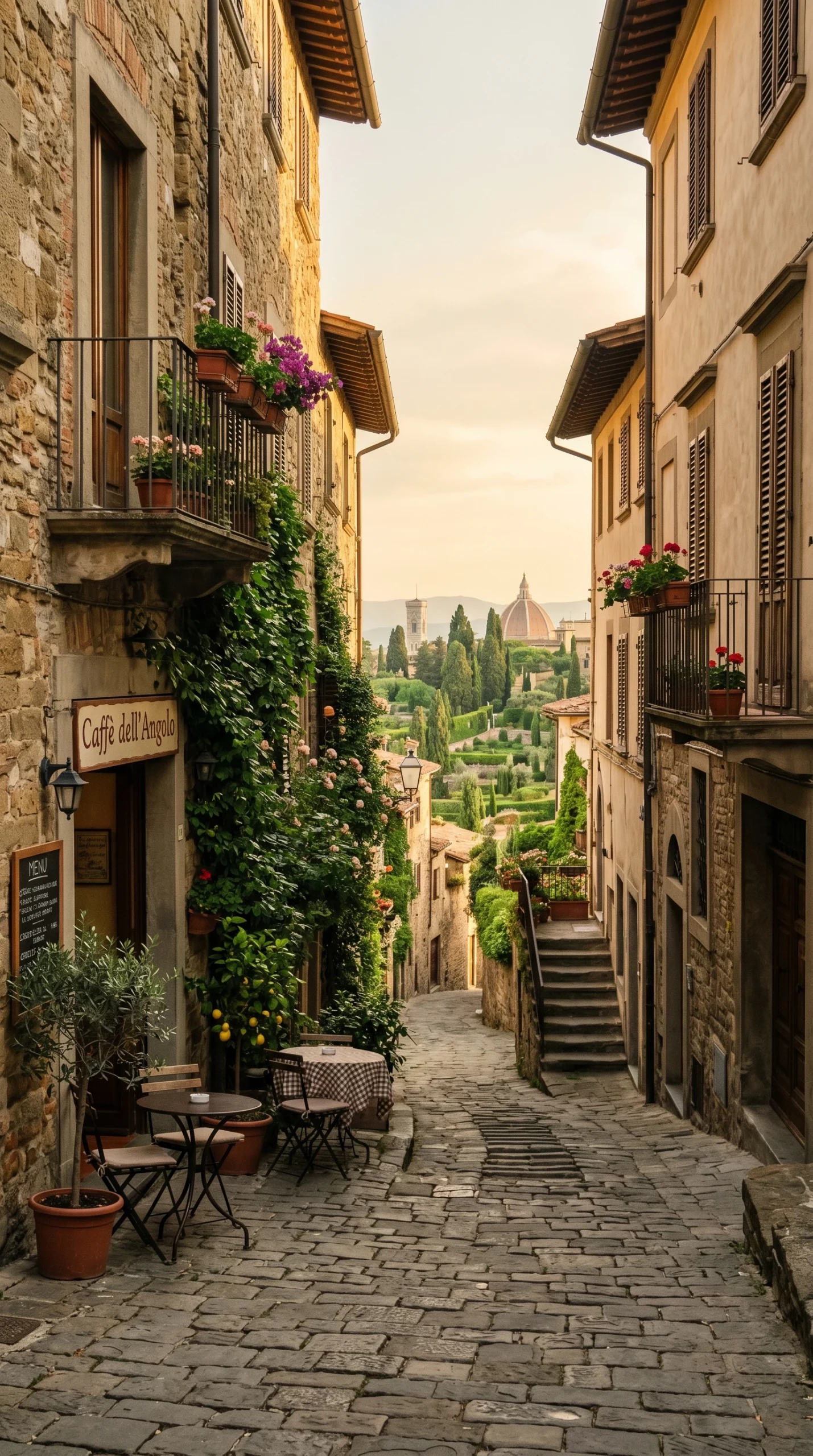
This fortresslike palace was the home of Florence’s government. Inside, you’ll find grand halls packed with Renaissance frescoes, hidden staircases, and rooms full of Medici history.
Highlights
- Renaissance frescoes
- Medici history
- Tower climb views
Best Time to Visit
- Early morning: shorter entry lines
- Midday: good indoor lighting
- Late afternoon: fewer tour groups inside
Hidden Gem Nearby
Visit the Roman ruins beneath Palazzo Vecchio (accessible via museum tour) for a hidden layer of Florence history underground.
Quick Facts
- Location: Piazza della Signoria
- Time Needed: 1.5–2 hours
- Entry Cost: Paid ticket
- Best For: Renaissance history
- Family Friendly: Yes
- Accessibility: Partial
Common Mistake
Visitors often rush through the palace after seeing Piazza della Signoria.
Better Alternative Nearby
If you’re more interested in Medici history than government history, choose Palazzo Medici Riccardi, which receives far fewer visitors.
7. Loggia dei Lanzi
An open air sculpture gallery right on the edge of Piazza della Signoria. You’ll spot dramatic statues, like Perseus holding Medusa’s head, that are totally free to admire.
Highlights
- Perseus with Medusa
- Free access sculptures
- Renaissance masterpieces
Best Time to Visit
- Early morning: best for unobstructed photos
- Evening: atmospheric lighting
- Avoid midday: crowded square
Hidden Gem Nearby
Walk 2 minutes to the Uffizi courtyard entrance viewpoint, it’s often overlooked and gives a quieter sculpture and architecture perspective.
Quick Facts
- Location: Piazza della Signoria
- Time Needed: 15–30 minutes
- Entry Cost: Free
- Best For: Outdoor sculpture viewing
- Family Friendly: Yes
- Accessibility: Fully accessible
8. Uffizi Gallery
The Uffizi is one of the world’s most famous art museums, with masterpieces by Botticelli, Leonardo, Michelangelo, and dozens more. Go early or late for shorter lines. Make sure you have reservations!
Highlights:
- Botticelli’s “Birth of Venus,”
- da Vinci’s works,
- and incredible views over the Arno from the upper floors
Best Time to Visit
- Opening time (8:15 AM): shortest queues
- Late afternoon: quieter galleries
- Avoid weekends: peak congestion
Hidden Gem Nearby
After your visit, go upstairs to the Uffizi terrace café for one of the best Arno River views without leaving the museum.
Quick Facts
- Location: Historic Center
- Time Needed: 2–4 hours
- Entry Cost: Paid ticket (reservation strongly recommended)
- Best For: Renaissance art
- Family Friendly: Yes (older children recommended)
- Accessibility: Accessible
9. Ponte Vecchio
This medieval bridge over the Arno is lined with jewelry shops. It’s a super popular walking spot with memorable river views, and a great place for sunset photos.
Highlights
- Historic medieval bridge
- River Arno views
- Sunset photography spot
Best Time to Visit
- Sunrise: empty and peaceful
- Sunset: most beautiful lighting
- Evening: romantic atmosphere
- Tip: Visit early morning or late at night for a quieter experience
Hidden Gem Nearby
Cross to Ponte Santa Trinita for the best photo angle of Ponte Vecchio itself, most tourists completely miss this viewpoint.
Quick Facts
- Location: River Arno
- Time Needed: 15–30 minutes
- Entry Cost: Free
- Best For: Sunset views & photography
- Family Friendly: Yes
- Accessibility: Fully accessible
10. Vasari Corridor
A hidden passageway running above the shops of Ponte Vecchio, linking the Uffizi to the Pitti Palace. You’ll get a peek at private Medici history here. Tours must be booked in advance.
Highlights
- Medici private walkway
- Unique architectural design
- Rare guided tours
Best Time to Visit
- Morning tours: best visibility and fewer crowds
- Book in advance: limited access slots
- Avoid peak summer: limited availability
Hidden Gem Nearby
Walk along the Arno riverbank (Lungarno degli Archibusieri) for rare unobstructed views of the corridor’s hidden windows.
Quick Facts
- Location: Uffizi → Pitti Palace
- Time Needed: 1 hour (guided tour)
- Entry Cost: Paid guided access only
- Best For: Medici history
- Family Friendly: Limited (older visitors preferred)
- Accessibility: Restricted
11. Palazzo Pitti
A massive Renaissance palace across the river, stuffed with huge art collections and royal apartments. Once home to the Medicis, now home to four museums in one.
Highlights
- Royal apartments
- Multiple museums
- Renaissance architecture
Best Time to Visit
- Morning: best for museum exploration
- Early afternoon: quieter galleries
- Avoid late afternoon: limited viewing time
Hidden Gem Nearby
Explore the quieter Courtyard of Ammannati, often overlooked despite being one of the palace’s most elegant architectural spaces.
Quick Facts
- Location: Oltrarno
- Time Needed: 2–3 hours
- Entry Cost: Paid ticket
- Best For: Museums & royal history
- Family Friendly: Yes
- Accessibility: Partial
Common Mistake
Attempting to visit every museum section in one visit.
Better Alternative Nearby
If your main interest is outdoor scenery and photography, prioritize the Boboli Gardens instead of spending the entire day indoors.
GET YOUR Florence CITY PASS – ALL ATTRACTIONS INCLUDED
12. Boboli Gardens
Florence’s grandest gardens, filled with sculptures, fountains, and leafy pathways winding up the hillside. In spring, the flowers are amazing.
Highlights
- Sculpted gardens
- City views
- Hidden pathways
Best Time to Visit
- Morning: cooler and less crowded
- Spring: flowers in bloom
- Late afternoon: golden light for photos
- Tip: Bring a snack and relax in the shade, great for a break from sightseeing
Hidden Gem Nearby
Find the Viottolone Cypress Avenue viewpoint, a long, dramatic perspective rarely reached by casual visitors.
Quick Facts
- Location: Behind Palazzo Pitti
- Time Needed: 1.5–2.5 hours
- Entry Cost: Paid ticket
- Best For: Gardens & views
- Family Friendly: Yes
- Accessibility: Partial (uneven terrain)
Common Mistake
Visitors stay near the entrance and never explore deeper into the gardens.
Better Alternative Nearby
For skyline photography and fewer crowds, visit the Bardini Gardens, which many tourists completely overlook.
13. Piazzale Michelangelo
The classic Florence viewpoint, with postcard perfect views over the city. It truly shines at sunset. Bring your camera and maybe a gelato for one of Florence’s best photo ops.
Highlights
- Sunset views over Florence
- Duomo skyline view
- Photography hotspot
Best Time to Visit
- Sunset (must-see): iconic Florence views
- Early morning: peaceful and uncrowded
- Avoid midday: harsh lighting and heat
Hidden Gem Nearby
Continue uphill to San Salvatore al Monte church grounds for similar views with a fraction of the crowds.
Quick Facts
- Location: Hilltop (Oltrarno)
- Time Needed: 1 hour
- Entry Cost: Free
- Best For: Sunset views
- Family Friendly: Yes
- Accessibility: Accessible (steep roads nearby)
Common Mistake
Arriving only 10–15 minutes before sunset.
Better Alternative Nearby
Continue uphill to San Miniato al Monte. The view is almost identical, but the atmosphere is noticeably calmer and more authentic.
14. Basilica of Santa Croce
The final resting place of Italian legends like Michelangelo, Galileo, and Machiavelli. The artwork and tombs inside are impressive, and the square outside is full of local buzz.
Highlights
- Famous tombs
- Frescoes by Giotto
- Peaceful square
Best Time to Visit
- Morning: quiet and reflective atmosphere
- Midday: better interior lighting
- Avoid late afternoon crowds
Hidden Gem Nearby
Step into the Scuola del Cuoio (Leather School) behind the basilica for artisan workshops inside a historic monastery.
Quick Facts
- Location: Historic Center
- Time Needed: 1–1.5 hours
- Entry Cost: Paid ticket
- Best For: Famous tombs & frescoes
- Family Friendly: Yes
- Accessibility: Partial
Common Mistake
Focusing only on the famous tombs and leaving immediately afterward.
Better Alternative Nearby
Visit the nearby Scuola del Cuoio (Leather School) behind the basilica for a unique look at Florentine craftsmanship.
15. Basilica of Santa Maria Novella
One of Florence’s prettiest churches, famous for its grand façade and Renaissance frescoes. Easy to visit if you’re arriving by train since it’s super close to the main station.
Highlights
- Gothic façade
- Renaissance frescoes
- Historic pharmacy nearby
Best Time to Visit
- Morning: fewer tour groups
- Early afternoon: best interior lighting
- Avoid rush hours near station
Hidden Gem Nearby
Visit the Officina Profumo-Farmaceutica di Santa Maria Novella, one of the oldest pharmacies in the world, hidden behind the church.
Quick Facts
- Location: Near train station
- Time Needed: 1–1.5 hours
- Entry Cost: Paid ticket
- Best For: Gothic art & frescoes
- Family Friendly: Yes
- Accessibility: Partial
16. Basilica of San Lorenzo
This church is packed with Medici history, plus art by Michelangelo and Brunelleschi. Don’t miss the attached Medici Chapels for even more bling.
Highlights
- Brunelleschi-designed architecture
- Medici Chapels connection
- Renaissance art and interiors
Best Time to Visit
- Morning: quietest time with fewer tour groups
- Midday: better interior lighting for details
- Avoid late afternoon: can feel rushed before closing
Hidden Gem Nearby
Check out the San Lorenzo open-air market (Mercato di San Lorenzo) behind the church for local leather goods and street food.
Quick Facts
- Location: San Lorenzo District
- Time Needed: 45–90 minutes
- Entry Cost: Paid ticket (church + chapels separate)
- Best For: Medici history & Renaissance architecture
- Family Friendly: Yes
- Accessibility: Partial
17. Medici Chapels
Overflowing with marble and semiprecious stone, these opulent chapels are where the Medici family members are buried. They’re just behind San Lorenzo Church and offer a quieter alternative to the city’s bigger sights.
Highlights
- Brunelleschi-designed architecture
- Medici Chapels connection
- Renaissance art and interiors
Best Time to Visit
- Morning: quietest time with fewer tour groups
- Midday: better interior lighting for details
- Avoid late afternoon: can feel rushed before closing
Hidden Gem Nearby
Walk a few steps to Piazza San Lorenzo backstreets, where you’ll find quiet artisan shops and fewer crowds than the main square.
Quick Facts
- Location: San Lorenzo Complex
- Time Needed: 45–60 minutes
- Entry Cost: Paid ticket required
- Best For: Michelangelo interiors & Medici tombs
- Family Friendly: Older kids recommended
- Accessibility: Limited
18. Mercato Centrale
This lively indoor market is home to the best food stalls and local flavor. Sample freshly baked focaccia, local cheeses, and gelato. It’s a must visit for foodies wanting to check out authentic Florentine cuisine.
Highlights
- Fresh Italian food stalls
- Local cheeses, pasta, and street food
- Lively indoor atmosphere
Best Time to Visit
- Late morning (10–11 AM): freshest food, fewer crowds
- Lunch time: most vibrant atmosphere
- Avoid peak lunch rush (1–2 PM): very crowded
Hidden Gem Nearby
Head upstairs to the lesser-known rooftop seating area in the evening, when it transforms into a relaxed food-and-wine space.
Quick Facts
- Location: San Lorenzo Area
- Time Needed: 1–2 hours
- Entry Cost: Free entry (food paid separately)
- Best For: Food tasting & local cuisine
- Family Friendly: Yes
- Accessibility: Fully accessible
19. Palazzo Medici Riccardi
The original Medici mansion is less crowded than the Pitti or Palazzo Vecchio. It’s famous for its enchanting courtyard and colorful frescoes. It’s a great place to learn more about Renaissance life and art.
Highlights
- Historic Medici palace
- Courtyard architecture
- Frescoed interiors
Best Time to Visit
- Morning: quiet and best for exploring
- Early afternoon: good lighting for frescoes
- Avoid late afternoon: shorter visit time before closing
Hidden Gem Nearby
Walk to Via Cavour’s quiet side streets, where you’ll find hidden Renaissance courtyards and almost no tourists.
Quick Facts
- Location: Via Cavour
- Time Needed: 1–1.5 hours
- Entry Cost: Paid ticket
- Best For: Early Medici history & frescoes
- Family Friendly: Yes
- Accessibility: Partial
20. Bargello Museum
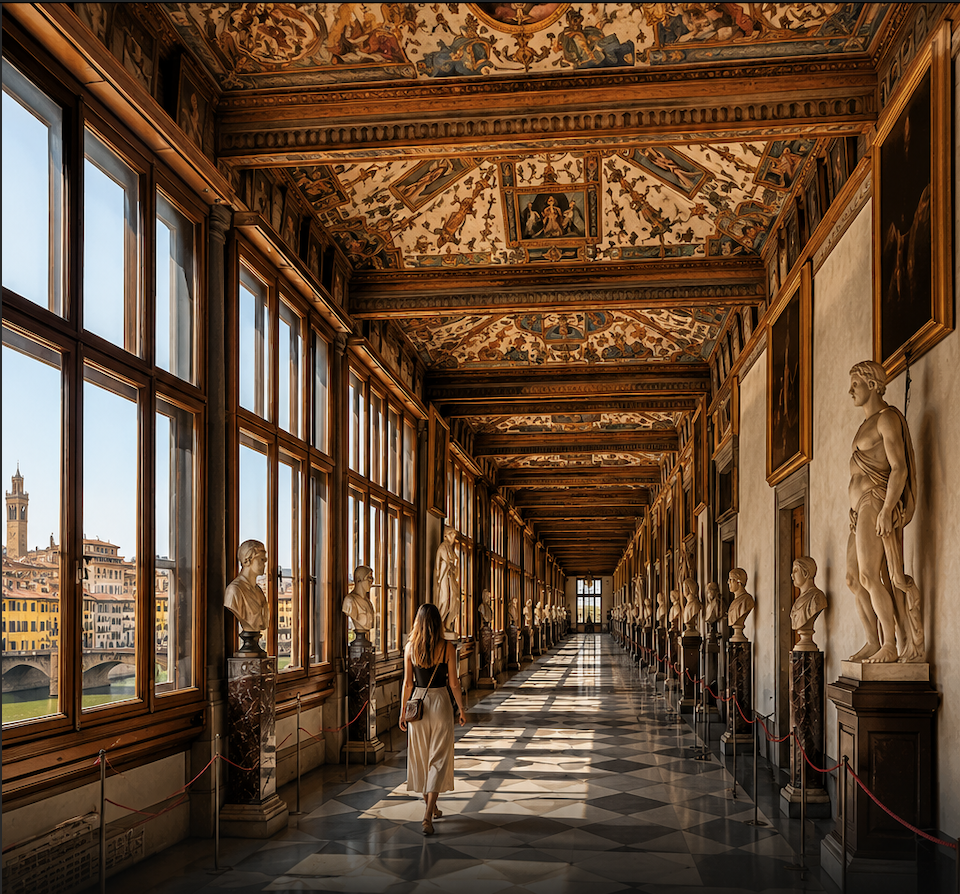
Florence’s sculpture museum in a former prison, with top works by Donatello, Michelangelo, and more. If you’re into statues, this place is a goldmine. You’ll stumble upon some less touristy masterpieces here.
Highlights
- Donatello sculptures
- Michelangelo works
- Medieval architecture
Best Time to Visit
- Opening time: most peaceful experience
- Mid-morning: ideal lighting inside galleries
- Avoid weekends: moderate crowds
Hidden Gem Nearby
Step into the nearby Church of Orsanmichele, one of Florence’s most underrated architectural gems with stunning exterior niches.
Quick Facts
- Location: Historic Center
- Time Needed: 1–2 hours
- Entry Cost: Paid ticket
- Best For: Renaissance sculpture
- Family Friendly: Yes (best for older children)
- Accessibility: Partial
21. Basilica di Santo Spirito
A laidback local spot in the Oltrarno, known for its calm vibe and Michelangelo’s early wooden crucifix tucked inside. It’s perfect for a moment of peace and to spot some great architecture.
Highlights
- Brunelleschi architecture
- Michelangelo crucifix
- Local neighborhood atmosphere
Best Time to Visit
- Late morning: calm and authentic vibe
- Early evening: lively local square atmosphere
- Avoid midday: can feel quiet and less engaging
Hidden Gem Nearby
Visit the Santo Spirito square market (morning only) where locals sell antiques, crafts, and vintage items.
Quick Facts
- Location: Oltrarno
- Time Needed: 30–60 minutes
- Entry Cost: Free (donations appreciated)
- Best For: Local atmosphere & Michelangelo crucifix
- Family Friendly: Yes
- Accessibility: Partial
22. San Miniato al Monte
Sitting just above Piazzale Michelangelo, this church is partly Romanesque and has a super peaceful cemetery. The view is unbeatable and it’s usually much quieter than Michelangelo’s plaza.
Highlights
- Stunning city viewpoints
- Historic cemetery
- Romanesque architecture
Best Time to Visit
- Sunset: one of Florence’s best viewpoints
- Early morning: peaceful and spiritual atmosphere
- Avoid midday: harsh light for photography
Hidden Gem Nearby
Stop at the Olive groves and cemetery pathways behind the church for one of Florence’s most peaceful walking spots.
Quick Facts
- Location: Hill above Piazzale Michelangelo
- Time Needed: 45–90 minutes
- Entry Cost: Free
- Best For: Sunset views & peaceful atmosphere
- Family Friendly: Yes
- Accessibility: Limited (steep access)
23. Piazza della Repubblica
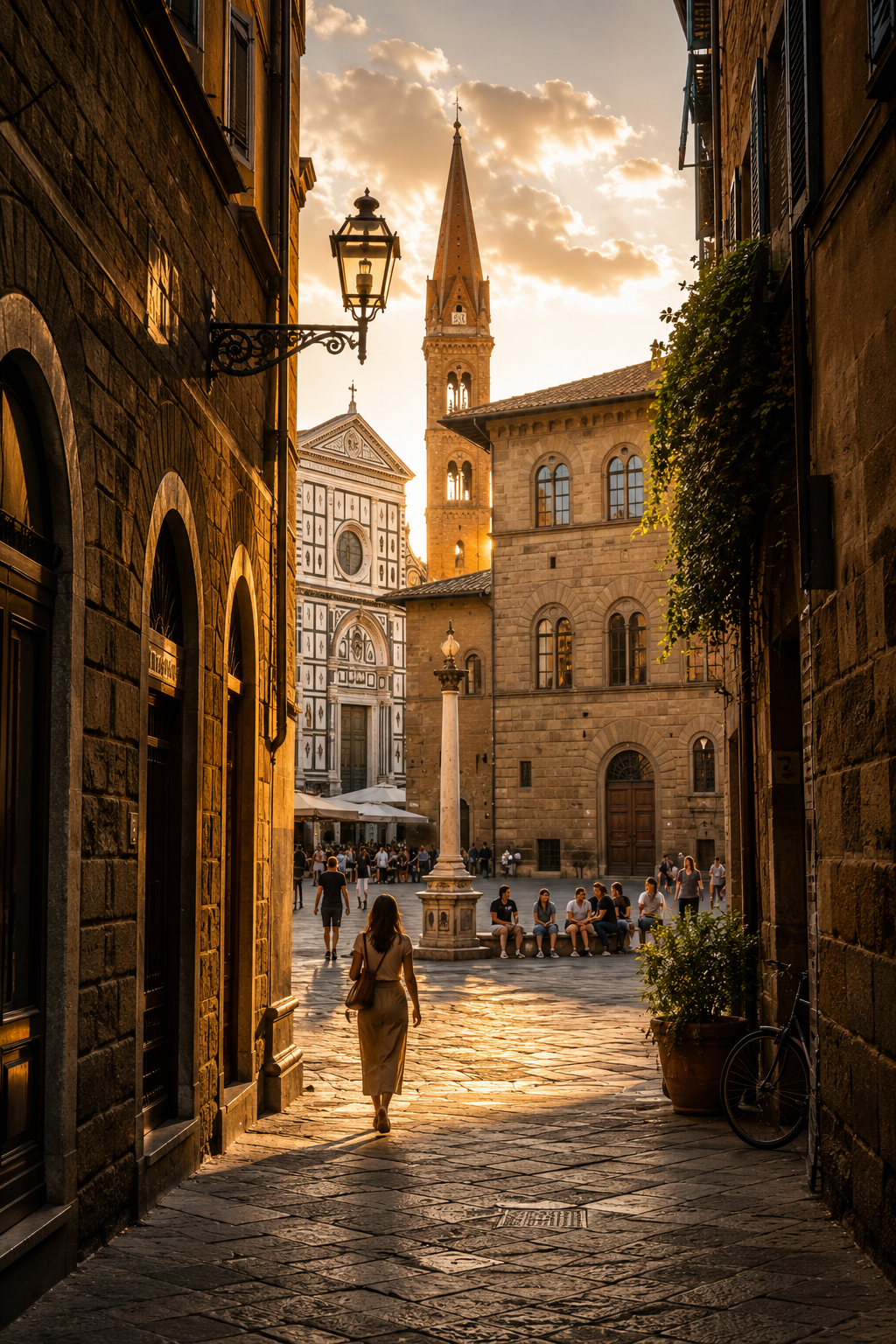
This grand, open square features cafés and a vintage carousel. It’s a popular meeting spot with plenty of history. Take a minute to watch the world go by here.
Highlights
- Historic city center square
- Outdoor cafés
- Vintage carousel
Best Time to Visit
- Morning: quiet and relaxed atmosphere
- Late afternoon: best café culture experience
- Evening: lively street performers and ambiance
Hidden Gem Nearby
Slip into the historic Caffè Gilli arcade interior for a classic Florence café experience with ornate interiors.
Quick Facts
- Location: Historic Center
- Time Needed: 20–40 minutes
- Entry Cost: Free
- Best For: Cafés & people watching
- Family Friendly: Yes
- Accessibility: Fully accessible
24. Rose Garden (Giardino delle Rose)
Right below Piazzale Michelangelo, this public garden bursts into color from late April. Statues and winding paths make it a peaceful break from the crowds. Plus, you get a lovely city view with almost no tourists around.
Highlights
- Rose-filled gardens
- Panoramic Florence views
- Hidden artistic sculptures
Best Time to Visit
- Late spring (April–June): peak bloom season
- Early morning: quiet and peaceful
- Sunset: soft golden light over Florence skyline
Hidden Gem Nearby
Walk down to the Giardino dell’Iris (Iris Garden) nearby, open seasonally and almost completely unknown to tourists.
Quick Facts
- Location: Historic Center
- Time Needed: 20–40 minutes
- Entry Cost: Free
- Best For: Cafés & people watching
- Family Friendly: Yes
- Accessibility: Fully accessible
25. Porta San Niccolò
This tall medieval gate towers over Florence’s east side and is the perfect spot for a unique skyline view. Sometimes you can climb to the top for a different perspective on the city. Keep an eye on opening times since access can change with the season.
Highlights
- Medieval city gate
- Elevated panoramic views
- Less touristy experience
Best Time to Visit
- Late afternoon: best light over the city walls
- Sunset: dramatic skyline views
- Early morning: very quiet and atmospheric
Hidden Gem Nearby
Follow the ancient city wall walking path (Le Rampe del Poggi) for one of the most cinematic and least crowded Florence routes.
Quick Facts
- Location: Eastern Florence River Wall
- Time Needed: 20–40 minutes
- Entry Cost: Free (when open seasonally)
- Best For: Unique skyline views
- Family Friendly: Yes
- Accessibility: Limited (stairs)
Florence Landmarks by Neighborhood
Historic Center
- Duomo
- Giotto’s Bell Tower
- Baptistery
- Uffizi
- Palazzo Vecchio
Oltrarno
- Ponte Vecchio
- Pitti Palace
- Boboli Gardens
- Santo Spirito
Hilltop Florence
- Piazzale Michelangelo
- Rose Garden
- San Miniato al Monte
Landmark Based Florence Walking Itinerary
A typical Florence walking itinerary connects major landmarks within a single day, starting at the Duomo, continuing through Piazza della Signoria and Uffizi Gallery, crossing Ponte Vecchio, and ending at Piazzale Michelangelo for sunset views over the city.
- Morning: Duomo, Bell Tower, Baptistery
- Afternoon: Piazza della Signoria, Palazzo Vecchio, Uffizi, Ponte Vecchio
- Evening: Boboli Gardens, Piazzale Michelangelo, San Miniato al Monte
Walking distance ends up around 5–7 km, but you’ll squeeze in all the big ones plus a few peaceful stops to catch your breath. Wear comfy shoes, pack water, and don’t be afraid to wander into side streets, some of the best finds in Florence are off the main drag.
Florence looks small on maps, but walking times between landmarks can feel longer due to crowds, photography stops, and narrow streets. A simple Duomo → Uffizi walk can take 10 minutes on paper, but 25–30 minutes in reality during peak hours.
How to Move Between Landmarks Efficiently
Instead of visiting Florence randomly, group landmarks by walking clusters:
- Duomo → Baptistery → Bell Tower → Uffizi
- Ponte Vecchio → Pitti Palace → Boboli Gardens
- Piazzale Michelangelo → San Miniato al Monte → Rose Garden
Best Areas to Stay Near Florence Landmarks
The best areas to stay in Florence are the Historic Center for first-time visitors, Oltrarno for local atmosphere, Santa Maria Novella for transport access, and Santa Croce for nightlife. Most areas are within walking distance of major landmarks.
1. Historic Center (Best for First-Time Visitors)
If this is your first time in Florence, this is the most convenient area. You’ll be within walking distance of major landmarks like the Duomo, Uffizi, and Piazza della Signoria.
Best for:
- First-time visitors
- Short stays (1–3 nights)
- Walking access to landmarks
Nearby landmarks:
- Florence Cathedral (Duomo)
- Uffizi Gallery
- Piazza della Signoria
Hotel style:
- Boutique hotels
- Historic palazzos
- Mid-range stays
2. Oltrarno (Best for Views & Local Atmosphere)
Across the Arno River, Oltrarno is quieter, more artistic, and offers some of the best sunset viewpoints in Florence.
Best for:
- Couples
- Longer stays
- Travelers wanting a local feel
Nearby landmarks:
- Ponte Vecchio
- Palazzo Pitti
- Boboli Gardens
- Piazzale Michelangelo
3. Santa Maria Novella (Best for Transport & Budget)
Perfect if you’re arriving by train or want more affordable accommodation while still being central.
Best for:
- Budget travelers
- Train arrivals/departures
- Short overnight stays
Nearby landmarks:
- Santa Maria Novella Church
- Mercato Centrale
- San Lorenzo
4. Santa Croce (Best for Nightlife & Food)
A lively area with restaurants, bars, and a more local nightlife scene.
Best for:
- Nightlife
- Food lovers
- Younger travelers
Nearby landmarks:
- Basilica of Santa Croce
- Piazza della Signoria (walking distance)
5. San Lorenzo (Best for Food & Markets)
A central area with great street food and access to Mercato Centrale.
Best for:
- Food-focused travelers
- Budget-mid range stays
- Central access
Nearby landmarks:
- Medici Chapels
- Mercato Centrale
- San Lorenzo Church
Most accommodations are within a 20 minute walk of major sights. If you want a quieter evening or more local feel, check out small guesthouses south of the river. If you love nightlife, the Santa Croce and San Frediano areas offer some fun local bars and music venues.
Florence Landmarks by Interest
- Best for Architecture: Duomo, Palazzo Vecchio, Medici Chapels
- Top Museums: Uffizi, Bargello, Pitti Palace
- Photo Spots: Piazzale Michelangelo, Ponte Vecchio, Rose Garden
- Free Attractions: Piazza della Signoria, Ponte Vecchio, Piazza della Repubblica, Rose Garden
No matter your interests, Florence has a mix of mustsee sights and chances to set your own pace. Streamline your trip by grouping nearby locations and taking time for local food or spontaneous detours.
Florence Landmarks Most Tourists Miss
Beyond major attractions, Florence offers hidden gems such as Bardini Gardens, Brancacci Chapel, Orsanmichele Church, and Via dei Neri. These locations provide fewer crowds, authentic local experiences, and additional insight into Renaissance-era Florence.
While Florence is famous for icons like the Duomo and Ponte Vecchio, some of the city’s most rewarding experiences come from places that don’t make it into most guidebooks. These spots are quieter, more local, and often give you a deeper understanding of the city’s history and daily life.
If you want to see a more authentic side of Florence, add a few of these to your itinerary.
1. Brancacci Chapel
One of the most important Renaissance art sites in Florence, yet surprisingly overlooked by many visitors.
Why it’s special
- Early frescoes by Masaccio and Masolino
- Considered a turning point in Renaissance painting
- Far fewer crowds than major museums
Best for
Art lovers who want to see “pre-Uffizi-level” masterpieces in a quiet setting.
2. Orsanmichele Church
A unique building that blends church and medieval grain market architecture.
Why it’s special
- Exterior niches filled with original Renaissance statues
- Less crowded than nearby Piazza della Signoria
- Fascinating mix of civic and religious history
Best for
Architecture enthusiasts and history lovers.
3. Bardini Gardens
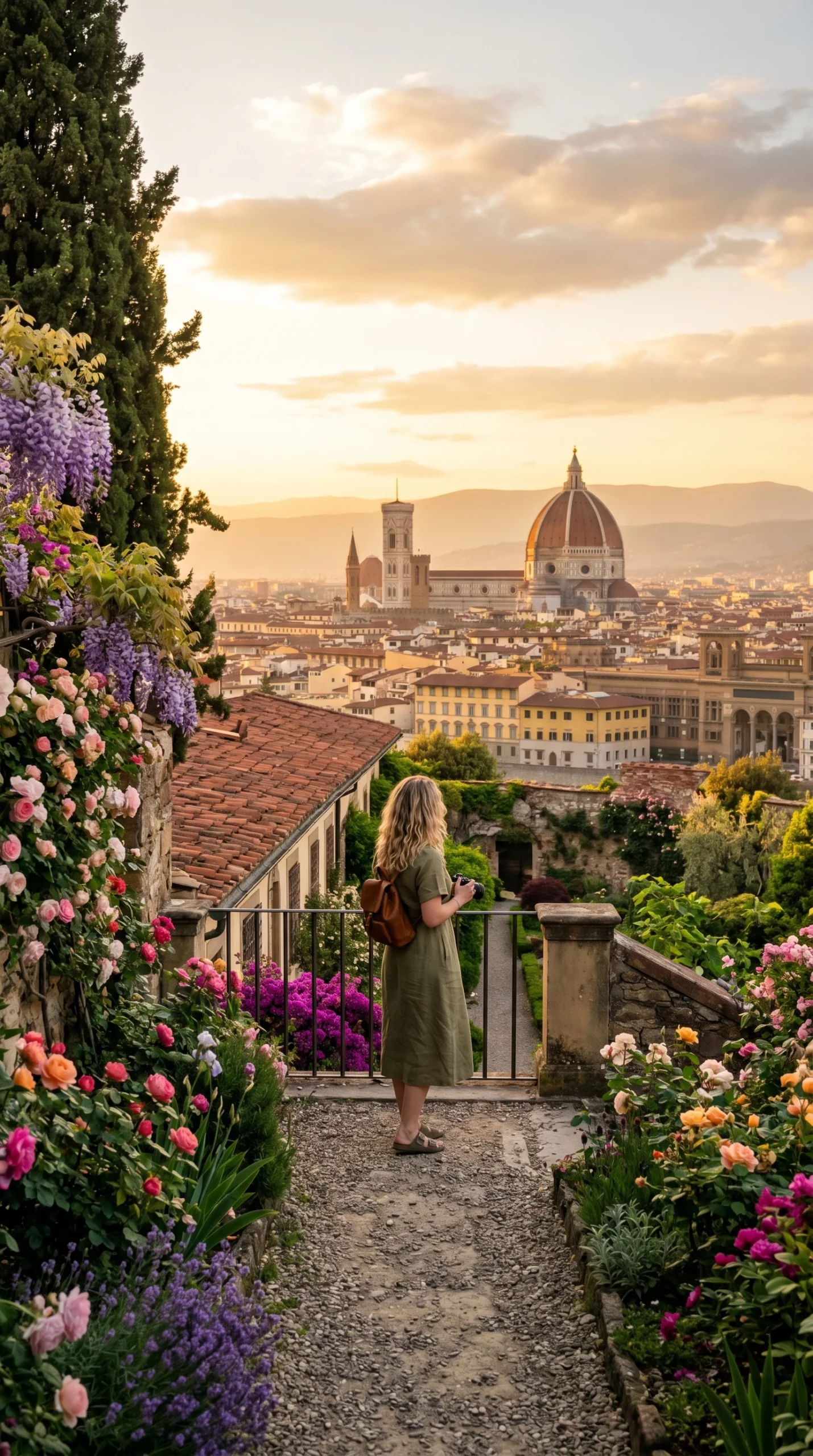
A quieter alternative to Boboli Gardens with some of the best panoramic views in Florence.
Why it’s special
- Stunning staircase framed by flowers (especially in spring)
- Sweeping views over Florence rooftops
- Much fewer tourists than nearby attractions
Best for
Photography and peaceful walks.
4. Biblioteca delle Oblate Rooftop
A hidden rooftop café and library space with one of the best free Duomo views in the city.
Why it’s special
- Direct Duomo skyline view
- Relaxed café atmosphere
- Free access (just order a coffee)
Best for
Budget-friendly skyline photography and quiet breaks.
5. Via dei Neri (Food Street)
A narrow street packed with some of Florence’s best local food spots.
Why it’s special
- Famous panini shops and local eateries
- Much cheaper than tourist restaurants near Duomo
- Authentic local atmosphere
Best for
Food lovers wanting a quick, authentic lunch stop.
6. Museo Galileo
A fascinating science museum that most first-time visitors completely miss.
Why it’s special
- Historic scientific instruments from the Medici era
- Insight into Florence’s role in science and discovery
- Quiet and rarely crowded compared to major museums
Best for
Curious travelers and families.
7. Church of Orsanmichele (Interior Focus)
While many people admire the exterior, the interior is often overlooked.
Why it’s special
- Stunning Gothic interior details
- Connection between guilds and Florence’s economy
- Peaceful compared to major basilicas
Best for
A quick cultural stop between major landmarks.
Why To Consider These Hidden Gems
Including these lesser-known landmarks helps you experience Florence beyond the postcard version. Instead of only following crowds, you’ll discover quieter streets, more authentic food spots, and historical layers that most visitors miss entirely.
These places also tend to:
- Have shorter queues or no queues at all
- Offer better photography opportunities
- Provide a more relaxed, local atmosphere
Practical Tips for Visiting Florence Landmarks
- Best Time to Visit: April–June and September–October offer milder weather and shorter lines.
- How Many Days? At least 2 days for highlights; 3–4 for a deeper look.
- Museum Reservations? Absolutely for the Uffizi and the Dome climb.
- Getting Around: Florence is super walkable and driving is tricky, so walking is the name of the game.
Public buses are available, but the city center is compact and easy to explore on foot. For deeper insights, consider joining a walking tour or getting an audio guide at major museums.
Florence Landmarks Ranked (Best Picks by Category)
Florence landmarks can be ranked by interest: the Duomo and Uffizi for overall importance, Piazzale Michelangelo for views, and Bargello Museum for sculpture. Free attractions include Ponte Vecchio, Piazza della Signoria, and Rose Garden.
Instead of trying to see everything blindly, it helps to prioritize Florence’s landmarks based on what you actually care about, views, museums, history, or photography.
Best Overall Florence Landmarks (Must-See)
If you only have time for a few places, start here.
- Florence Cathedral (Duomo)
- Uffizi Gallery
- Ponte Vecchio
- Piazza della Signoria
- Piazzale Michelangelo
These combine architecture, history, art, and iconic views in one itinerary.
Best Florence Landmarks for Art Lovers
Florence is one of the world’s greatest art cities. These spots showcase the Renaissance at its peak.
- Uffizi Gallery
- Bargello Museum
- Medici Chapels
- Basilica of Santa Croce
- Palazzo Medici Riccardi
Best for Botticelli, Michelangelo, Donatello, and Renaissance masterpieces.
Best Florence Landmarks for History & Architecture
Perfect if you’re interested in how Florence shaped Europe’s cultural identity.
- Florence Cathedral (Duomo)
- Palazzo Vecchio
- Basilica of San Lorenzo
- Orsanmichele Church
- Basilica of Santa Maria Novella
These sites show Florence’s transition from medieval power to Renaissance innovation.
VISIT Historical & Archaeological Sites
Best Florence Viewpoints & Photo Spots
These are the most photogenic locations in the city.
- Piazzale Michelangelo
- San Miniato al Monte
- Rose Garden (Giardino delle Rose)
- Ponte Santa Trinita (Ponte Vecchio view)
- Bardini Gardens
Go at sunrise or sunset for the best lighting and fewer crowds.
Best Free Florence Landmarks
Perfect for budget travelers or spontaneous exploration.
- Ponte Vecchio
- Piazza della Signoria
- Piazza del Duomo (exterior)
- Rose Garden
- Piazza della Repubblica
You can experience a large part of Florence without spending anything.
Most Underrated Florence Landmarks
These are often skipped, but offer some of the most memorable experiences.
- Brancacci Chapel
- Bardini Gardens
- Museo Galileo
- Via dei Neri food street
- Basilica di Santo Spirito
Fewer crowds, more authenticity, better storytelling opportunities.
Join Road Voyagist
Subscribe to Road Voyagist and get updates on the latest posts, trip tips and more from Bella of Road Voyagist straight to your inbox.
FAQ
Florence is best visited in 2–3 days to see major landmarks. The city is highly walkable, with most attractions in the historic center. Top sights like the Duomo, Uffizi Gallery, and Ponte Vecchio require advance booking or ticket reservations.
What is the most famous landmark in Florence?
Florence Cathedral, thanks to its jaw dropping Dome.
Is Florence walkable?
Totally. All the main landmarks are in easy walking distance.
Can you visit Florence in one day?
You can cover the highlights, but two or more days are way better.
Is the Florence Cathedral free?
Entry to the main church is free, but climbing the Dome and seeing the baptistery require tickets.
What landmark has the best view in Florence?
Piazzale Michelangelo is tough to beat for epic city views.
Are Florence landmarks included in the Firenze Card?
Yes, most major museums and some sights are covered. Double check details before you buy.
How many days do you need in Florence to see the main landmarks?
You need at least 2 days to see the main Florence landmarks like the Duomo, Uffizi Gallery, Ponte Vecchio, and Piazzale Michelangelo.
For a more relaxed experience that includes hidden gems and museums, 3–4 days is ideal.
What is the most famous landmark in Florence?
The most famous landmark in Florence is the Florence Cathedral (Duomo), known for Brunelleschi’s massive dome.
It dominates the skyline and is one of the most recognizable architectural achievements of the Renaissance.
Is Florence walkable for tourists?
Yes, Florence is one of the most walkable cities in Europe.
Most major landmarks are within:
- 5–10 minutes in the historic center
- 20–30 minutes between outer districts
You rarely need public transport inside the city center.
Which Florence landmarks require tickets?
Many top attractions require paid entry, including:
- Uffizi Gallery
- Duomo Dome climb
- Palazzo Vecchio interior
- Boboli Gardens
- Medici Chapels
- Bargello Museum
However, landmarks like Ponte Vecchio and Piazza della Signoria are free.
What are the best Florence landmarks for first-time visitors?
If it’s your first visit, focus on:
- Florence Cathedral (Duomo)
- Uffizi Gallery
- Ponte Vecchio
- Piazza della Signoria
- Piazzale Michelangelo
These give you the best mix of art, history, and views.
What is the best viewpoint in Florence?
The best viewpoint in Florence is Piazzale Michelangelo, especially at sunset.
Other excellent viewpoints include:
- San Miniato al Monte (quieter alternative)
- Boboli Gardens (garden perspective)
- Rose Garden (less crowded option)
Are Florence landmarks close to each other?
Yes. Most major landmarks are clustered in the historic center, making it easy to walk between them.
For example:
- Duomo → Uffizi → Ponte Vecchio is about a 15–20 minute walk total.
Do you need to book Florence attractions in advance?
Yes, especially for:
- Uffizi Gallery
- Duomo dome climb
- Accademia Gallery (Michelangelo’s David)
- Vasari Corridor tours
Booking in advance helps avoid long queues, especially in peak season.
What is the best time of year to visit Florence landmarks?
The best months are:
- April–June (spring): pleasant weather, blooming gardens
- September–October (fall): fewer crowds, golden light
Avoid peak summer (July–August) if possible due to heat and crowds.
Is the Florence Cathedral free to enter?
Yes, entry into the main cathedral is free.
However, additional parts require tickets:
- Dome climb
- Bell tower
- Baptistery
- Museum complex
What are the best free Florence landmarks?
Top free landmarks include:
- Ponte Vecchio
- Piazza della Signoria
- Piazza del Duomo (exterior)
- Rose Garden
- Piazza della Repubblica
What Florence landmarks are best for photography?
Best photo spots include:
- Piazzale Michelangelo (city skyline)
- Ponte Vecchio (sunset reflections)
- Rose Garden (flowers + skyline)
- Ponte Santa Trinita (best bridge view)
- Duomo rooftop views
Is Florence expensive to visit?
Florence can be moderate to expensive depending on your choices.
Costs vary:
- Museums: €10–€30
- Food: €5–€25 per meal
- Attractions: many free viewpoints available
Budget travelers can still enjoy most landmarks affordably.
Can you see Florence landmarks in one day?
Yes, but only the highlights. In one day you can see:
- Duomo
- Piazza della Signoria
- Ponte Vecchio
- Uffizi (quick visit)
- Piazzale Michelangelo (sunset)
However, 2–3 days is much better for a complete experience.
What should you not miss in Florence?
Don’t miss:
- The Duomo dome climb
- Sunset at Piazzale Michelangelo
- Uffizi Gallery masterpieces
- Walking across Ponte Vecchio at night
- Hidden gems like Bardini Gardens
Florence Rewards Slow Exploration
The Duomo and Ponte Vecchio get all the attention but some of the better moments in Florence come from just walking around. I think finding a small piazza that no one talks about feels more real than the big sights. Sitting in a garden works too or ending up at a church that stays pretty quiet most of the time.
Putting together an itinerary like this gets you away from the usual pictures and closer to how the city actually felt during the Renaissance. It is easy to miss those parts when you stick to the main list. Bookmark the page if it helps or save it for when you plan the trip.
Happy travels!
You may like: 5-Day Amalfi Coast Road Trip: An Unforgettable Scenic Itinerary
Note: This article contains affiliate products. We earn a commission if you make a purchase, at no additional cost to you.

Bella Hartwell
I’m Bella Hartwell, a travel enthusiast who has organized multiple road trips.
I share hands-on tips, tested gear lists, and personal stories to help others travel smarter.
The best kind of freedom starts on the open road.