5 Hidden Gems In Swedish Lapland Most Travelers Miss
Swedish Lapland is famous for the northern lights, Abisko National Park, and winter adventures like dog sledding and snowmobiling. But beyond the well-known stops, northern Sweden hides quieter Arctic landscapes that many travelers completely overlook.
From frozen waterfalls and hidden canyon trails to peaceful lakeside viewpoints near Torneträsk, these lesser-known places offer a more remote and authentic side of Lapland.
This guide is based on winter and early spring visits to Swedish Lapland (mainly February–March), when snow conditions are stable, daylight is returning, and northern lights activity is still strong.
This guide covers five hidden gems in Swedish Lapland, including practical travel tips, the best seasons to visit, and how to build them into a winter road trip itinerary.
TL;DR
Swedish Lapland offers several underrated destinations beyond Abisko, including Abisko Canyon’s quieter hiking paths, Riksgränsen’s remote mountain valleys, Silverfallet’s frozen waterfall, Björkliden’s panoramic viewpoints, and secluded shores along Lake Torneträsk. These spots are best explored in winter or early spring, ideally by rental car from Kiruna for full access and flexibility.
Swedish Lapland is hiding some secret spots that most travelers totally miss. Check out Abisko Canyon’s secret trails, roam Riksgränsen’s wild peaks, hunt for amazing frozen waterfalls at Silverfallet, catch panoramic Arctic views in Björkliden, and find peaceful retreats along Lake Torneträsk. Rent a car for full freedom, bundle up, and try to book your stay early to snag the best options.
How to Choose Between These Hidden Gems
Not all hidden gems in Swedish Lapland offer the same experience. Choosing the right ones depends on how you travel, the season, and your tolerance for winter conditions.
- If you want easy access with minimal driving, focus on Abisko Canyon and Björkliden
- If you want remote Arctic mountain landscapes, prioritize Riksgränsen
- If you want photography spots with minimal effort, Silverfallet and Lake Torneträsk are best
- If you want a full road trip experience, combine all locations via the E10 highway
Quick List: 5 Hidden Gems in Swedish Lapland
Swedish Lapland’s lesser-known destinations include Abisko Canyon’s quiet hiking trails, the mountain landscapes of Riksgränsen, the frozen waterfall at Silverfallet, panoramic viewpoints in Björkliden, and the remote shoreline areas of Lake Torneträsk. These locations offer a quieter alternative to Abisko National Park and are best explored in winter or early spring.
- Abisko Canyon viewpoints
- Riksgränsen mountain landscapes
- Silverfallet frozen waterfall
- Björkliden Arctic views
- Torneträsk lake secret spots
| Place | Best Season | Time Needed | Difficulty | Best For |
|---|---|---|---|---|
| Abisko Canyon | Winter | 1–2 hrs | Easy | Quiet hiking |
| Riksgränsen | Late winter | Half day | Moderate | Mountain scenery |
| Silverfallet | Feb–Mar | 30–45 mins | Easy | Frozen waterfalls |
| Björkliden | Winter | 1–3 hrs | Easy | Panoramic views |
| Lake Torneträsk | Year-round | Flexible | Easy | Photography & solitude |
Join Road Voyagist
Subscribe to Road Voyagist and get updates on the latest posts, trip tips and more from Bella of Road Voyagist straight to your inbox.
Where to Stay Near Lapland’s Hidden Gems
The best bases for exploring Swedish Lapland’s hidden gems are Abisko for trail access and northern lights, Björkliden for quiet mountain views, Kiruna for car rentals and logistics, and Riksgränsen for remote stays. Accommodation fills quickly in winter, so early booking is essential during aurora season.
Choosing the right base is key for exploring these hidden gems, especially in winter when driving distances and daylight matter.
Track down the best cabins, hotels, and lodges near these quiet corners:
Abisko – Best Base for First-Time Visitors
Abisko is the most practical base if you want quick access to canyon trails, Lake Torneträsk viewpoints, and northern lights viewing spots.
It’s:
- directly connected by train on the northern line
- close to multiple short hiking routes
- one of the most reliable aurora locations in Sweden
Best for: first-time visitors, no-car travelers, photography-focused trips
Björkliden – Best for Views & Quiet Atmosphere
Björkliden is a quieter alternative just 10 minutes away from Abisko. It offers elevated viewpoints over Lake Torneträsk and easier access to open mountain scenery.
It’s:
- less crowded than Abisko
- ideal for sunrise and sunset photography
- close to chairlift-access viewpoints
Best for: couples, photographers, quieter stays
Kiruna – Best for Flexibility & Car Rentals
Kiruna is the main transport hub of Swedish Lapland and the best place to start a road trip.
It’s:
- where most Kiruna car rental options are available
- well-connected via airport and train
- ideal for exploring all five hidden gems by car
Best for: road trips, larger groups, flexible itineraries
Riksgränsen – Best for Remote Mountain Stays
Riksgränsen is ideal if you want a more isolated Arctic experience surrounded by mountains and ski terrain.
It’s:
- significantly quieter than Abisko
- closer to Norwegian border landscapes
- best experienced with a car or train connection
Best for: off-grid feeling, ski-focused trips, solitude
Best Strategy for Choosing Where to Stay
If you’re planning a trip around these hidden gems:
- Stay in Abisko if you want easy access to multiple spots without driving far
- Stay in Kiruna if you want maximum flexibility with a rental car
- Stay in Björkliden if you want quieter scenery and mountain views
- Stay in Riksgränsen if you prefer remote, off-grid Arctic stays
This simple choice can completely shape your experience in Swedish Lapland.
1. Abisko Canyon (Quiet Paths Off the Main Trail)
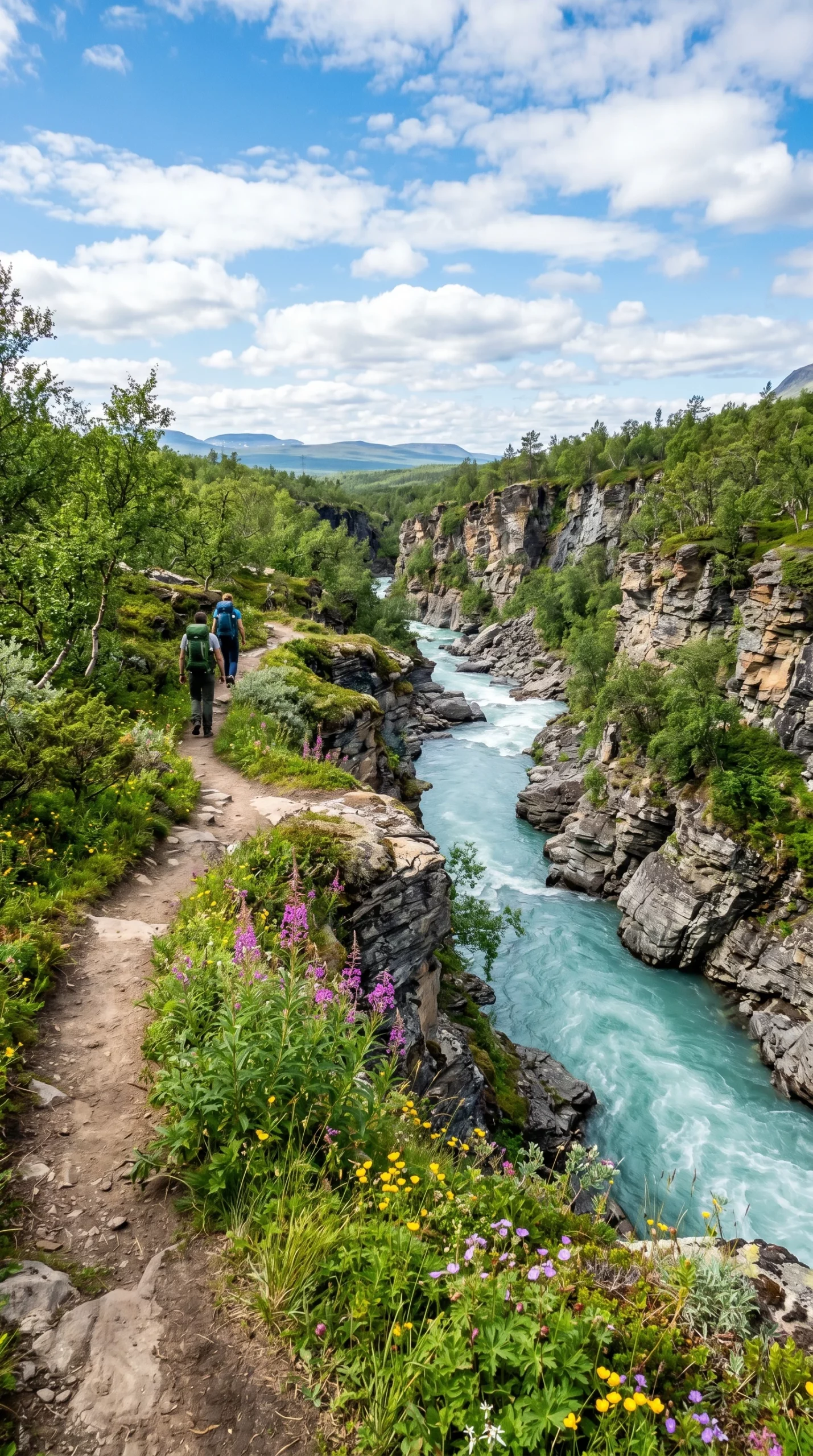
Abisko Canyon, located in Abisko National Park, features deep river gorges, frozen waterfalls, and quieter side trails just minutes from the main tourist routes. While the main viewpoints can be busy, nearby hidden paths offer solitude and Arctic scenery. Winter conditions may make trails icy, so proper footwear is recommended.
Abisko usually draws a crowd around the big hiking loops and the Aurora Sky Station, but just nearby are peaceful canyon paths where vast river gorges slice through the snow, icy waterfalls freeze in midair, and you can wander for an hour without spotting another soul.
On a late February afternoon in Abisko, I took a narrow side trail just off the main canyon loop after heavy snowfall the night before. The path was barely visible in places, and I didn’t see anyone else for nearly an hour.
I originally planned to stay on the main loop, but after seeing footprints heading off into a quieter side gorge, I followed those instead, and that’s where I found the most interesting frozen formations.
I once followed a narrow trail off the main loop and ended up surrounded by snow-wrapped rock walls echoing with the heavy rush of water. If the main overlook seems crowded, just step around the bend, you’ll find a whole other world of calm and beauty.
What surprised me most was how quickly the canyon shifts from crowded near the main entrance to completely empty just a few minutes further along the trail.
In January, daylight around Abisko lasts only a few hours, while March offers longer golden-hour conditions ideal for photography.
- Deep river canyon just outside the most popular areas
- Frozen waterfalls put on a show in the colder months
- Quiet, tuckedaway trails for serious solitude
Pro tip: Move past the largest viewpoints, there’s almost always a quiet spot close by. The quieter canyon paths tend to branch off within 5–15 minutes of the main entrance. Most visitors never go beyond the first viewpoint, which creates a sharp drop in crowd density further inside the canyon.
Photo tip: Frame the canyon through snow-covered trees or go for dramatic blue hour light bouncing off the ice and river below.
Access & parking: The easiest access point is near the main Abisko National Park entrance, where paid parking is available year-round. Most quieter canyon viewpoints can be reached within 15–30 minutes on foot from the main trails.
Trail conditions: In winter, paths around the canyon can become icy, especially near shaded sections and wooden walkways. Microspikes are highly recommended between December and March.
Best time to visit: Early morning and late afternoon usually offer the quietest conditions and softer light for photography.
How much time to plan: Allow 1–2 hours if you want to explore beyond the main overlook areas.
If you’re planning to stay near this area, booking early is essential during winter months (December–March), as accommodation options around Abisko and Björkliden are limited and fill up quickly during aurora season.
2. Riksgränsen: Remote Mountain Landscapes Near the Norwegian Border
Riksgränsen is a remote mountain area on the Swedish-Norwegian border known for vast Arctic valleys and ski terrain. It is significantly quieter than nearby tourist hubs and is best visited in late winter when daylight increases. Access is possible by train or car, but conditions can be affected by weather.
Sitting right on the Norwegian border, Riksgränsen has a distinct “edge of the map” feel, the last train stop before nothing but wilderness. The ride there sets the mood, but what really gets you is how much untouched landscape waits once you arrive.
Picture wide valleys, jagged peaks, and wild ski terrain even when snow is gone. In Riksgränsen during March, I walked several valley trails mid-day and only passed two other hikers the entire time, despite it being peak ski season nearby.
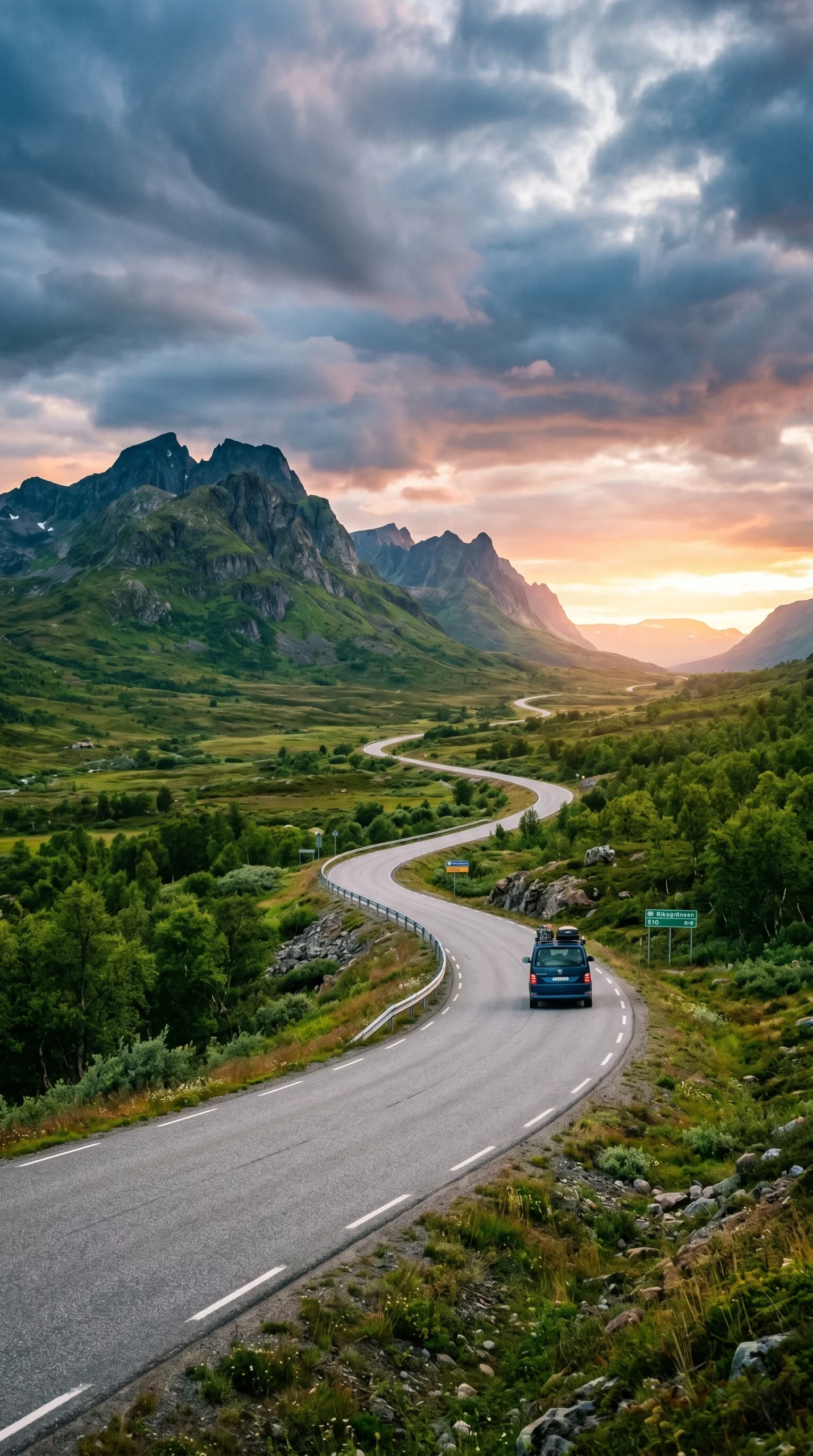
I debated skipping the chairlift due to wind conditions, but it ended up being one of the clearest viewpoints of Lake Torneträsk that day.
- Raw mountain scenery and endless remote mountain terrain
- Super few tourists compared to most Lapland hot spots
- Late winter brings stubby trees in blue-purple shadows under endless skies
Despite being a ski destination, non-skiing visitors often find the surrounding valleys completely empty during weekdays, especially outside peak holiday weeks.
Pro tip: March and April are perfect, there’s deep snow, brighter sunlight, and you can walk or ski in peace. Try a sunrise trek or just chill out beneath the stars.
Getting there: Riksgränsen is accessible by train from Kiruna and Abisko via the Ofoten Line, though winter weather can occasionally affect schedules. Driving offers more flexibility for stopping at viewpoints along the route.
Trail difficulty: Many lower valley walks are relatively easy, but mountain terrain becomes more demanding quickly in winter conditions.
Best season: March and April typically provide the best balance of snow coverage and daylight hours.
Facilities: Outside ski season, services and restaurants can be limited, so it’s worth carrying snacks and extra water.
If you’re planning to stay near this area, booking early is essential during winter months (December–March), as accommodation options around Abisko and Björkliden are limited and fill up quickly during aurora season.
3. Silverfallet – Frozen Waterfall With Large Ice Formations
Silverfallet is a small, easily accessible waterfall near Abisko that transforms into dramatic ice formations during winter. The site is reached via a short walk from roadside parking, typically under 10 minutes. It is best visited in February or March when ice structures are most stable and photogenic.
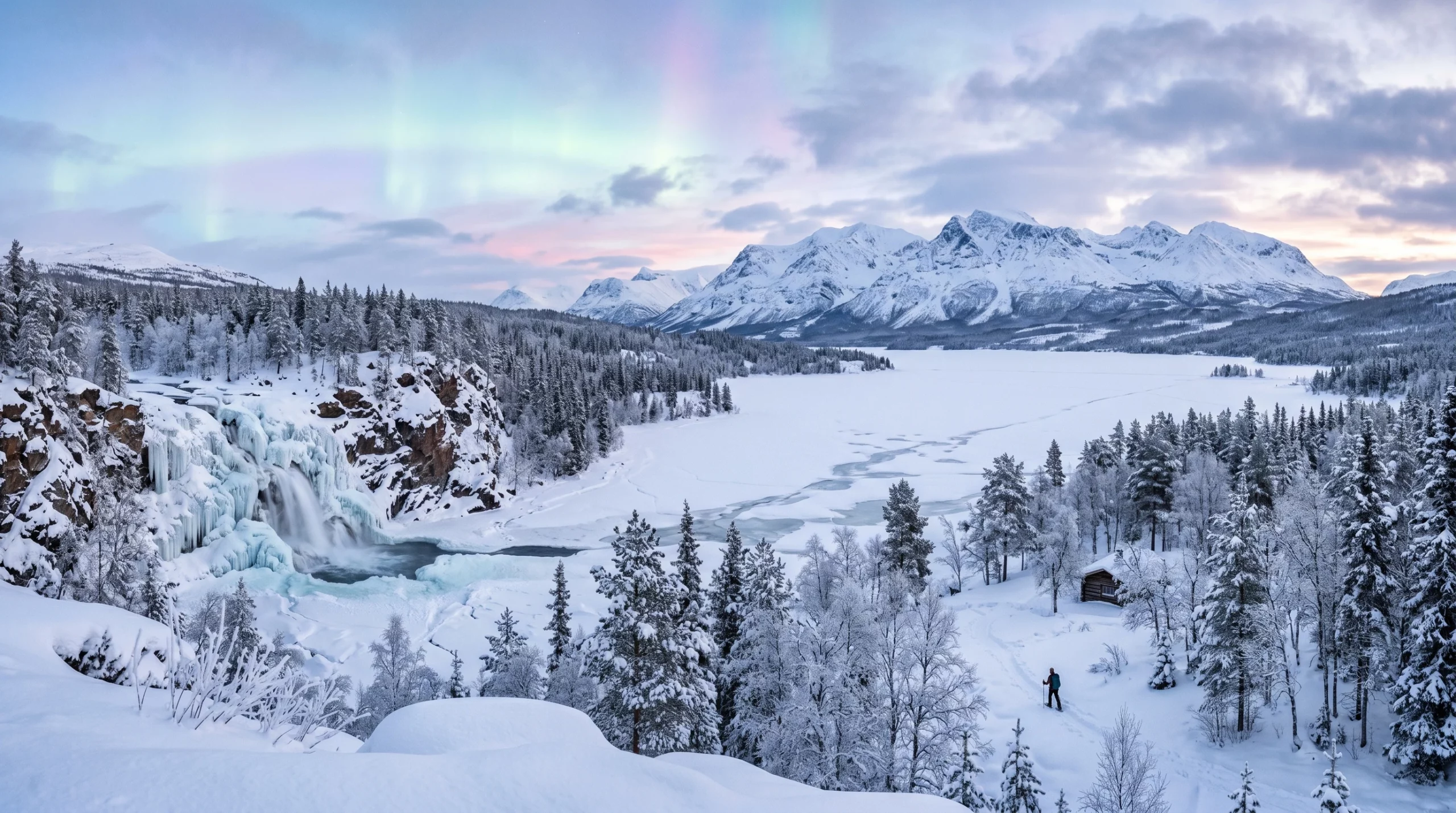
Silverfallet is far more than just another waterfall. In winter, it morphs into a magical show of weird ice towers and glimmering turquoise columns.
Only a handful of photographers come out here, even fewer stay long enough to watch the sun make the ice spark. The short trail from the road feels mysterious, with the ice popping on cold days and snow softening every sound.
I almost skipped this stop because of limited daylight, but it ended up being one of the most photogenic locations of the entire trip.
I stayed at Silverfallet for just over an hour in early March, mostly waiting for the light to shift as the sun dropped behind the treeline and turned the ice from pale blue to deep turquoise.
- Easy walk – under 10 minutes from the road
- Wicked ice formations in February and March
- Super few crowds, making it peaceful even on weekends
Pro tip: Micros pikes or really grippy boots keep things safe, since the trail gets slick after frozen nights. It’s short but can be surprisingly icy.
Parking & access: A small roadside parking area provides access to the waterfall, followed by a short walk of roughly 5–10 minutes.
Winter safety: The trail can become extremely slippery after snowfall or overnight freezing. Waterproof boots with good traction or microspikes make the walk much safer.
Photography tip: Midday light often creates strong reflections on the ice, while early morning produces softer blue tones that work better for photography.
Visit duration: Most travelers spend around 30–45 minutes here, though photographers may stay longer during golden hour.
Silverfallet was far less visited than expected, especially compared to other frozen waterfalls closer to Kiruna. Ice formations vary significantly depending on recent freeze-thaw cycles, meaning the waterfall can look completely different within the same month.
If you’re planning to stay near this area, booking early is essential during winter months (December–March), as accommodation options around Abisko and Björkliden are limited and fill up quickly during aurora season.
Stay Near Abisko & Björkliden
- Pick up a cozy cabin for a different experience, not just standard hotels. It adds a unique vibe, especially at night when the aurora might pop over your roof.
- Björkliden and Abisko both offer solid budget choices if you book early. Kiruna‘s a smart backup for bigger groups, but fills up quickly during prime aurora season.
4. Björkliden Viewpoints (Local Favorite Overlooks)
Björkliden offers elevated viewpoints over Lake Torneträsk and surrounding mountains, located just minutes from Abisko. It is less crowded than nearby tourist spots and accessible via car, train, or chairlift. The area is popular for sunrise, sunset, and northern lights viewing, especially during clear winter conditions.
Björkliden sits minutes from Abisko by car or train, and the views here are next-level cool. Most people just cruise by or stick to the ski slopes, but climbing up even a short way unlocks wild Arctic scenery, with Lake Torneträsk spread out below and jagged ridges all around.
One time, I grabbed a steaming hot chocolate, hopped on the chairlift (open both winter and summer), and soaked up the gradient colors spilling across the sky.
Bonus: it’s an underrated spot for northern lights hunting, especially when Abisko is busy. Visibility from viewpoints is highly dependent on wind clearing snow from the valley floor, which can change conditions from fully obscured to crystal clear within hours.
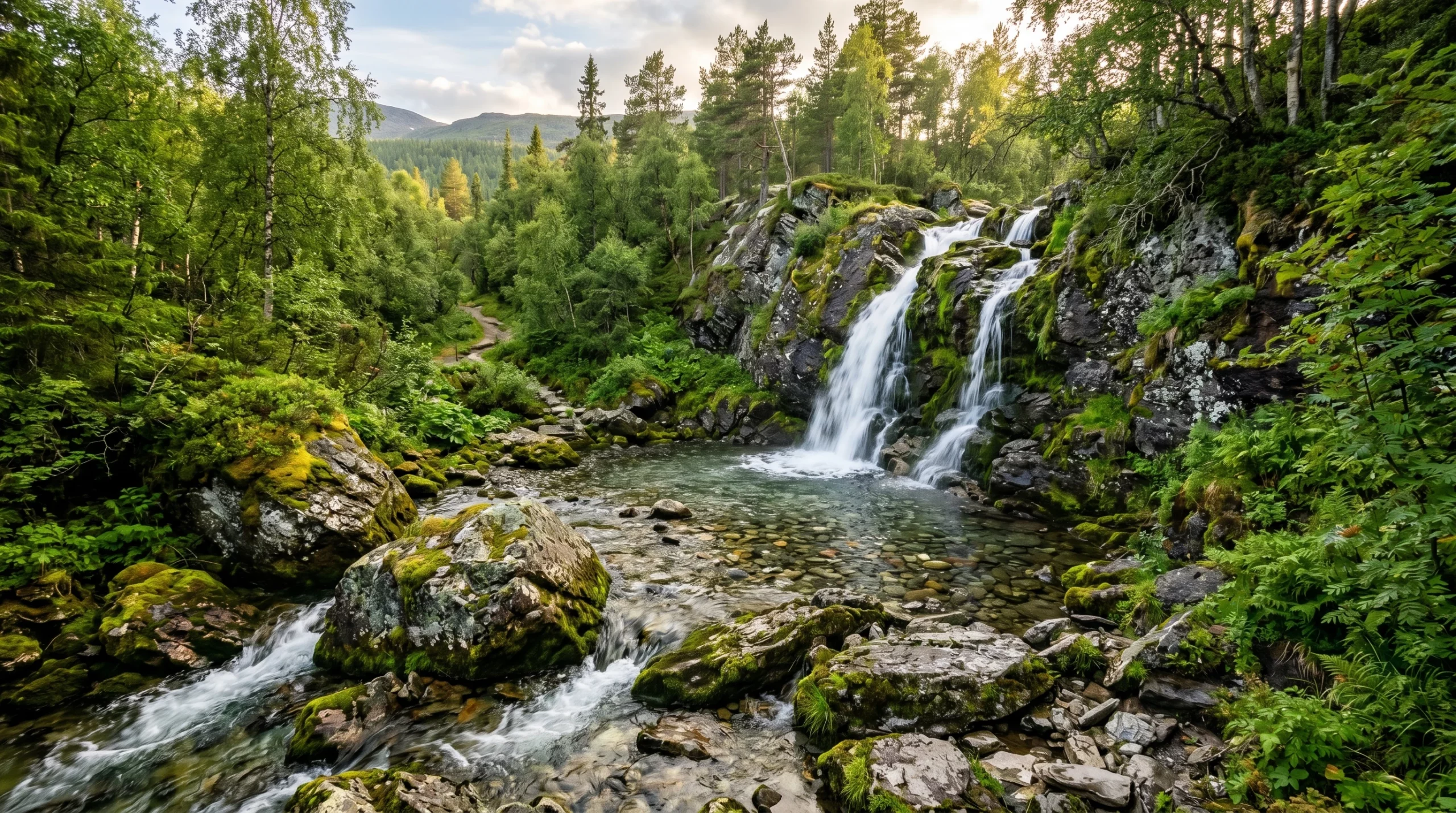
The color gradient in the sky changed much faster than expected in late afternoon, with pink tones lasting only a short window before deep blue took over.
- Massive panoramas that are surprisingly easy to reach
- Prime location for northern lights, as long as clouds stay away
- Chairlift (when running) drops you at dramatic vantage points, perfect for photos and relaxing
Pro tip: Go early for sunrise or rush there before sunset. The high perch turns the sky into a light show.
Chairlift access: The chairlift usually operates seasonally, with schedules varying depending on snow and weather conditions. Check local operating hours in advance during shoulder seasons.
Northern lights conditions: Björkliden often experiences less crowding than central Abisko while still offering dark skies suitable for aurora viewing.
Accessibility: Some viewpoints are accessible with only short walks from the lift station, making this one of the easier panoramic stops in the region.
Best photography conditions: Clear winter evenings and sunrise hours tend to provide the best visibility over Lake Torneträsk.
Compared to Abisko’s main viewpoints, Björkliden felt significantly quieter and more open, with fewer groups stopping for photos.
If you’re planning to stay near this area, booking early is essential during winter months (December–March), as accommodation options around Abisko and Björkliden are limited and fill up quickly during aurora season.
5. Lake Torneträsk: Quiet Lakeside Stops Beyond Abisko
Lake Torneträsk is one of Sweden’s largest lakes, with quiet shoreline access points along the E10 highway between Abisko and Björkliden. These areas are rarely crowded and offer photography opportunities, frozen landscapes in winter, and midnight sun reflections in summer. Some access points may be snow-covered in winter.
Lake Torneträsk is enormous, one of Sweden’s largest lakes, yet barely anyone explores beyond the main highway viewpoints.
Even when the highway was busy, stepping just a few dozen meters toward the shoreline made the entire landscape feel completely isolated.
Park at a tiny bay or head out on smaller trails near Abisko or Björkliden, and you’ll find wild coastline, snowy woodlands, and peaceful corners you can have to yourself.
Some of the roadside pull-offs along Lake Torneträsk were partially buried in snow, making it difficult to safely park in certain spots.
I once wandered just a hundred meters from the main road and found silence, with ice reflecting the first gold of dawn. It’s the kind of quiet you remember long after leaving.
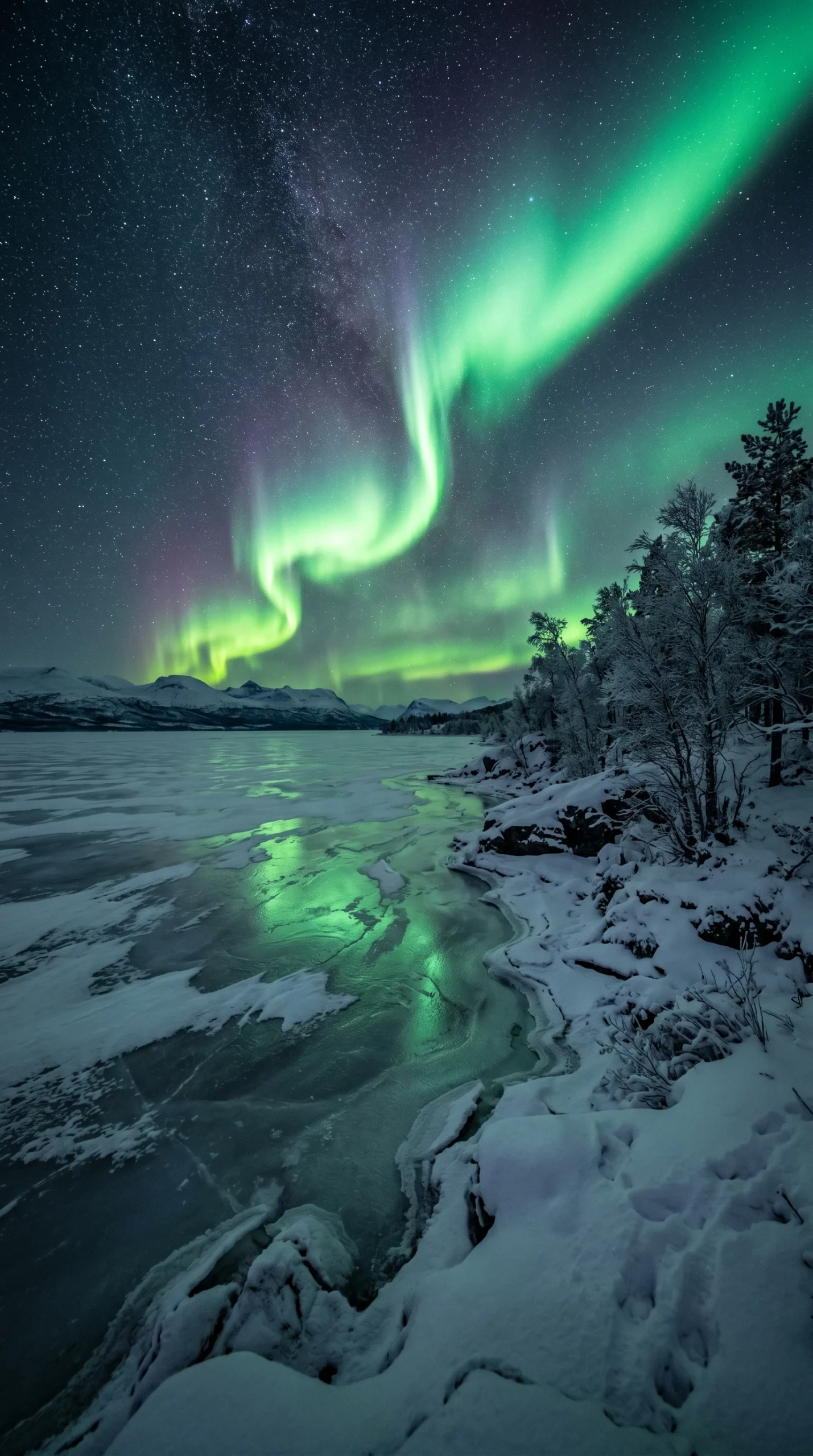
By mid-afternoon in winter, light fades quickly, which limited how long I could stay at some viewpoints.
- Chill lakeshore spots for perfect reflection shots
- Solitude for picnics or slow walks, great even if you’re traveling alone
- Super clear water most of spring and early summer
Pro tip: Search for the tiniest pull-offs between Abisko and Björkliden. A lot have their own mini beaches or rocky spots for relaxing or snagging photos. Some of the most photogenic shoreline spots are not marked and appear only as small vehicle pull-offs along the E10, which are easy to miss without local awareness.
Roadside access: Several small pull-offs along the E10 highway provide quick access to the shoreline, though some may become snow-covered after storms in peak winter.
Best season: Winter offers frozen landscapes and aurora viewing opportunities, while summer brings midnight sun and easier walking conditions.
Safety note: Ice conditions on the lake can change quickly and should never be assumed safe unless locally confirmed. The sound of running water beneath the frozen canyon ice was surprisingly loud, even with heavy snow absorbing most ambient noise.
How much time to plan: Short stops work well for photography, but slower lakeside walks can easily fill half a day. Most visitors spend less than 10–15 minutes at roadside viewpoints along Lake Torneträsk, but photographers often stay significantly longer due to rapidly changing light conditions during sunrise and sunset.
If you’re planning to stay near this area, booking early is essential during winter months (December–March), as accommodation options around Abisko and Björkliden are limited and fill up quickly during aurora season.
Driving Between These Hidden Gems
Most of these locations are connected by the E10 highway between Kiruna, Abisko, Björkliden, and Riksgränsen. Winter driving conditions can change quickly, especially during snowstorms and polar night periods.
Distances in Lapland may look short on maps, but road conditions and limited daylight can make journeys take longer than expected.
Approximate driving times:
- Kiruna -> Abisko: 1.5 hours
- Abisko -> Björkliden: 10 minutes
- Björkliden -> Riksgränsen: 40 minutes
Fuel stations become less frequent farther north, so avoid letting your tank run too low during winter road trips.
One mistake I made was underestimating how quickly daylight disappears in February. I had planned too many stops in one day, which meant rushing through some viewpoints instead of fully enjoying them.
How These Locations Change by Season
- In December–January, daylight is extremely limited, which reduces how many stops are realistic per day
- In February–March, conditions stabilize and visibility improves for photography
- In late spring, snowmelt changes waterfall intensity and accessibility
- In summer, Lake Torneträsk becomes significantly more accessible but loses frozen landscapes
2–3 Day Swedish Lapland Itinerary for Hidden Gems
A 2–3 day Swedish Lapland itinerary typically starts in Kiruna, continues to Abisko for canyon hikes, Björkliden for panoramic views, and Lake Torneträsk for shoreline stops, with a final visit to Riksgränsen and Silverfallet. A rental car is recommended for flexibility, especially during winter road conditions.
- Day 1: Land in Kiruna, pick up a rental car, check into somewhere near Abisko. Spend the day walking quieter Abisko Canyon trails, then grab local Arctic fare for dinner.
- Day 2: Head out to Björkliden for killer views in the morning (take the chairlift if it’s open), then wander along Lake Torneträsk’s secret shorelines in the afternoon. After dark, keep an eye out for aurora magic in open, dark areas.
- Day 3: Make the morning trip up to Riksgränsen for winter hiking or just soaking up silence. On your way back, pause at Silverfallet for a photo session at the frozen falls, it’s the perfect close to your trip.
Mobile Signal & Weather Conditions
Mobile coverage is generally reliable along the E10 corridor, but signal strength can weaken near remote trails and mountain areas.
Arctic weather changes rapidly during winter, particularly around Riksgränsen and higher elevations. Always check forecasts and road conditions before leaving for the day.
| Location | Parking | Best Time | Winter Difficulty |
|---|---|---|---|
| Abisko Canyon | Main visitor parking | Morning | Easy–Moderate |
| Riksgränsen | Station/roadside | March–April | Moderate |
| Silverfallet | Small roadside pull-off | Early morning | Easy but icy |
| Björkliden | Resort parking | Sunset | Easy |
| Torneträsk | E10 pull-offs | Sunrise/sunset | Easy |
Travel Tips for Swedish Lapland
Key travel tips for Swedish Lapland include visiting between December and March for winter conditions or June and July for midnight sun. Renting a car improves access to remote areas, while layered clothing is essential due to extreme cold and variable weather. Booking accommodation early is strongly recommended.
- Best time to visit: Winter (December to March) is best for deep snow, hunting the northern lights, and that super-cozy Arctic mood. Summer (June and July) means midnight sun, endless daylight, and easy hiking with less cold, worth mixing it up if you like variety.
- Getting around: Renting a car gives you total freedom and is definitely recommended for chasing remote corners. Public transport covers the basics, but driving means you can make your own schedule.
- What to pack: Warm thermals, thick wool socks, waterproof boots, good gloves, and a down jacket. The Lapland weather loves to keep you guessing, so pack layers.
- Budget tip: Lock in cabins and accommodations weeks (or even months) in advance, there’s big demand for unique stays in peak season. Cooking your own meals can save quite a bit too.
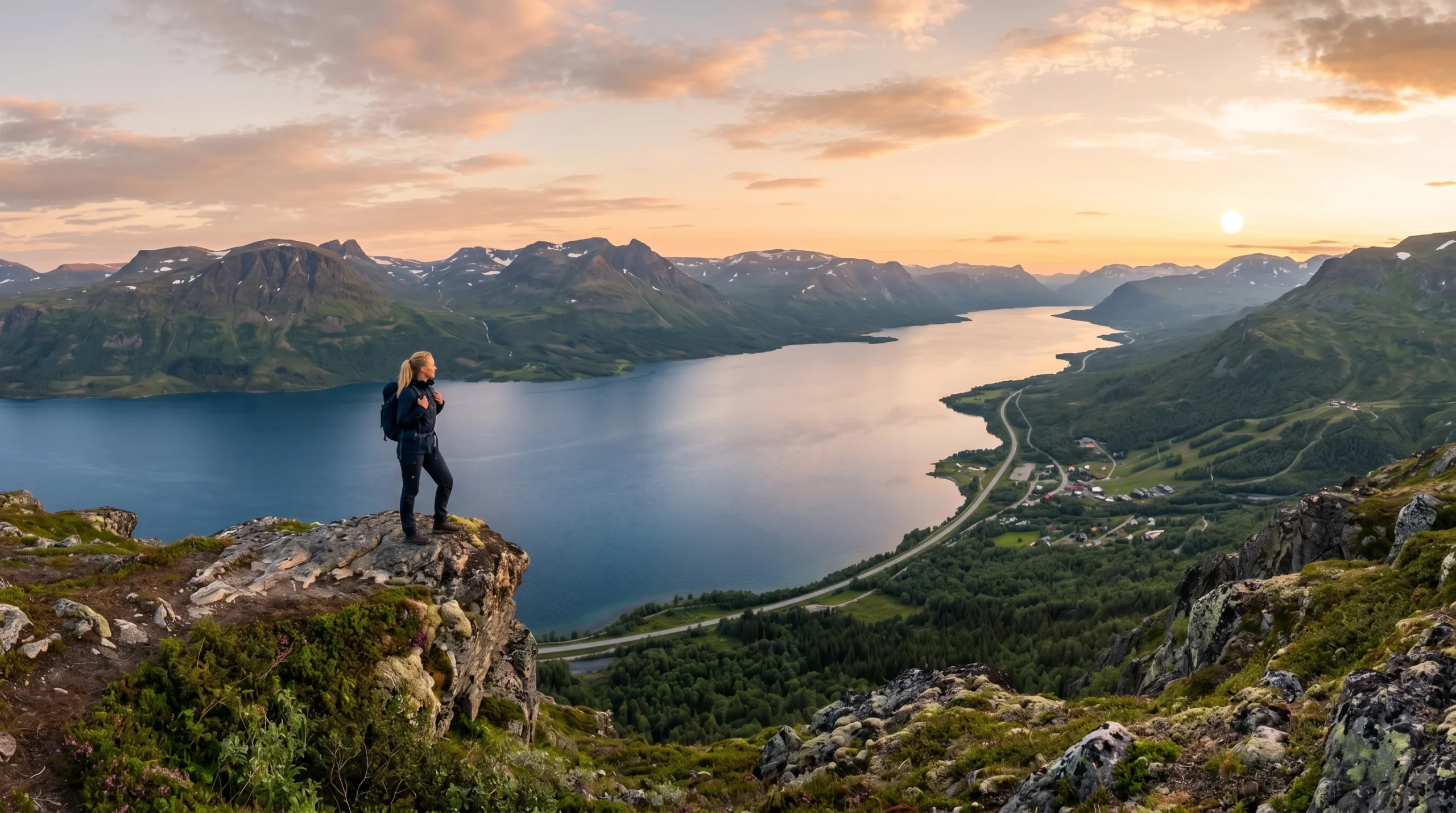
What Travel in This Region Actually Feels Like
Travel times in Swedish Lapland are not just about distance, they are shaped by weather, daylight, and road conditions.
- A 40 km drive can take significantly longer in snow or low visibility
- Some roadside viewpoints along Lake Torneträsk are inaccessible after heavy snowfall
- Daylight in winter can limit how many stops you realistically fit in per day
- Wind conditions near Riksgränsen can reduce visibility suddenly, even when forecasts look clear
Getting Around Swedish Lapland (Driving & Winter Travel Guide)
Swedish Lapland is best explored by car. While trains and buses connect the main towns like Kiruna, Abisko, Björkliden, and Riksgränsen, having your own vehicle gives you the flexibility to reach hidden viewpoints, remote lake pull-offs, and trailheads that public transport simply doesn’t cover.
This is especially important if you’re planning a winter road trip in Sweden, where daylight is limited and weather conditions can change quickly.
Driving in Swedish Lapland (Winter Conditions)
Driving in Swedish Lapland during winter is generally safe if you’re prepared, but conditions are very different from central Europe or southern Sweden.
Key things to expect:
- Snow-covered or icy roads for most of the season (December–March)
- Plowed main roads, but side roads may be snow-packed
- Sudden weather changes, especially near mountain areas like Riksgränsen
- Reduced visibility during snowstorms or polar night periods
Most rental cars come equipped with proper winter tires, which are mandatory and well-adapted for Arctic conditions.
Kiruna Car Rental Tips
Kiruna is the main gateway for most travelers exploring northern Swedish Lapland.
If you’re planning to rent a car in Kiruna:
- Book well in advance during winter season (December–March)
- Choose a vehicle with heated seats and good ground clearance if possible
- Consider full insurance coverage due to ice and wildlife risks
- Pick up your car directly at Kiruna Airport for convenience
Having a car from Kiruna makes it easy to reach all five hidden gems in this guide without relying on tour schedules or limited bus routes.
Distances & Real Travel Times
On paper, distances in Swedish Lapland look short—but Arctic driving conditions often extend travel times.
Approximate driving times:
- Kiruna ->Abisko: ~1.5 hours
- Abisko -> Björkliden: ~10 minutes
- Björkliden -> Riksgränsen: ~40 minutes
- Abisko -> Silverfallet: ~1–1.5 hours (seasonal road conditions may affect this)
In winter, always add extra time for:
- snow-covered roads
- photo stops
- wildlife crossings (reindeer are common in this region)
Join Road Voyagist
Subscribe to Road Voyagist and get updates on the latest posts, trip tips and more from Bella of Road Voyagist straight to your inbox.
Arctic Driving Tips
If it’s your first time driving in Arctic Sweden, these practical tips make a big difference:
- Drive slower than you normally would, even cleared roads can be icy
- Keep your fuel tank at least half full at all times
- Avoid driving in complete darkness if you’re unfamiliar with winter conditions
- Watch for reindeer on or near the road, especially at dawn and dusk
- Check daily road conditions via Swedish Transport Administration updates
When You Don’t Need a Car
While a car is ideal, you can still access some key locations without one:
- Abisko (train station on the main northern line)
- Björkliden (train stop + short transfers)
- Riksgränsen (train connection, though limited)
However, without a car, reaching quieter viewpoints at Lake Torneträsk or Silverfallet becomes significantly more difficult.
Swedish Lapland Hidden Gems Map
Frame your travel route, places to stay, and quick stops at these under-appreciated gems:
FAQ: Hidden Gems in Swedish Lapland
Swedish Lapland’s hidden gems are best visited in late winter, with Abisko, Björkliden, and Riksgränsen accessible by train or car. A rental car from Kiruna is recommended for full access. Winter driving is safe but requires caution due to ice, snow, and changing weather conditions.
What’s the best time of year to visit these hidden spots?
From December through March, you’ll find snowy magic and great chances for the northern lights. Summer is all about never-ending daylight and lakes so clear they look like glass. Personally, I’d vote for late February or early March, the days start to stretch out but winter vibes are in full force.
Are these places accessible by public transport?
Trains and buses will get you to Abisko, Björkliden, and Riksgränsen. To really check out the quieter trails and lakesides, renting a car is the way to go; you’ll make the most of your time and discover so much more.
Do I need a car to visit these places?
A car is highly recommended for visiting most of these hidden gems. While Abisko, Björkliden, and Riksgränsen are accessible by train, locations like Silverfallet and remote viewpoints along Lake Torneträsk are much easier to reach by car. A Kiruna car rental is the most common starting point for a winter road trip in Swedish Lapland.
How do I see the northern lights at these locations?
Stay outside the bustle of towns and keep your eyes on the clear night skies, Abisko, Björkliden, and even tiny shore spots offer the perfect viewing. I recommend checking aurora forecasts with a local app like Aurora Service, which is super easy to use.
Any safety tips for visiting in winter?
Bundle up in layers, watch for ice on trails (microspikes are a game changer), and always peek at weather and road conditions before you leave. If storms roll in or weather suddenly changes, it’s always smart to turn back.
Is it safe to drive in Swedish Lapland in winter?
Yes, driving is generally safe if you are prepared for Arctic conditions. Roads are regularly plowed, and rental cars are equipped with winter tires. However, conditions can change quickly due to snowstorms, ice, and low visibility. For a safe winter road trip in Sweden, always check road conditions, drive cautiously, and allow extra travel time.
How can I see the northern lights at these locations?
The northern lights are visible across Swedish Lapland whenever the sky is dark and clear. Locations like Abisko, Björkliden, and Lake Torneträsk offer excellent viewing due to low light pollution. For the best chance, check aurora forecasts and move away from towns or lit areas.
Are these hidden gems crowded?
Compared to Abisko National Park’s main attractions, these locations are significantly less crowded. Riksgränsen and Lake Torneträsk viewpoints often feel completely empty outside peak ski times, while Silverfallet remains relatively quiet even during winter weekends.
What are the best hidden gems in Swedish Lapland?
Some of the most underrated places in Swedish Lapland include Abisko Canyon’s quieter trails, the mountain landscapes around Riksgränsen, the frozen waterfall at Silverfallet, panoramic viewpoints in Björkliden, and the remote shoreline areas along Lake Torneträsk. These spots offer a more peaceful alternative to the main tourist areas around Abisko National Park.
Find Your Own Arctic Magic
Swedish Lapland rewards travelers who slow down and explore beyond the main tourist routes. Whether you’re photographing frozen waterfalls near Abisko, driving toward Riksgränsen, or searching for quiet viewpoints above Lake Torneträsk, these lesser-known places offer a calmer and more remote Arctic experience.
If you’re planning a winter road trip through northern Sweden, adding even one or two of these stops can completely change the feel of your journey.
Feeling inspired? Start planning your route, double up on mittens, and see how many hidden corners you can track down for yourself. If you’re lucky, you might stumble upon even more magic no one else has found yet!
Happy travels!
Note: This article contains affiliate products. We earn a commission if you make a purchase, at no additional cost to you.

Bella Hartwell
I’m Bella Hartwell, a travel enthusiast who has organized multiple road trips.
I share hands-on tips, tested gear lists, and personal stories to help others travel smarter.
The best kind of freedom starts on the open road.