The Frugal Road Tripper’s Guide: 15 Brilliant Ways To Save Money On The Road
Frugal road tripping requires a multi-faceted approach to cost reduction across fuel, lodging, and food. By leveraging GPS data to avoid high-cost tolls, utilizing dispersed camping on public lands, and employing specific vehicle maintenance strategies, travelers can significantly reduce overhead. Key tools for budget optimization include fuel-reward apps, annual National Park passes, and strategic grocery planning to bypass high-interest tourist pricing.
Setting out on a classic American road trip used to mean freedom, adventure, and, honestly, a shock to my wallet. I still remember filling up on gas at a highway station only to see prices thirty cents lower two exits later, or dropping $17 on soggy gas station snacks. Since then, I’ve picked up some pretty handy hacks for frugal road trips that let me spend less on the boring stuff and more on the good memories.
Being frugal on the road doesn’t mean skipping what makes a trip awesome. It means saving on basics, like gas, tolls, and hotel markups, so I can splurge on things that stick with me: bucket-list hikes, fancy tacos in a small town, or last-minute detours to those quirky roadside attractions. The right road trip hacks can turn any adventure into a legendary one, no trust fund required.
If you’re still deciding on the right ride for your journey, check out my deep dive on SUV vs. Compact Cars for Road Trips.
Here are my go-to strategies for a wallet-friendly ride, from fuel tricks to low-cost sleep, food hacks, and the gear I never leave home without. These tips have made my explorations smoother and a whole lot more memorable. I hope they help set you up for your own unforgettable rides, too.
Quick Comparison: Road Trip Lodging Value
| Accommodation Type | Avg. Cost (2026) | Best For | Frugal Pro-Tip |
| Dispersed Camping | $0 | Nature lovers | Use iOverlander for GPS |
| Hostels | $30 – $60 | Solo travelers | Book via Stay22 for city stays |
| Budget Hotels | $80 – $120 | Families/Couples | Check-in on Sundays to save 30% |
| Vehicle Sleeping | $0 | Stealth travelers | Park at 24-hour gyms (with permit) |
TL;DR – Frugal Road Trip Tips
- Fuel up smarter with apps and timing
- Camp free or score killer deals on unique stays
- Pack food and hack hotel breakfasts for big savings
- Use discount passes and offline apps to make every dollar count
Road Trip Fuel & Vehicle Hacks: Cutting Your Biggest Expenses
To reduce road trip fuel costs, utilize apps like GasBuddy or Upside to locate cheaper stations away from interstate exits. Maintain tire pressure at recommended PSI to improve fuel efficiency by 3%, and enable the “Avoid Tolls” setting in navigation apps to bypass high-cost motorways in favor of free scenic routes.
Fuel almost always takes the biggest bite out of the road trip budget. If you’re looking to cut your costs, this is where to start.
Gas App Strategy
If you haven’t downloaded apps like GasBuddy or Upside, you’re missing out. I always check gas prices a few miles ahead on the route. Highway exits closest to interstates are marked up, but even a two-mile detour can save you fifteen bucks on a full tank. Upside even gives cash-back rewards.
The “6 PM Rule”
I used to fill up whenever my tank hit halfway, but gas prices can switch up during the day. Statistically, 6 to 8 PM is when prices often dip, especially midweek. I try to plan refuelling in that window for the best rate.
Join Road Voyagist
Subscribe to Road Voyagist and get updates on the latest posts, trip tips and more from Bella of Road Voyagist straight to your inbox.
Tire Pressure = Fuel Economy
Rolling on under inflated tires isn’t just a safety thing, it kills your MPG. I check tire pressure every couple days on a long drive. Even being a few PSI low can drop fuel efficiency by 3%. Gas station air pumps are free in some states if you ask at the counter.
Cruising at 55–60 mph instead of 75 mph can save up to 15% on fuel.
Toll Free Navigation
Avoiding tolls is super important for frugal road trips, especially in the Northeast and parts of the Midwest. Google Maps and Waze both let you select “Avoid Tolls” in route options. Sometimes the slower route is way more scenic anyway. One day’s tolls can easily add up to the cost of a dinner out.
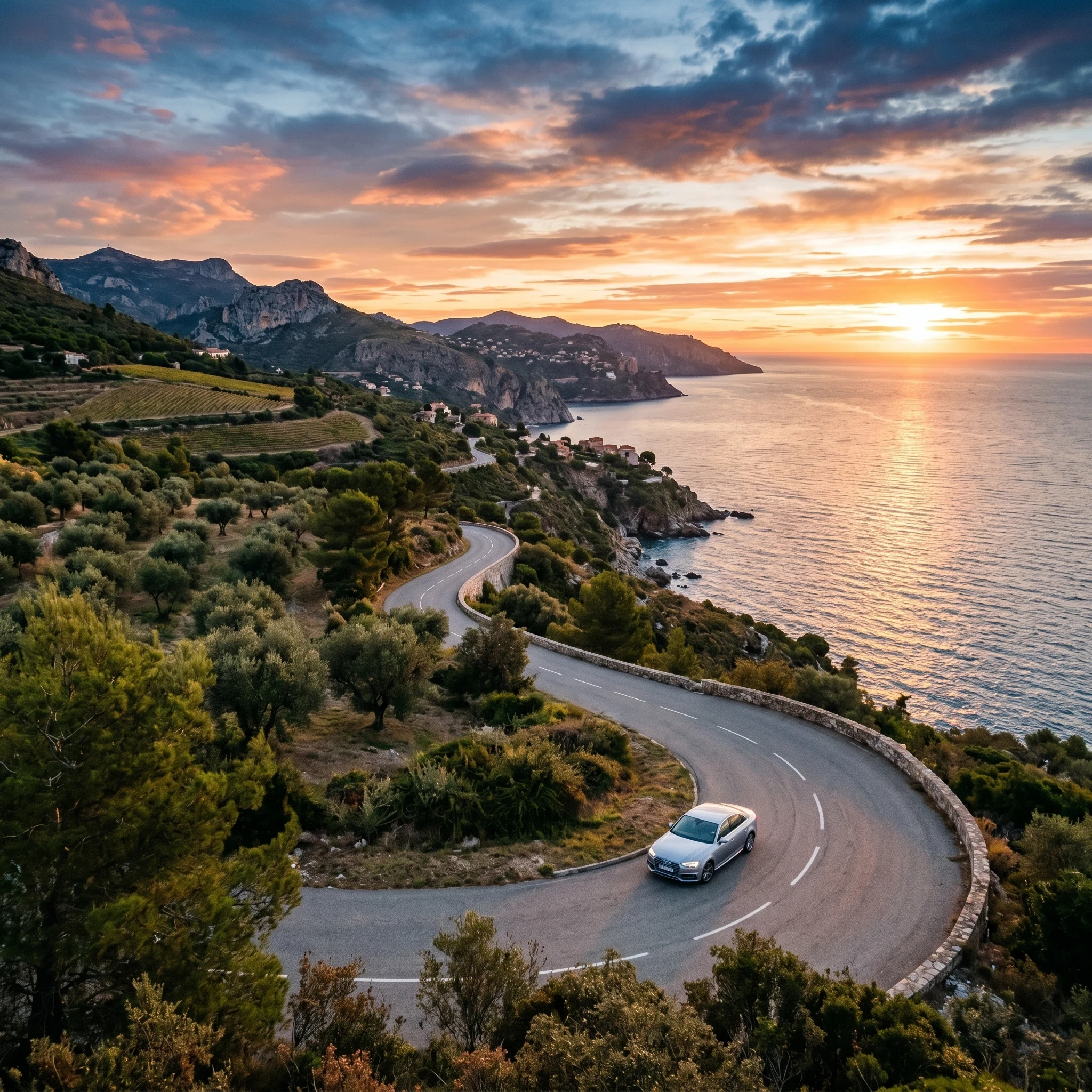
Tolls are the hidden “budget vampires” of a road trip. Driving from Calais to Nice in France can cost you over €125 ($136) in motorway fees alone, and crossing just a few bridges in the San Francisco Bay Area can easily set you back $30–$50.
The good news? Your phone has a “secret” button to make those costs disappear. Every major navigation app has an “Avoid Tolls” setting that redirects you to free, public roads.
How to Activate It:
- Google Maps: Tap your profile icon > Settings > Navigation > Toggle on Avoid Tolls.
- Waze: Tap the menu > Settings (Gear icon) > Navigation > Toggle on Avoid Toll roads.
- Apple Maps: Go to your iPhone Settings > Maps > Driving & Navigation > Under “Avoid,” toggle on Tolls.
Why This is a Frugal Double-Win:
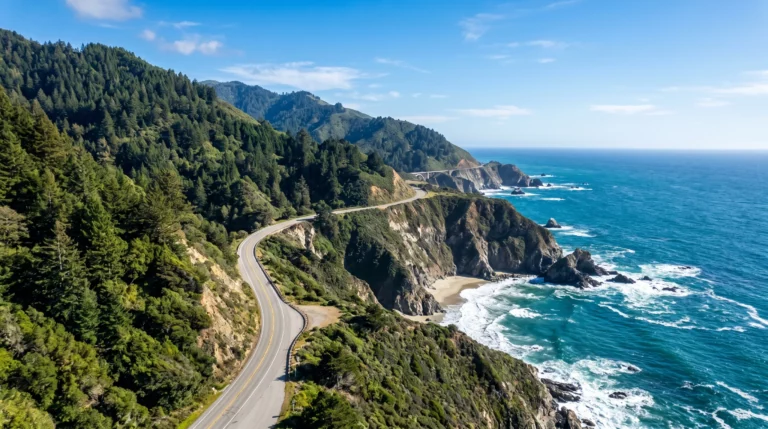
- Direct Savings: On coastal routes like the French Riviera or the Pacific Coast Highway, the “free” roads are usually the historic scenic byways. You save the cash and get the views for free.
- Better Stops: Toll roads are designed to get you from A to B as fast as possible, which usually means boring rest stops and expensive gas. The free routes take you through small towns with local bakeries, cheaper fuel, and unique photo ops.
Expert Tip: Toll-free routes usually take about 20% to 30% longer. I use this hack when I’m not in a rush and want to see the “real” country. If you’re on a tight schedule, toggle it off for the long stretches and back on when you hit the scenic coast!
Since the scenic, toll-free roads take a little longer, you might find yourself wanting to pull over and stay the night in one of those charming villages you just discovered.
The 1,000-Mile Cost Comparison (2026 Estimates)
| Vehicle Category | Avg. MPG | Fuel Cost (1,000 Miles) | Frugal Advantage |
| Economy (Yaris/Versa) | 35 MPG | $103 | Best for solo/couples; highest savings on paved routes. |
| Midsize (Camry/Accord) | 28 MPG | $128 | The “Sweet Spot” for balancing comfort with fuel cost. |
| Standard SUV (RAV4) | 22 MPG | $163 | Essential for high-clearance trailheads and mountain roads. |
| Full SUV (Tahoe/Expedition) | 16 MPG | $225 | High cost; only budget-friendly if splitting gas 4+ ways. |
Bonus: Carpooling & Vehicle Choice
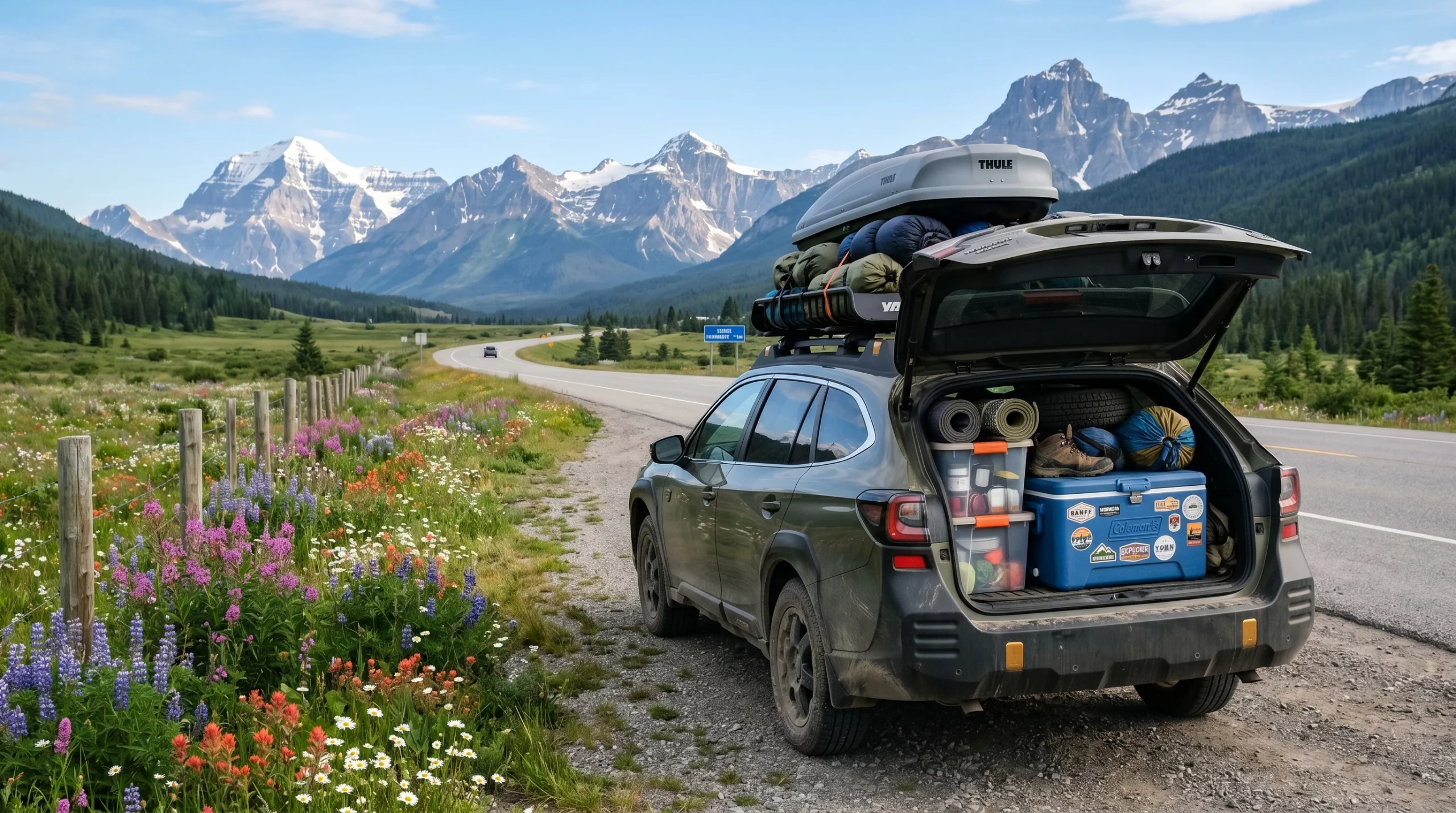
If you’re traveling with friends, splitting the cost of fuel really gives your wallet a boost. If you have access to a more fuel-efficient car, use it. A car that gets just 5 more MPG can mean the difference between filling up three times or four. Double check your cargo, too, hauling extra weight for no reason wastes fuel.
Sleep for Cheap: Where to Crash
Budget-friendly lodging options include dispersed camping on BLM or National Forest land via apps like iOverlander, which offer $0 stays. Travelers can also leverage “Sunday Check-ins” for 30–50% lower hotel rates or utilize the “Basecamp Method”, staying in one location for multiple days to eliminate daily transit fuel costs.
Accommodations can drain your budget fast, but a little planning opens up seriously cheap options.
Dispersed Camping (BLM & National Forest)
West of the Rockies, dispersed camping on public land is the ultimate frugal move. It’s totally free, and waking up under the stars is hard to beat. I use iOverlander to scout out sites, it has GPS coordinates and user reviews for thousands of spots. Remember, amenities are basic, so bring your own supplies and always respect the land.
The Sunday Check In
If I need a hotel, I always aim to check in on Sunday. Rates drop because weekend travelers and business folks have cleared out. I’ve scored midlevel hotel rooms for half their Friday rate just by switching my schedule a night.
Apps for Offbeat Stays
Vanlifers and solo travelers swear by Park4Night for finding everything from RV-friendly parking lots to hidden beach camps. Hostelworld is my move for last-minute cozy beds in any city. Perfect if your plans change and you’d rather spend a bit less than a hotel and meet fellow travelers.
The “Basecamp” Method
Instead of bouncing to a new place every night, I’ll pick one spot for three days and use my bike or feet to explore nearby. Not only does this cut gas costs, it also means less time packing and unpacking, and more time doing fun stuff. Pro tip: look for places with great community spaces if you want to meet people.
Bonus: Sleeping in Your Vehicle
If you have a roomy car or van, sleeping inside can be a safe, budget option, just check local rules. Blackout curtains or window tints give you privacy, and parking at a 24-hour gym or truck stop is usually OK for a night. Bring earplugs and a sleep mask for an even better rest.
Find Your Budget Basecamp
I’ve set up this map to show you the best-rated spots under $100/night along major routes. It’s the easiest way to see where your dollar goes further.
When you’re on a budget, a few miles can save you $50. I always use my interactive maps to spot the ‘price drops.’ By looking at the map, you can see if a hotel in the city center is overpriced and quickly find a ‘satellite’ guesthouse just 10 minutes down the road that’s half the cost. Plus, you can instantly see which spots are near free hiking trails or parks, so you save on gas too!
Frugal Road Trip Food Hacks: Eat Well, Spend Less
Minimize food expenses by substituting $80 restaurant meals with $20 grocery hauls consisting of wraps, fruit, and snacks. Use “freezer bottle hacks”, frozen gallon jugs, to maintain cooler temperatures without the recurring cost of ice, and prioritize hotels offering complimentary breakfasts to secure free mid-day snacks and beverages.
Eating out for every meal makes road trip finances ugly fast. Packing your own food is better for your wallet and keeps you out of fastfood purgatory.
The $20 Grocery Run vs. the $80 Dinner
A $20 stop at a local grocery store gets me enough meal fixings for two days. Toss in some wraps, hummus, trail mix, and fresh fruit for lunches at any overlook, or pull over at a scenic picnic spot and feel like royalty for pennies. Compare that to an $80 dinner for two at a touristy café, and the choice is pretty clear.
The Freezer Bottle Hack
I quit buying ice a while ago. Instead, I freeze gallon jugs of water before I leave. They keep my cooler cold for days, and as they melt, I always have crisp, cold (and clean) water to drink. It’s a rare win-win: more space for snacks, no soggy bread, and no ice runs.
Hotel Breakfast Strategy
If I need a hotel, I look for ones offering free breakfast. Hot tip: grab a couple extra apples or yogurts to stash for the afternoon. Midday hanger is real, and those snacks are already included.
Snack Box & Coffee Gear
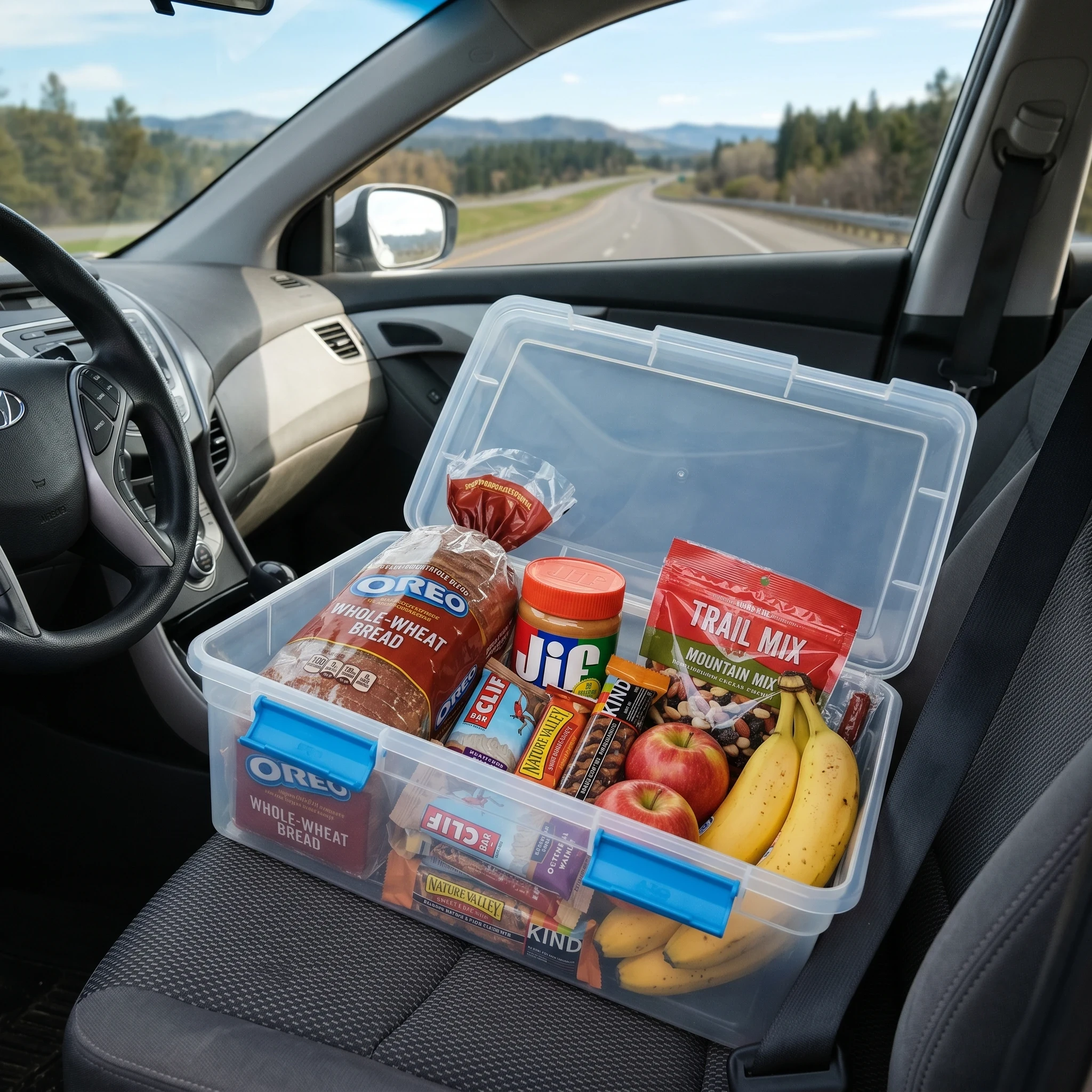
Make a simple snack box before your trip, nuts, bananas, granola bars, and a jar of peanut butter. A travel coffee press or single-cup pour-over setup means you skip expensive (and often mediocre) coffee stops, too. Hot water is free at most hotel lobbies and many gas stations.
Expert Logistics & Gear That Save Real Cash
Optimize travel budgets by purchasing the $80 “America the Beautiful” pass for access to 2,000+ federal recreation sites. Use eSIMs like Airalo for localized data rates to avoid international roaming fees, and perform pre-trip maintenance to prevent high-cost emergency repairs and towing fees during the journey.
The National Park “America the Beautiful” Pass
If your trip involves more than two or three national parks, the $80 annual “America the Beautiful” pass pays for itself almost immediately. Covering entrance fees to over 2,000 sites, it’s a game-changer for frugal adventurers. Details are on the National Park Service website.
Local Library/Tourism Centers
Libraries and tourist centers often have coupon books, free activity flyers, and museum passes. Even tiny towns tend to have a rack of maps with things to do for free or nearly free. I pop in for a bathroom break and walk out with new ideas every time.
Stay Connected Without the Fees
International trips? I’d rather not come home to a monster phone bill. eSIMs like Airalo give me affordable data plans with local rates (no swapping out tiny chips), and I always download Google Maps offline for coverage in no-signal zones. Saves money and stress.
PreTrip Maintenance
Oil changes and basic tuneups might not sound like a frugal move, but nothing will kill your budget faster than a breakdown in the middle of nowhere. Spending $50 on maintenance is the easiest way to protect your wallet from those four-digit surprise tow bills.
Bonus: Reusable Water Bottles & Basic Tool Kit
Bringing a good reusable water bottle saves a small fortune versus buying drinks at every stop. I also keep a basic tool kit and tire inflator in my trunk, it’s saved me dozens of times when little fixes would have otherwise derailed my budget plans.
Experience-Led Gear Hacks (The Pro-Secret List)
Maximize road trip savings by utilizing experience-led gear hacks: swap expensive butane for twig-burning stoves, use frozen gallon jugs instead of buying ice to keep coolers dry, and opt for rotisserie chickens as a low-cost, multi-meal protein source. These methods eliminate recurring daily costs and optimize vehicle storage.
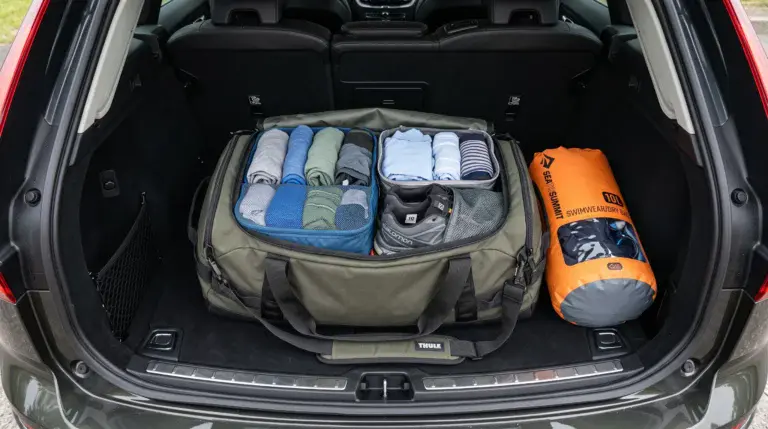
Most “frugal” guides tell you to bring a reusable water bottle. While that’s great, it’s not exactly a secret. If you want to travel for weeks on a shoestring budget, you need gear that does double duty or eliminates recurring costs entirely. Here is what is actually in my trunk:
1. The “Rotisserie Chicken” Strategy (The $7 Hot Meal)
Forget expensive freeze-dried backpacking meals ($15 each) or fast-food combos. My go-to move is stopping at a local supermarket for a rotisserie chicken.
- The Hack: It’s the cheapest hot protein on the road (usually $5–$7). I shred it for wraps at lunch, use the rest for “road-tacos” at dinner, and keep the bones in a zip-lock to make a quick base for soup if I’m camping. It’s two days of protein for less than a single meal at a diner.
2. The “Ghillie Kettle” or Twig Burner
Butane canisters for portable stoves have spiked to nearly $10–$12 in tourist towns this year.
- The Hack: I carry a small twig-burning stove. It uses dry grass, sticks, or pinecones found at the campsite to boil water in minutes. I’ve calculated that I save roughly $60 over a two-week trip just by not buying fuel for my morning coffee and evening oatmeal.
3. The “Freezer Jug” Cooling System
Stop buying bags of ice! They melt, make your bread soggy, and cost $4–$6 every two days.
- The Hack: I freeze two gallon jugs of water before I leave. They stay frozen longer than cubed ice because of their low surface area. As they melt, you have a supply of perfectly cold, clean drinking water. It saves about $30 a week and keeps your cooler bone-dry.
4. The “Microfiber Towel” Sink-Laundry Setup
Laundromats are time-wasters and cost $5–$10 per load.
- The Hack: I travel with just three changes of clothes and a high-quality microfiber towel. I wash my socks and shirts in a sink or a dry-bag every other night. The microfiber towel is the secret; it absorbs 10x its weight in water, allowing clothes to air-dry in the car overnight so I never have to pay for a dryer.
Budget-Friendly Activities: Booking Tours and Exploring Nature
Reduce activity costs by booking essential tours at least three weeks in advance to avoid last-minute price hikes, which can reach 15% in 2026. Prioritize free “zero-dollar” entertainment like hiking, public beaches, and stargazing. Use the America the Beautiful pass to eliminate individual entry fees at over 2,000 federal recreation sites.
Book Tours in Advance
The biggest mistake frugal travelers make is waiting until they arrive to book their “must-do” tours. Not only do the best experiences sell out, but “on-the-day” prices at the ticket window are almost always higher than the online rates.
- Beat the Price Hikes: Booking in advance locks in the current rate. In 2026, we’ve seen popular tours in places like Rome or the Grand Canyon increase their gate prices by up to 15% for last-minute walk-ins.
- Flexibility is Key: Most of the tours I recommend offer a 24-hour free cancellation policy. This is the ultimate frugal move: you lock in the low price now, but if your road trip plans change or the weather turns, you can cancel and get every penny back.
Expert Tip: If you’re heading to a high-demand spot (like the Alhambra or a popular boat tour in Amalfi), book at least 3 weeks out. The “last-minute” premium is real, and it’s a budget killer!
Night-Sky & Nature are Free
If you want to keep your daily spending low, look out the window. The “entertainment” budget for a road trip can easily spiral if you’re hitting theme parks and museums every day. Instead, lean into the reason you’re on the road: the great outdoors.

- The “Zero-Dollar” Day: A day spent hiking to a waterfall, exploring a public beach, or driving a scenic mountain pass costs exactly $0. These are almost always the moments you’ll remember most anyway.
- Starlit Nights (Astrotourism): One of the biggest 2026 travel trends is “Noctourism.” National Parks and remote camping spots offer world-class stargazing for free. Download a free app like SkyView Lite, grab a blanket, and enjoy a “show” that beats any $100 theater ticket.
- Picnic with a View: Instead of paying for a restaurant with a “view,” go to a local market, grab some fresh bread and cheese, and drive to a scenic overlook. You get the best seat in the house for the price of a grocery run.
Join Road Voyagist
Subscribe to Road Voyagist and get updates on the latest posts, trip tips and more from Bella of Road Voyagist straight to your inbox.
Frequently Asked Questions: Frugal Road Trips
The most cost-effective road trip strategies include grocery shopping at local markets to avoid restaurant markups and using apps like iOverlander for free dispersed camping. Travelers should also utilize hotel loyalty programs for free nights and check in on Sundays when mid-level hotel rates typically drop by 30% to 50%.
What’s the cheapest way to eat on the road?
Packing a cooler with grocery staples and using local markets is the best way to eat cheap and healthy. Mix in the occasional local spot for the full experience.
How do I find free or cheap camping?
The best way to find free camping is by using the iOverlander app to locate BLM and National Forest land, Park4Night to locate dispersed camping on public lands. National Forest websites are also super helpful.
Are hotel rewards programs worth it for road trips?
Usually, yes. I always join free hotel rewards programs, they often stack with discounts and earn free nights faster than people expect when staying multiple places in a trip.
Is it safe to sleep in your car at rest stops?
This depends on state laws and the specific rest area. Some welcome overnight stays, while others prohibit them, so I always check local rules. When in doubt, find a well-reviewed site through a trusted app.
More Money for Memories
Frugal road trips prioritize high-value experiences over high-cost logistics. By automating savings on fuel, tolls, and lodging through strategic app usage and pre-trip planning, travelers can reallocate budgets toward unique local discoveries and lasting memories. Success relies on balancing essential maintenance with the flexibility to pursue low-cost, offbeat adventures.
The real highlight from every road trip I’ve taken? It’s always the sunset on a quiet backroad, an unexpected local festival, or a midnight chat at a campground far from city lights. The pricey stuff usually fades, but the nearly free memories stick with me.
I really geek out about squeezing more miles (and adventures) out of every dollar. Frugal road trips aren’t about deprivation, they’re about getting to do more of the stuff that makes you smile. Got your own money-saving tip or a hack I didn’t cover? Drop your best frugal find in the comments. I’d love to try it on my next adventure.
Here’s to eye-catching views, full coolers, and wallets that survive the ride!
Happy travels!
Bella Hartwell
I’m Bella Hartwell, a travel enthusiast who has organized multiple road trips.
I share hands-on tips, tested gear lists, and personal stories to help others travel smarter.
The best kind of freedom starts on the open road.