25 Essential Tips & Tricks For The First-Time Camper (Stress-Free Guide)
Camping for the first time doesn’t have to be complicated. With the right preparation, a beginner-friendly campsite, essential gear, and a few practical habits, you can avoid the most common mistakes and enjoy a safe, comfortable, and memorable outdoor experience. This guide covers everything first-time campers need to know, from choosing a campsite and packing efficiently to cooking simple meals, staying safe around wildlife, and building confidence for future adventures
Taking your first camping trip is equal parts exciting and nerve-wracking. There’s something about packing all your stuff and heading into the forest or a lakeside campground that feels adventurous but a bit daunting. You don’t need a closet full of fancy camping gear or a background in survival skills to have a great time. With just a little prep and a few clever tips for first time campers, you’ll skip a lot of the rookie mistakes and have a blast outdoors.
Why Your First Camping Trip Feels Intimidating, but It Shouldn’t
I remember my first camping trip, and my nerves mostly came from not knowing what to expect. If you’ve never set up a tent or cooked a meal outside, it’s easy to worry that you’ll forget something super important or mess up and be uncomfortable for a whole weekend. But the truth is, you don’t need to shell out on expensive equipment or know every bit of camping lingo. With just a few low-stress preparations, you can avoid the most common camping mistakes and focus on what’s actually fun about camping: nature, food, relaxing, and new experiences.
TL;DR: What Are the Key Tips for First-Time Campers?
First-time campers get the most out of their adventure by planning ahead, packing light and smart, and practicing with gear at home. Arriving before dark makes camp setup less stressful, and sticking with easy meals will cut down on hassle. Knowing some basic camping etiquette, safety, and weather tips helps you avoid beginner mistakes so your first camping trip is less stressful and a lot more fun.
Choose the Right Type of Camping
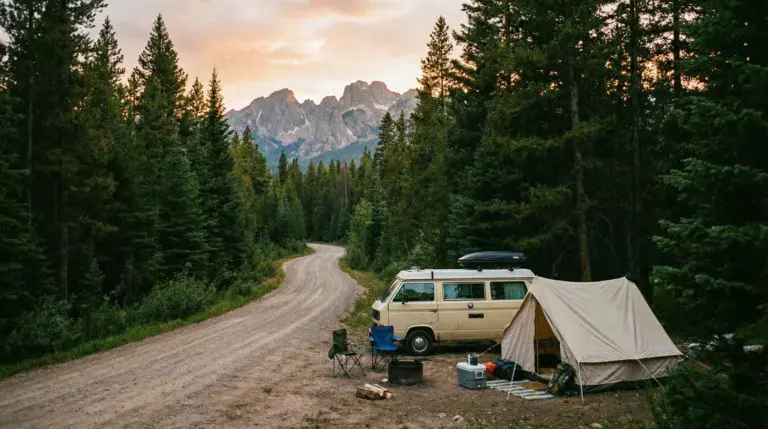
First-time campers should choose a camping style that matches their comfort level, experience, and budget. Car camping and established campgrounds are usually the easiest options because they provide convenient access to facilities while still offering an authentic outdoor experience.
There’s more than one way to camp. Understanding your options helps you pick a style that actually matches your comfort level and goals. If you’re new, you aren’t “cheating” by choosing something cushier or easier!
| Camping Style | Best For | Comfort Level | Typical Cost | Facilities | Beginner Friendly |
|---|---|---|---|---|---|
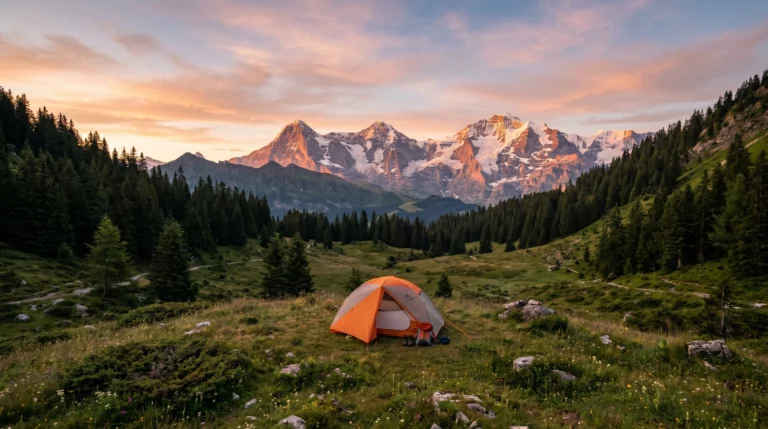
| Tent Camping | Travelers who want the classic outdoor experience | ⭐⭐☆☆☆ | 💲 | Varies by campground | ⭐⭐⭐⭐☆ |
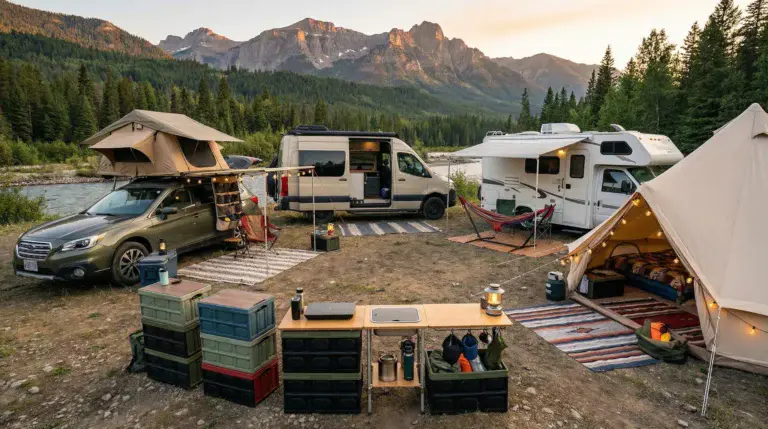
| Car Camping | First-time campers, weekend getaways, families | ⭐⭐⭐⭐☆ | 💲 | Easy access to your vehicle and campground amenities | ⭐⭐⭐⭐⭐ |
| Campervan Camping | Road trips and travelers wanting extra comfort | ⭐⭐⭐⭐⭐ | 💲💲💲 | Kitchen, bed, storage, often campground hookups | ⭐⭐⭐⭐☆ |
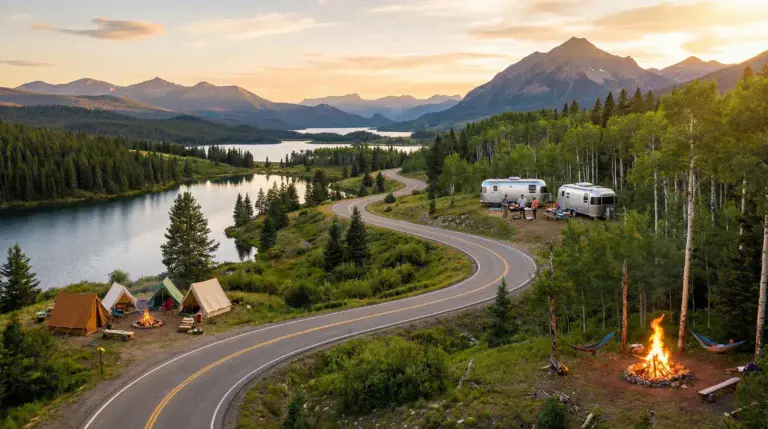
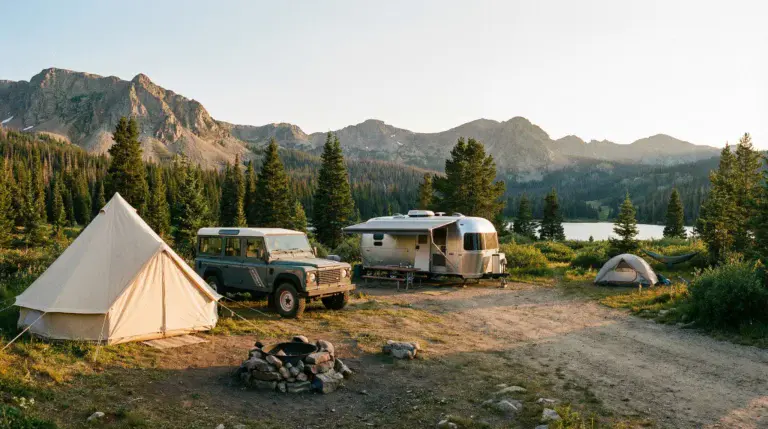
| RV Camping | Families, long trips, maximum comfort | ⭐⭐⭐⭐⭐ | 💲💲💲💲 | Full amenities, electricity, bathroom, kitchen | ⭐⭐⭐☆☆ |
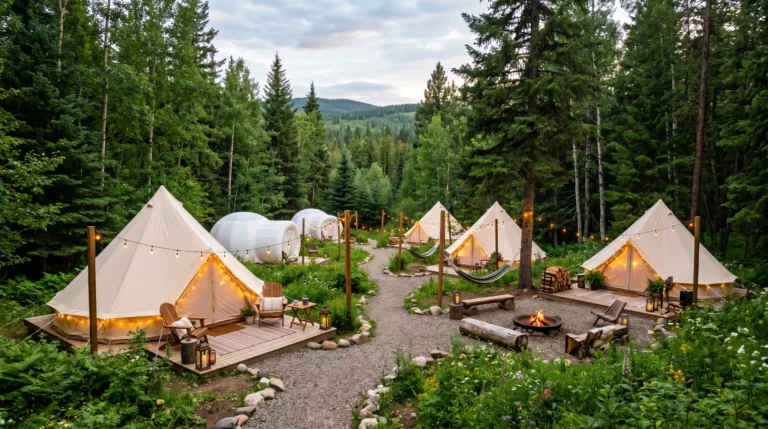
| Glamping | Travelers wanting nature without sacrificing comfort | ⭐⭐⭐⭐⭐ | 💲💲💲💲 | Fully equipped accommodation with hotel-like comforts | ⭐⭐⭐⭐⭐ |
If you’re nervous about sleeping outdoors, car camping and glamping are super beginnerfriendly. Tent camping connects you most to nature, but RV or campervan camping can make things a lot more comfortable, especially in unpredictable weather.
RoadVoyagist Tip: If you’re unsure whether you’ll enjoy camping, start with a campground close to home and stay for just one night. You’ll gain experience without feeling committed to a long weekend if something doesn’t go as planned.
How Much Does a First Camping Trip Cost?
A first camping trip can be surprisingly affordable when you borrow or rent equipment instead of buying everything new. Your overall cost depends on the type of camping, campsite fees, food, transportation, and whether you already own basic outdoor gear.
Your first camping trip doesn’t have to be expensive. Many beginners can borrow or rent equipment instead of buying it all, making it possible to enjoy a weekend camping trip without spending hundreds of dollars on gear.
| Item | Borrow | Rent | Buy |
|---|---|---|---|
| Tent | ✅ | $20–40 | $100–250 |
| Sleeping Bag | ✅ | $10–20 | $60–150 |
| Camping Stove | ✅ | $10–15 | $40–100 |
| Cooler | ✅ | — | $30–80 |
| Camping Chairs | ✅ | — | $20–60 |
Pick the Right Campsite
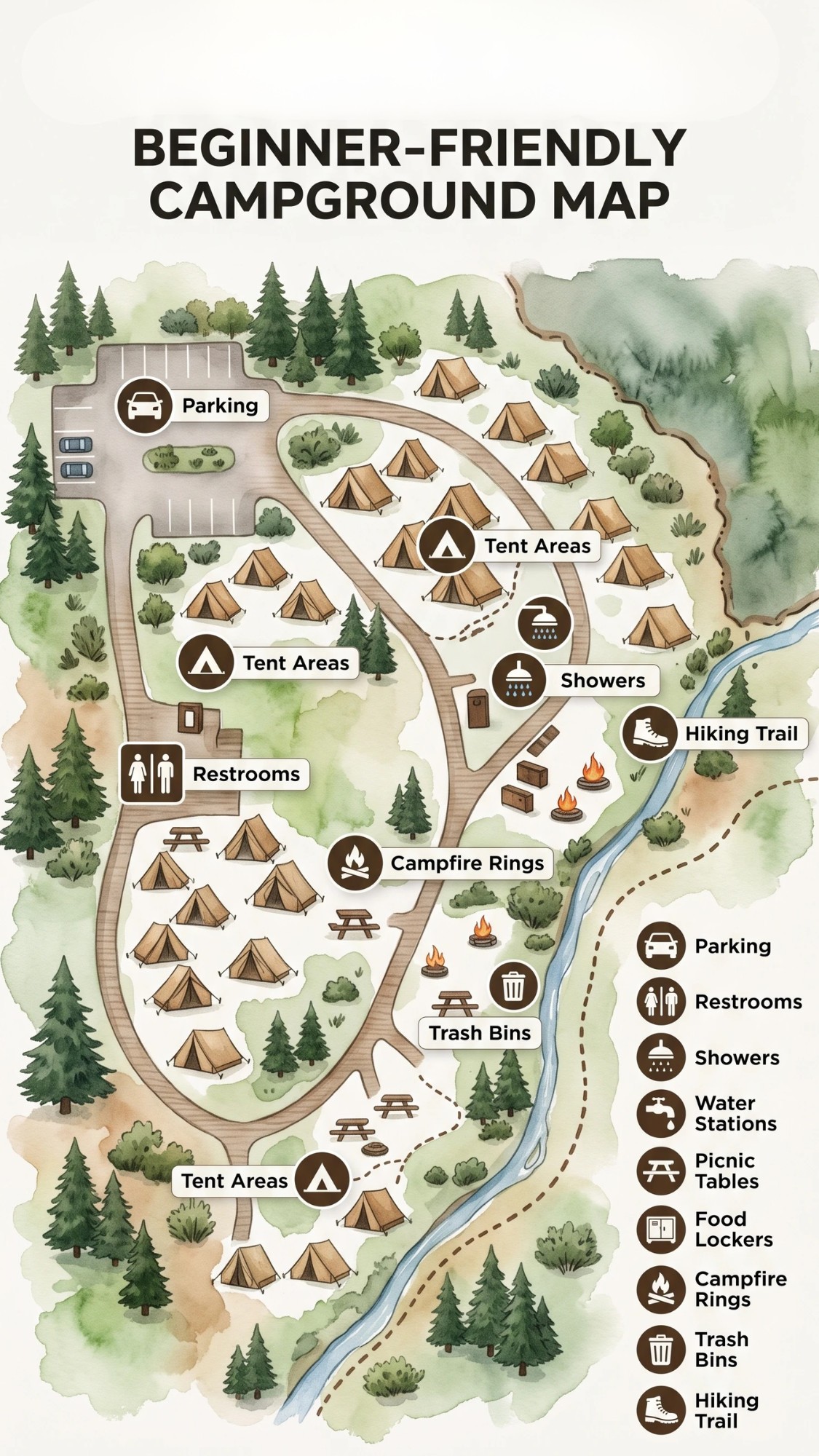
Choosing the right campground can make your first camping trip much easier. Look for established campsites with restrooms, drinking water, and good reviews, and always check campground rules and available facilities before booking.
The best camping tips for beginners nearly always mention location. Campgrounds offer amenities (like bathrooms and water) and are perfect for your first camping trip. Wild camping or backcountry camping is usually better after you have a little experience.
- Popular campgrounds book up fast, so reserve early in peak seasons (spring and summer weekends go quick!)
- Read reviews before you book. Some sites are louder, floodprone, or have tricky terrain
- Check if the campground has everything you want (showers, playgrounds, electricity, pet areas, etc.)
- Understand the rules. Some require “leave no trace,” quiet hours, or limit things like fires and pets
Join Road Voyagist
Subscribe to Road Voyagist and get updates on the latest posts, trip tips and more from Bella of Road Voyagist straight to your inbox.
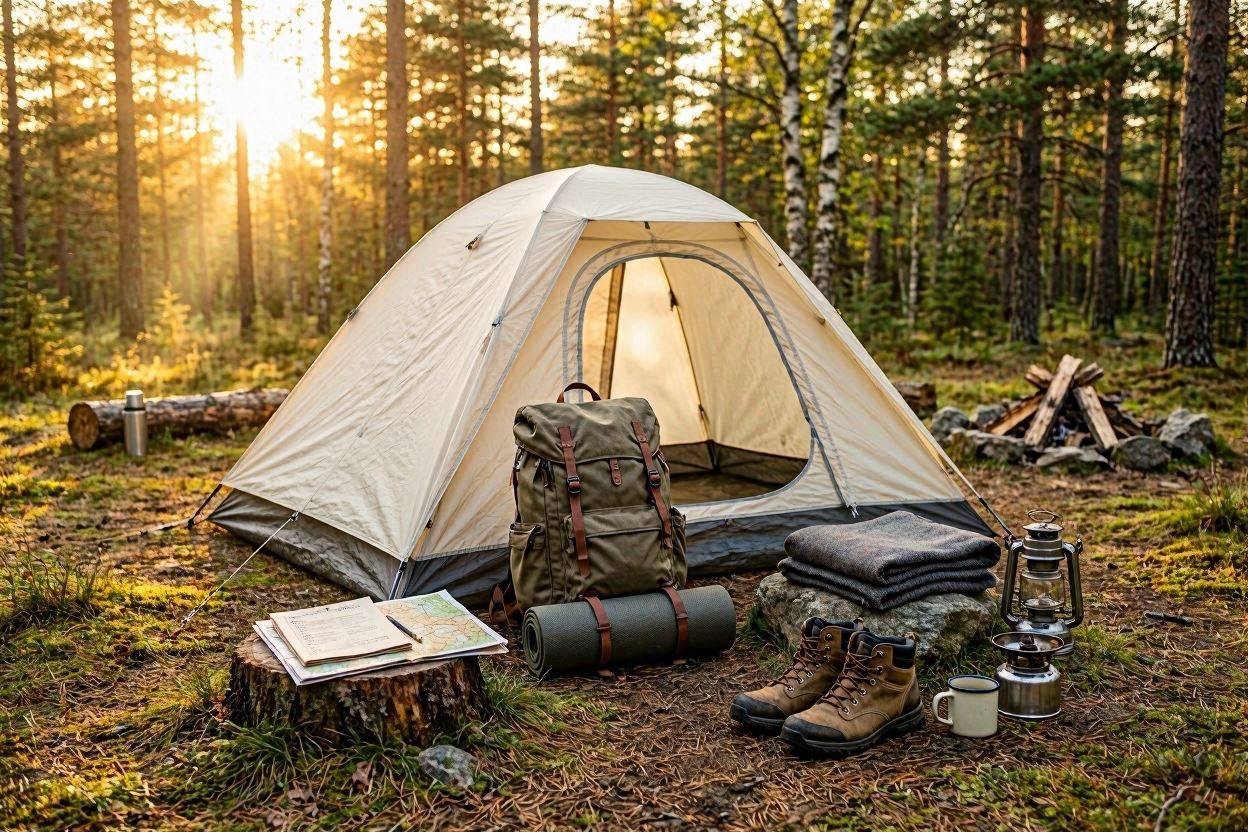
Practice Before You Leave Home
Practicing with your camping equipment before leaving home helps you avoid frustration at the campsite. Setting up your tent, testing your stove, and organizing your gear in advance builds confidence and makes your first camping trip much less stressful.
Messing with a tent or cooking gear for the first time in the dark isn’t fun. Practice really pays off for first timers.
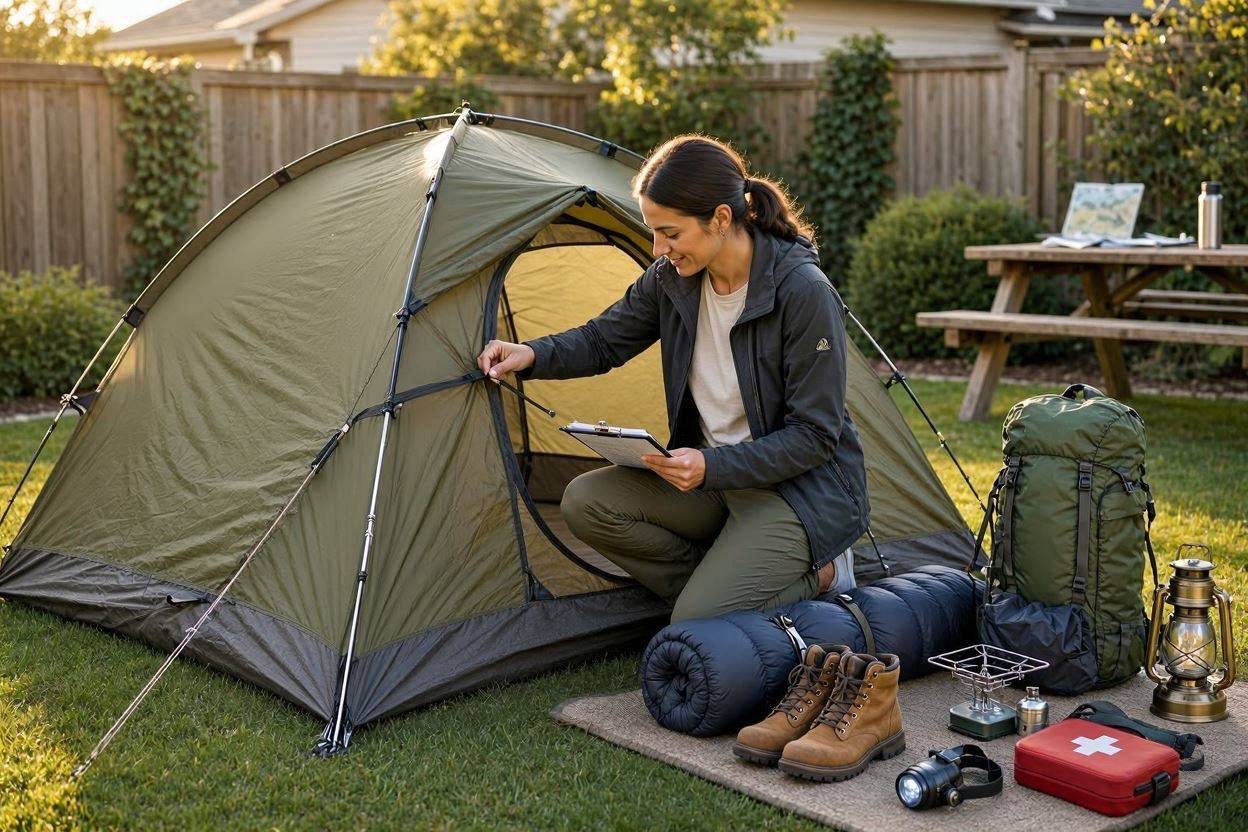
The first time I assembled a tent, I assumed it would be straightforward. Instead, I spent almost 30 minutes trying to figure out which poles connected where, all while daylight was fading. Ever since then, I always do a quick practice setup at home, it turns a stressful arrival into a much smoother start to the trip.
- Set up your tent in the backyard and learn how every pole, zipper, and stake works
- Try your stove safely at home so you know how it lights and cooks
- Use your lantern and flashlight; figure out how bright they are and how to hang or stand them
- Inflate and deflate your sleeping pads or air mattress (squeaky and slow? Better to know now than at bedtime)
- Put your kitchen bits together in a big storage box for grab-and-go
RoadVoyagist Tip: The first time you pitch a tent, don’t time yourself, learn the process. By your second or third setup, you’ll be surprised how much faster it becomes. A 10-minute practice session at home can save an hour of frustration at the campsite.
Your First Camping Trip Timeline
Following a simple preparation timeline helps first-time campers stay organized and avoid last-minute mistakes. Breaking tasks into manageable steps during the week before departure ensures nothing important is forgotten.
A simple timeline helps first-time campers stay organized and reduces last-minute stress. Breaking preparations into manageable steps, starting a week before departure, makes it less likely you’ll forget important gear or overlook essential tasks.
| When | What to Do |
|---|---|
| 1 Week Before | Book your campsite, check campground facilities, make a packing list. |
| 3–5 Days Before | Check the weather forecast, gather camping gear, borrow or rent missing equipment. |
| 2 Days Before | Practice pitching your tent, test your camping stove, charge power banks and headlamps. |
| The Day Before | Pack the car, prepare meals, fill reusable water bottles, download offline maps. |
| Departure Day | Double-check the checklist, leave early, and aim to arrive before sunset. |
Pack Smart, Not Heavy
Packing only essential camping gear makes your trip more comfortable and organized. Focus on versatile clothing, weather protection, and practical equipment instead of overpacking items that are unlikely to be used.
Overpacking is one of the most common beginner camping mistakes. You don’t need two duffels of extra clothes or five pans you’ll never use. Instead, focus on simple and practical packing techniques to stay organized and make everything easier to find at the campsite.
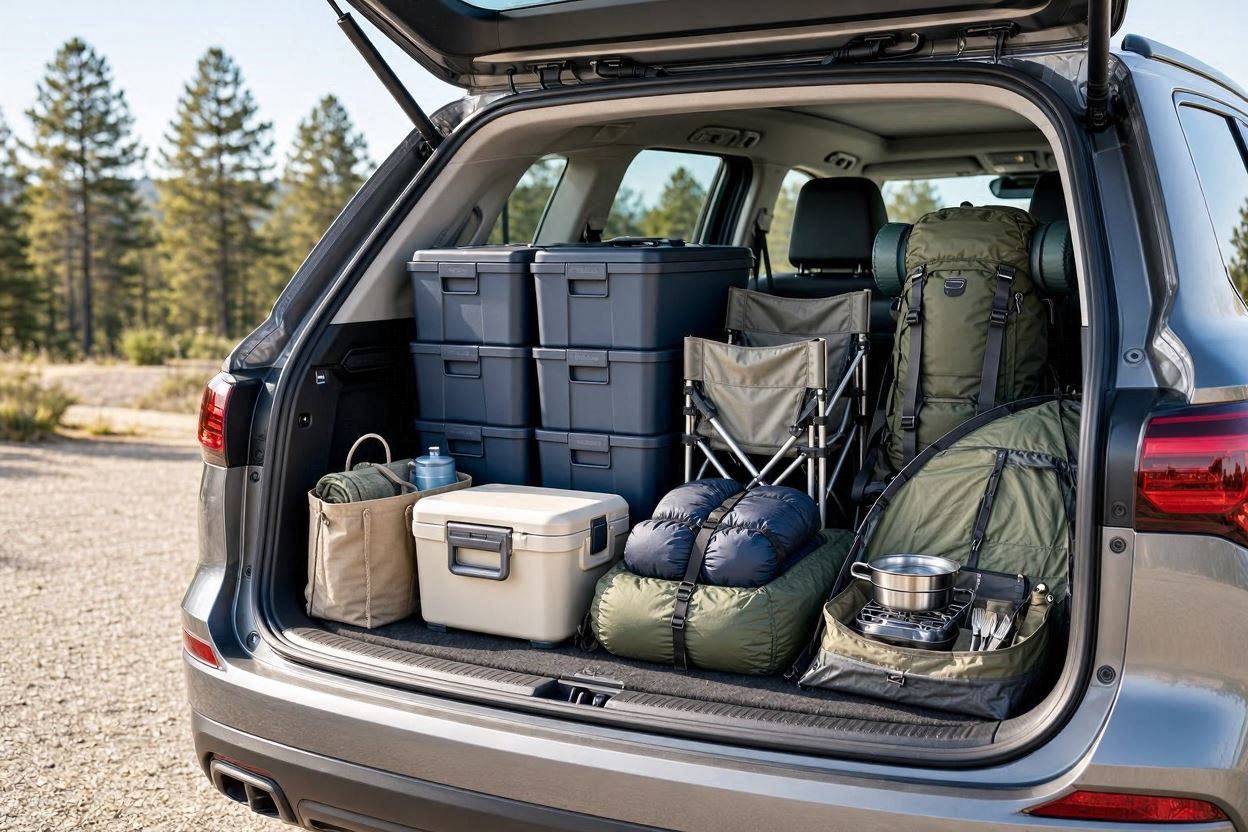
On my first camping trip, I packed for every possible situation, extra clothes, multiple pairs of shoes, and kitchen gadgets I never touched. By the time we packed up, I realized nearly half my gear had stayed in the car. These days, I pack lighter and focus on items I know I’ll actually use.
RoadVoyagist Tip: Lay out everything you plan to pack on the floor before loading the car. Seeing it all at once makes it much easier to spot duplicates and leave unnecessary items behind.
I still keep a checklist because it’s surprisingly easy to forget small items like a lighter or extra batteries.
- Only pack the gear and clothing you really need, checklists help
- Use plastic bins to keep kitchen and toiletries organized and easy to grab
- Organize outfits by day in bags, so you don’t dig around in the dark
- Always bring layers. Days get hot, nights can get chilly
- Pack a waterproof jacket (even if the forecast looks sunny)
- Comfortable shoes are really important; bring extras if it’s wet
- Headlamps are way more useful than flashlights when you need hands
Mini Packing Checklist: Tent, sleeping bag, sleeping pad, pillow, stove, fuel, lighter, one pot, sturdy plate/mug/utensils, water, first aid kit, weather-appropriate clothing, jacket, shoes, headlamp, bug spray, sunscreen.
What NOT to Bring on Your First Camping Trip
First-time campers often overpack by bringing unnecessary clothing, bulky kitchen equipment, and gadgets they never use. Leaving non-essential items at home saves space, reduces stress, and makes setting up camp much easier.
First-time campers often pack far more than they need. Leaving unnecessary or bulky items at home saves space, makes packing easier, and helps you stay organized throughout your trip. Focus on versatile essentials rather than preparing for every possible scenario.
One of the biggest mistakes first-time campers make isn’t forgetting something, it’s bringing too much. It’s tempting to prepare for every possibility, but extra gear quickly fills your car, makes setup more complicated, and often goes completely unused. Keep your first camping trip simple and you’ll spend less time searching through bags and more time enjoying the outdoors.
Things You Can Leave at Home
Too Many Clothes
You don’t need a fresh outfit for every activity. A few comfortable layers, extra socks, and weather-appropriate clothing are usually enough for a weekend camping trip.
Large Kitchen Appliances
Leave blenders, coffee machines, air fryers, and bulky cookware at home. Simple meals require only basic cooking equipment, and you’ll appreciate having less to clean up.
Expensive Valuables
Avoid bringing jewelry, luxury watches, or anything you’d worry about losing or damaging. Camping is much more enjoyable when you’re not constantly thinking about protecting expensive items.
Brand-New Shoes or Hiking Boots
Your first camping trip isn’t the time to break in new footwear. Wear shoes you’ve already used to reduce the chance of blisters and sore feet.
Every Camping Gadget You See Online
You don’t need every clever camping accessory to have a great trip. Focus on reliable essentials first. After a few camping adventures, you’ll have a much better idea of which gadgets would actually improve your experience.
Too Many “Just in Case” Items
It’s smart to be prepared, but packing three flashlights, four blankets, or multiple cooking pots usually adds unnecessary weight and clutter. If you’re camping at an established campground, most forgotten items can often be borrowed, purchased nearby, or simply done without for a weekend.
Glass Containers
Whenever possible, use reusable plastic or stainless-steel containers instead of glass bottles or jars. They’re lighter, more durable, and much less likely to break around the campsite.
RoadVoyagist Tip: If you’re unsure whether to pack an item, ask yourself one simple question: “Will I realistically use this during the next two days?” If the answer is “probably not,” leave it at home. After your first trip, you’ll have a much clearer idea of what deserves a place on future camping adventures.
| Leave at Home | Bring Instead |
|---|---|
| Five changes of clothes | Comfortable layers and extra socks |
| Full cookware set | One pot, one pan, and basic utensils |
| Glass bottles | Reusable water bottles |
| Luxury gadgets | Headlamp and power bank |
| New hiking boots | Comfortable, broken-in shoes |
| Heavy coolers full of food | Simple meals and snacks |
Keep Meals Simple
Simple meals are the best choice for first-time campers because they require less equipment, create less cleanup, and allow more time to enjoy the outdoors. Preparing ingredients before leaving home makes cooking at the campsite even easier.
Trying to cook an eye-catching meal outdoors is a fast track to frustration as a newbie. Stick with easy meals and snacks you actually like, and don’t hesitate to bring things you would eat at home if you’re not an adventurous eater yet. Also, prepping some food ahead of time saves energy and stress later.
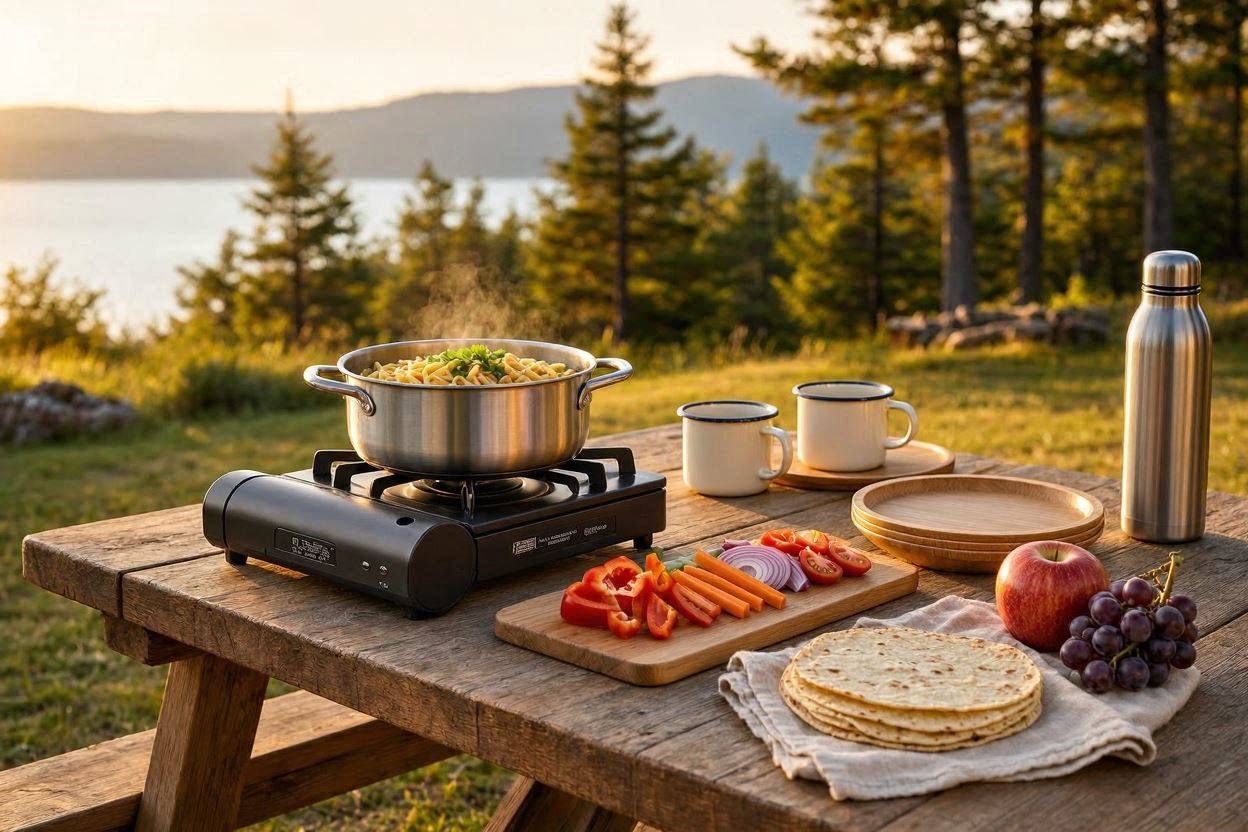
I once planned an ambitious camp dinner that looked great on paper but took far longer to prepare than expected. By the time everything was cooked, it was getting dark, and cleaning up felt like a chore. Since then, I stick to one-pot meals or simple recipes that leave more time to enjoy the evening.
- Onepot pastas, simple soups, or taco kits are reliable and tasty
- Sandwich stuff, wraps, and fruit make great nocook lunches
- Chop vegetables, cheese, or meats at home and pack in zip bags
- Instant oatmeal or granola makes good quick breakfasts
- Pack a camp coffee kit or a simple pourover if you need your caffeine fix
- Bring more drinking water than you think you’ll use; campgrounds sometimes have outages
Pro tip: Prep any food you can at home, from marinating proteins to premixing pancake batter. Less work at camp means more time for fun and exploring.
RoadVoyagist Tip: For your first camping trip, plan meals that use the same cooking equipment. One pot, one pan, and one burner are usually enough for a weekend, making cleanup much easier.
Arrive Before Sunset
Arriving at your campsite before sunset gives you enough daylight to set up your tent safely, organize your gear, and become familiar with your surroundings before darkness makes everything more difficult.
It’s really important to show up with plenty of daylight left on your first time out. This makes everything, from picking a nice campsite to setting up the tent and cooking dinner, way less stressful.
One of the most stressful arrivals I’ve had was reaching the campground just before dark. Finding the campsite, pitching the tent, and locating basic gear with only a headlamp wasn’t the relaxing start I’d imagined. Since then, I always aim to arrive with at least a couple of hours of daylight to spare.
But the most learning experience was when I arrived to the campsite just at mid night. I was knocking on the reception door, ringing the bell, without reply. Obvious, the reception was empty. I slept in the car until next morning when they open the reception. It took one hour to setup the tent and slept until noon. I lost halfway sleeping because I arrived late at the campground. Since then, it never happened again.
- Easier setup so you can see what you’re doing
- Better spot choices if your campground lets you pick
- Safer movein. No tripping over roots, rocks, or tent stakes in the dark
- More time to get your bearings and settle in before it’s cold or dark
RoadVoyagist Tip: Aim to reach your campsite at least two hours before sunset. That gives you plenty of daylight to pitch your tent, organize your gear, and relax before darkness falls.
What to Expect on Your First Camping Trip
Your first camping trip may feel unfamiliar, but that’s completely normal. Expect your campsite setup to take longer than planned, outdoor sounds to seem louder at night, and small mistakes to become valuable learning experiences for future trips.
Your first camping trip probably won’t go exactly as planned, and that’s completely normal. Setting up camp may take longer than expected, you’ll hear unfamiliar sounds at night, and you might forget a small item or two. With a relaxed attitude and realistic expectations, those little challenges quickly become part of the adventure.
The first few hours at your campsite are usually the busiest. You’ll be unloading the car, pitching your tent, organizing your gear, and figuring out where everything belongs. It may feel a little chaotic at first, especially if you’re camping for the very first time, but don’t worry, things settle down surprisingly quickly once camp is set up.
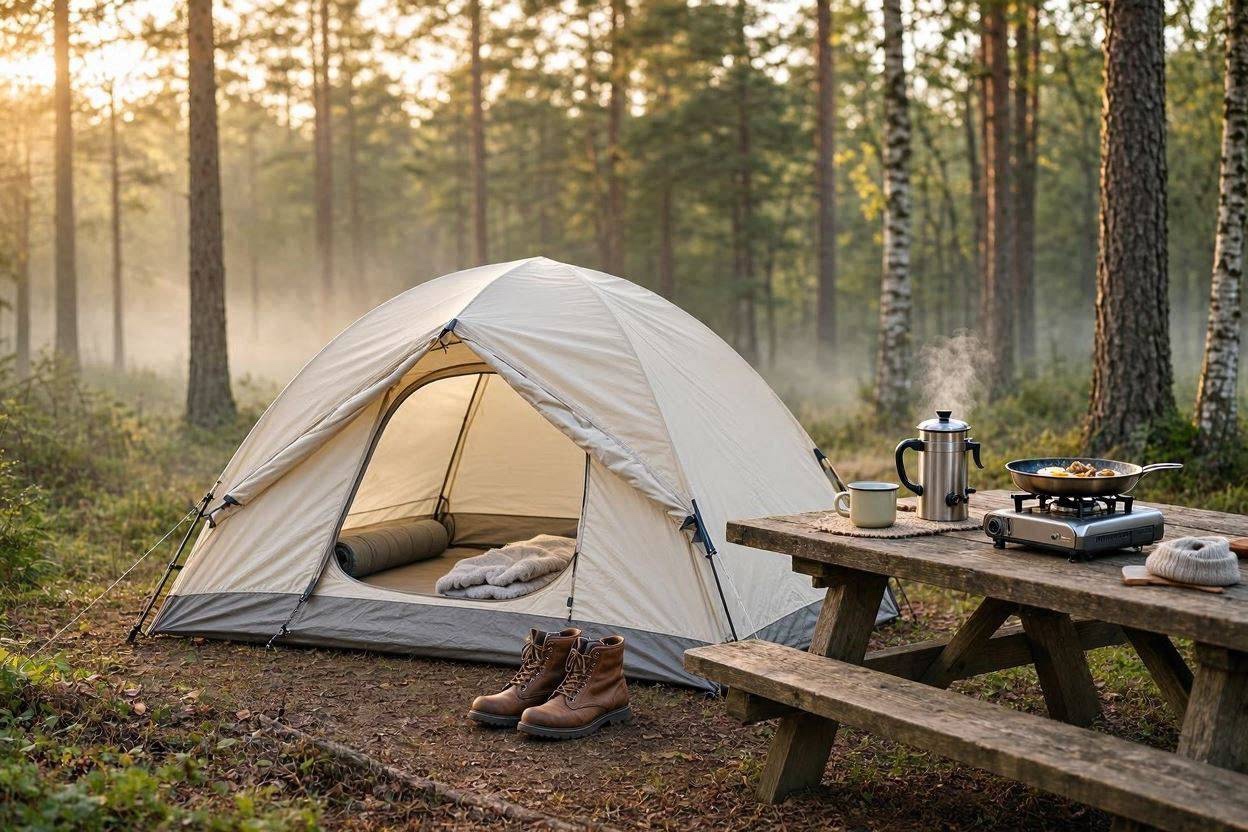
Don’t be surprised if your first tent setup takes longer than you expected. Even experienced campers occasionally have to reposition a tent or rethink where they want to place their chairs or cooking area. There’s no prize for finishing first, so take your time and enjoy the process.
As evening arrives, you’ll probably notice sounds you’ve never paid attention to before. Birds settling into the trees, insects chirping, rustling leaves, or distant animal calls can seem surprisingly loud when you’re sleeping outdoors. Most of these sounds are completely normal, and after a while they simply become part of the camping experience.
Your first night’s sleep may also be different from what you’re used to at home. You might wake up earlier with the sunrise, hear rain tapping on the tent, or notice the cooler nighttime temperatures. That’s perfectly normal, and many first-time campers find they sleep much better on their second trip because everything already feels familiar.
One thing that surprises many beginners is how relaxing camping becomes once all the setup is finished. Sitting around the campfire, cooking a simple meal outdoors, or enjoying your morning coffee surrounded by nature often becomes the highlight of the entire trip.
RoadVoyagist Tip: Don’t judge camping by the first hour after you arrive. The beginning is usually the busiest part of the trip, but once your campsite is set up, the pace slows down and you can finally relax and enjoy why you came.
Learn Basic Campground Etiquette
Following campground etiquette helps everyone enjoy a safe and relaxing outdoor experience. Respecting quiet hours, cleaning shared facilities, disposing of rubbish properly, and respecting other campers are essential parts of responsible camping.
A little campground etiquette goes a long way toward a peaceful, fun trip for everyone at the site. Getting along with other campers makes it easier to get help or advice if you need it too.
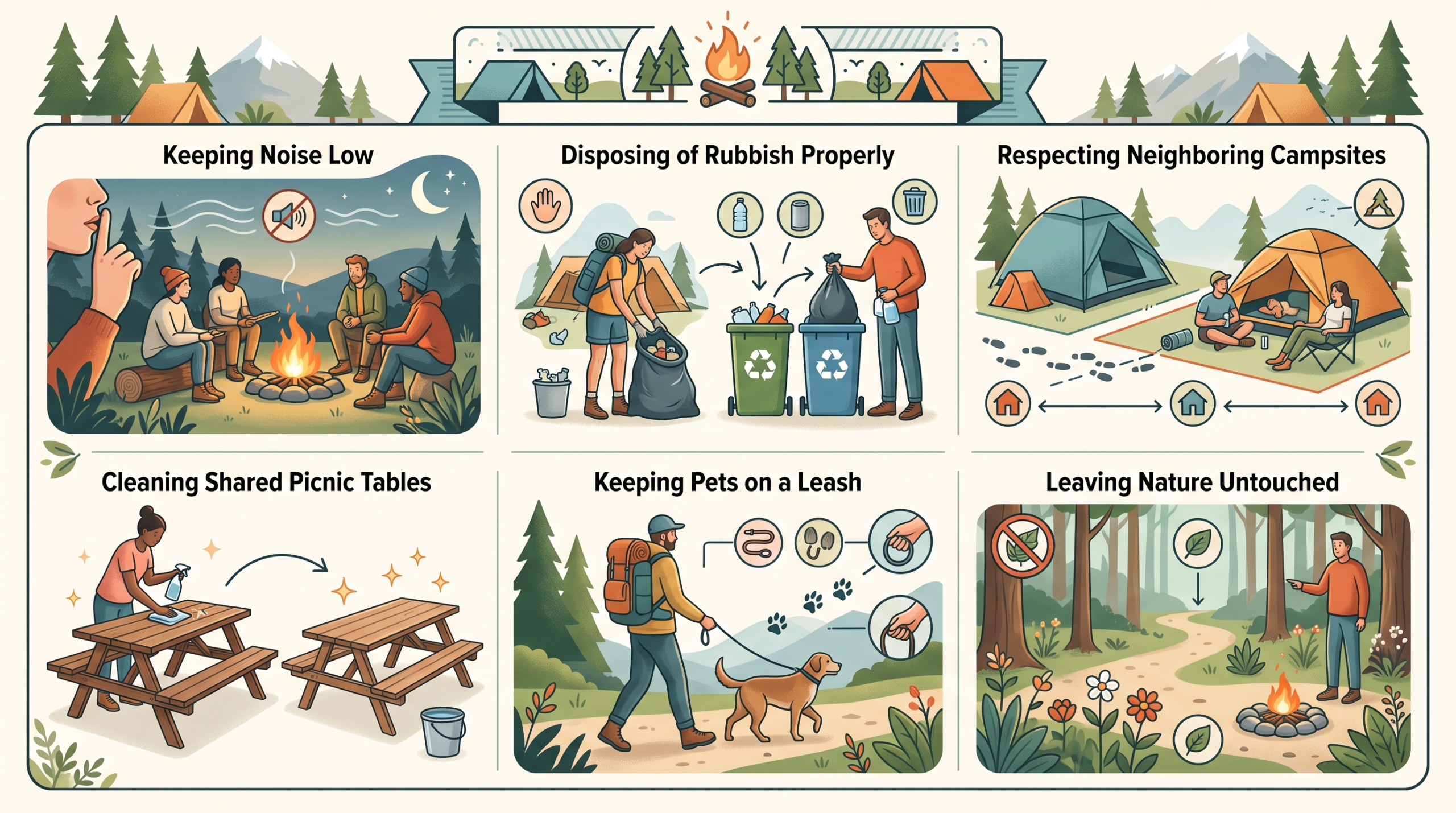
- Respect posted quiet hours. People come to campgrounds for rest too
- Always leash pets and clean up after them
- Don’t cut through someone else’s campsite. A shortcut for you is an intrusion for them
- Wipe down shared tables, sinks, grills, or bathrooms after using
- Pack out all your trash, and separate compost/recycling if available
- Leave plants, flowers, and rocks where you find them
One of the easiest ways to become a responsible camper is by following the Leave No Trace Seven Principles, which help protect natural areas for future visitors.
How to Leave Your Campsite Better Than You Found It
Leaving your campsite clean protects natural environments and improves the experience for future visitors. Packing out all rubbish, extinguishing campfires completely, and checking for forgotten items are simple habits every camper should follow.
Leaving your campsite cleaner than you found it helps protect nature and ensures future visitors can enjoy the same beautiful surroundings. Small actions make a big difference.
Before driving away, take one last slow walk around your campsite.
Look for forgotten gear, food scraps, bottle caps, twist ties, or small pieces of litter that are easy to miss. Even biodegradable items like fruit peels take time to decompose and shouldn’t be left behind.
A simple departure checklist:
- Pack all rubbish and recycling.
- Check under picnic tables and benches.
- Remove all food scraps.
- Make sure the campfire is completely extinguished.
- Leave rocks, flowers, and branches where you found them.
- Take one final look before pulling away.
Camping is about enjoying nature, and helping preserve it for the next visitors is part of the experience.
Be Prepared for Weather Changes
Weather conditions can change quickly while camping, especially near forests, lakes, or mountains. Packing layered clothing, waterproof gear, and checking the forecast before departure helps you stay comfortable throughout your trip.
Weather can switch up unexpectedly, especially in mountain or lakeside camping spots. Knowing how to handle a quick weather change helps you stay comfortable no matter what, and can even make your trip more memorable.
A sunny forecast doesn’t always tell the whole story. On one trip, the afternoon was warm enough for shorts, but after sunset the temperature dropped much faster than I expected. That experience taught me to pack an extra fleece or insulated jacket, even when the forecast looks perfect.
- Check the forecast a few hours before you leave, as well as the days before
- Pack an extra warm layer or two, no matter the forecast
- Bring rain gear (poncho, rain jacket, dry bag)
- Sun protection. Sunscreen, sunglasses, wide hat
- Throw in an extra blanket or two for chilly nights
- Waterproof containers, dry bags, or even big trash bags keep your essentials dry
Check the local weather forecast again on the morning of departure, as conditions can change quickly.
RoadVoyagist Tip: Pack one complete set of dry clothes in a waterproof bag. Even if everything else gets wet, changing into dry clothes before bed can make a huge difference to your comfort.
Camping in the Rain: Tips for First-Time Campers
Rain doesn’t have to ruin your camping trip if you’re prepared. Waterproof clothing, dry storage for essential gear, and keeping your sleeping area dry allow you to stay comfortable even during wet weather.
Rain doesn’t have to ruin your first camping trip. With waterproof gear, a few simple setup techniques, and the right clothing, you can stay warm, dry, and comfortable even if the forecast changes unexpectedly.
A little rain is part of the camping experience, and it doesn’t mean your trip is ruined. In fact, some of the coziest camping memories come from listening to raindrops on the tent while enjoying a hot drink inside. The key is staying dry and keeping your gear protected.
Here are a few simple ways to prepare for wet weather:
- Pack waterproof bags or dry sacks for clothing, electronics, and sleeping gear.
- Set up your tent on higher ground to avoid water pooling underneath during heavy rain.
- Keep a small tarp or canopy over your cooking area so you can prepare meals without getting soaked.
- Bring extra socks, changing into dry socks after a rainy walk makes a huge difference.
- Store wet clothing outside the sleeping area whenever possible to keep condensation and moisture out of the tent.
- Leave muddy boots outside the tent entrance or place them on a small mat to keep the interior clean.
RoadVoyagist Tip: Even if rain isn’t in the forecast, pack one waterproof jacket and one dry change of clothes. Weather can change quickly, especially near forests, lakes, or higher elevations.
Stay Safe Around Wildlife
Camping safely around wildlife means storing food securely, avoiding scented items inside your tent, and following local wildlife guidelines. These simple precautions help protect both campers and animals.
You probably won’t meet a bear on your first trip, but raccoons or chipmunks will sniff out food if you’re careless. Learning how to store food and scented items correctly is super important to prevent animals from becoming camp regulars.
- Store food in your car or a wildlifeproof locker
- Never feed any animals, even the cute ones
- Use bearproof lockers if provided
- Keep your tent completely food free. No snacks, gum, chapstick, or toothpaste
- Shake out your shoes and bedding in the morning for little critters
Wildlife recommendations vary by region. Follow the guidance provided by your campground or park authority, especially in areas where bears or other large animals are present.
RoadVoyagist Tip: Treat anything with a scent as food. Toothpaste, deodorant, sunscreen, and even flavored drinks can attract curious animals if they’re left inside your tent.
Camping With Kids for the First Time
Camping with children is easier when you keep trips short, choose family-friendly campgrounds, and focus on simple outdoor activities rather than busy schedules. A relaxed approach creates positive first camping experiences.
Camping with children is one of the best ways to introduce them to nature, but shorter trips, familiar foods, and flexible schedules make the experience much more enjoyable for everyone.
If your first camping trip includes children, keep your expectations simple. Young campers don’t need a packed itinerary, they’re often happiest exploring nearby trails, collecting pinecones, watching birds, or roasting marshmallows around the campfire.
A few tips that make family camping easier:
- Choose a campground with restrooms and drinking water.
- Pack familiar snacks and easy meals.
- Bring extra layers and spare clothes for unexpected messes.
- Let children help with simple tasks like collecting kindling (where permitted) or organizing the campsite.
- Plan plenty of free time instead of scheduling every hour.
Remember, the goal isn’t to see everything, it’s to create positive memories that make everyone excited for the next camping adventure.
Camping With Dogs for the First Time
Taking your dog camping requires planning ahead with food, water, bedding, and a leash. Choosing pet-friendly campgrounds and respecting campground rules helps ensure an enjoyable trip for everyone.
Many campgrounds welcome dogs, but checking the rules in advance, packing a few pet essentials, and keeping your dog comfortable helps ensure a fun trip for both you and your four-legged companion.
If your dog is joining the adventure, a little preparation goes a long way. Camping introduces new smells, sounds, and wildlife that can be exciting, or overwhelming, for pets.
Before leaving, make sure to pack:
- A sturdy leash and collar with identification tags.
- Plenty of fresh drinking water.
- Food and collapsible bowls.
- Waste bags.
- A familiar blanket or dog bed to help your pet settle down.
- Any medications your dog needs.
Always keep your dog under control, respect campground leash rules, and never leave them unattended at the campsite.
RoadVoyagist Tip: Before booking, confirm that your chosen campground is pet-friendly. Some parks have restrictions on pets in certain trails or protected wildlife areas.
Learn Campfire Safety
Campfire safety starts with checking local fire regulations, keeping water nearby, and never leaving a fire unattended. Properly extinguishing your campfire before leaving protects both people and the surrounding environment.
Many beginner camping guides point out campfires because they can get out of hand fast if you don’t follow some easy safety tips.
- Check for local or campground fire bans first
- Keep a bucket of water or sand by the fire pit
- Never leave your fire unattended, even for a minute
- Fully douse the fire before sleeping or leaving camp
- Buy firewood locally. Bringing in wood from far away spreads pests
Fire regulations change frequently depending on weather conditions. Always check local fire restrictions before lighting a campfire.
Don’t Forget the Camping Essentials
Packing the right camping essentials helps beginners stay safe, comfortable, and prepared. A well-organized checklist reduces the risk of forgetting important equipment before leaving home.
Here’s a quick checklist I always refer to, and it helps dodge the classic “oh no I forgot…” moment on my first camping trip:
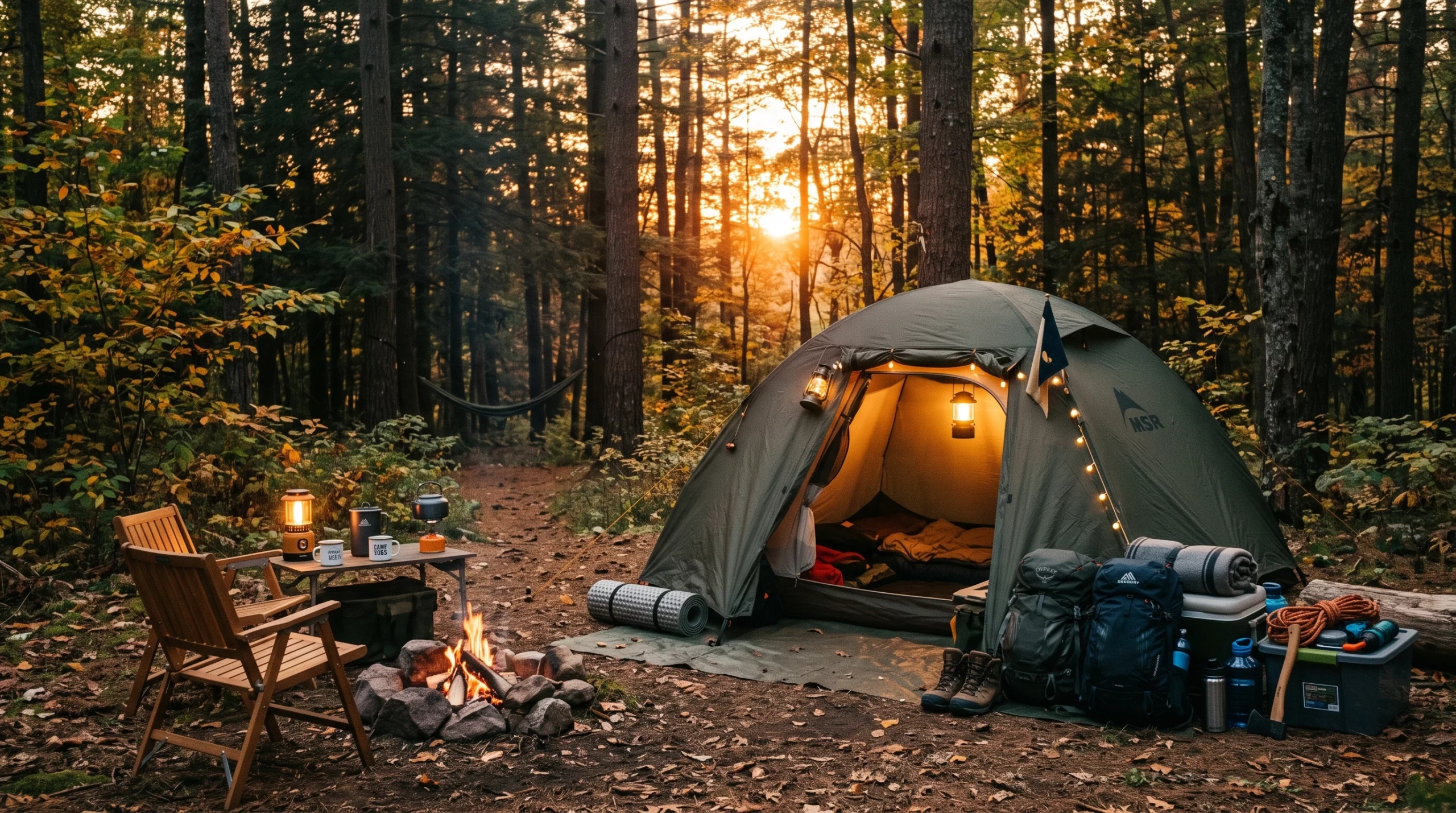
- Sleeping: Tent, sleeping bag, sleeping pad, pillow
- Cooking: Stove, fuel, lighter/matches, one pot/pan, plates/bowls/mugs, utensils
- Clothing: Layers for warmth, waterproof jacket, hiking shoes, extra socks, hat
- Safety: First aid kit, pocket knife or multitool, headlamp, portable power bank, bug spray, sunscreen
- Campsite: Camp chairs, folding table if needed, trash bags, rope or paracord, duct tape for emergencies
Common Beginner Camping Mistakes to Avoid
Most first-time camping mistakes can be avoided with good preparation. Overpacking, arriving after dark, skipping practice with camping gear, and ignoring the weather forecast are among the most common beginner errors.
Nothing ruins a first camping trip faster than a few classic mistakes. These are the most common camping mistakes to steer clear of:
- Packing way too much and getting overwhelmed by stuff
- Arriving at camp after dark. Super stressful every time
- Ignoring the weather forecast or not packing for rain/cold
- Planning complicated meals that are tricky without a real kitchen
- Buying expensive gear right away (borrow or rent if you can!)
- Not practicing how the tent and gear work at home
- Breaking campground rules and ending up frustrated or fined
- Leaving food outside and attracting critters to camp
- Wearing only cotton in cold weather (it doesn’t insulate when wet)
- Running out of drinking water. Always bring more than you think you need
- Forgetting a first aid kit and scrambling if there’s a scrape or cut
- Trying to schedule every minute instead of leaving time to relax
Camping Tips That Make Life Easier (Camping Hacks)
Small camping hacks can make your trip more comfortable and efficient. Simple tricks for packing, cooking, lighting, and organizing your campsite help reduce stress and improve your overall camping experience.
- Freeze water bottles to use as ice packs. Drink them as they thaw
- Keep a dedicated camping tub or box with your main gear always ready
- Pack clothing for each day in zip bags. Great for sorting dirty/wet stuff later
- Bring extra batteries or a small charging brick for lights and phones
- Headlamp plus hanging it from the tent equals handsfree light
- Store toilet paper in a resealable bag so it stays dry if it rains
- A small hand broom sweeps out dirt and leaves from your tent
- Switch your headlamp to red light mode at night to avoid waking others
- Microfiber towels dry fast. Pack a couple for swimming or rain
- An old doormat or towel at the tent entrance keeps mud outside
RoadVoyagist Reminder: Camping conditions vary depending on the season, weather, and destination. Always check local regulations, fire restrictions, and campground rules before you travel.
Join Road Voyagist
Subscribe to Road Voyagist and get updates on the latest posts, trip tips and more from Bella of Road Voyagist straight to your inbox.
Frequently Asked Questions
First-time campers often have questions about equipment, safety, costs, weather, and campground facilities. Understanding these basics helps you prepare with confidence and enjoy a more relaxed camping experience.
What should a first-time camper bring?
Stick with the essentials: tent, sleeping bag, sleeping pad, weather-ready clothes, simple cookware, water, light, and a small first aid kit. Add sunscreen, bug spray, and snacks you enjoy.
Is camping safe for beginners?
Camping is pretty safe, especially at established campgrounds. Follow basic safety (wildlife, fire, weather checks), and you’ll have a worry-free trip.
How many days is best for a first camping trip?
A weekend is perfect; one or two nights keeps things fun and manageable for new campers.
What’s the best camping season for beginners?
Late spring through early autumn is usually the best time for beginners. Warmer temperatures, longer daylight hours, and more predictable weather make learning basic camping skills much easier.
How many nights should my first camping trip be?
One or two nights is ideal for beginners. A short weekend trip gives you enough time to experience camping without feeling overwhelmed. It also helps you discover what gear works well before planning longer adventures.
Is camping expensive?
Camping can be affordable, especially if you borrow or rent gear. Avoid splurging on the fanciest equipment at first.
Should beginners rent or buy camping gear?
If you’re unsure whether camping will become a regular hobby, borrowing or renting equipment is usually the smarter choice. It allows you to test different gear before deciding what to purchase.
What food is easiest to cook while camping?
Simple meals such as pasta, one-pot dishes, wraps, sandwiches, instant oatmeal, and ready-to-cook taco kits are perfect for beginners. Preparing ingredients at home also saves time and makes cooking at the campsite much easier.
What is the best type of camping for beginners?
Go for one pot meals, pasta, sandwiches, or readytoeat options. Simpler is better; save the grilling experiments for after your first trip.
What should I do if it rains while camping?
Light rain doesn’t have to ruin your trip. Wear waterproof clothing, keep spare clothes in dry bags, and avoid storing wet gear inside your tent. A small tarp over your cooking or seating area can also make rainy days much more enjoyable.
Do I need expensive camping gear?
No. Many first-time campers borrow equipment from friends or rent gear before making any major purchases. Once you’ve completed a few trips, you’ll have a much better idea of which equipment is worth investing in.
How cold it get at night when camping?
Temperatures at campgrounds can drop significantly after sunset, especially near lakes, forests, or higher elevations. Even during summer, packing an extra warm layer and a suitable sleeping bag is always recommended.
Do campgrounds have electricity and running water?
It depends on the campground. Many developed campgrounds offer electricity, drinking water, restrooms, and showers, while more remote campsites may have few or no facilities. Always check the campground’s amenities before your trip.
What are the biggest mistakes first-time campers make?
The most common mistakes include overpacking, arriving after dark, skipping a practice tent setup, bringing overly complicated meals, forgetting weather-appropriate clothing, and leaving food unsecured around wildlife. Planning ahead helps avoid nearly all of these issues.
RoadVoyagist Tip: Your first camping trip isn’t about getting everything perfect, it’s about learning what works for you. After each trip, make a quick note of what you used, what stayed packed, and what you wished you’d brought. Your next adventure will be even easier.
Final Thoughts
Your first camping trip is about learning, building confidence, and enjoying the outdoors, not achieving perfection. Every trip teaches valuable lessons that make future camping adventures easier and more enjoyable.
Looking back, my first camping trip wasn’t perfect. I forgot a few things, overpacked, and made a couple of rookie mistakes, but none of them stopped me from enjoying the experience. In fact, those little mishaps are part of what made the trip memorable. Every camping adventure teaches you something new, and before long you’ll have your own collection of tips to share with family and friends.
Start easy, don’t stress gear, and use each trip to build up your experience and confidence. Before you know it, you’ll be the one telling the newbies all your best camping hacks!
Happy travels!
Recommend reading:
https://roadvoyagist.com/top-camping-gadgets-for-road-trips/
Bella Hartwell
I’m Bella Hartwell, a travel enthusiast who has organized multiple road trips.
I share hands-on tips, tested gear lists, and personal stories to help others travel smarter.
The best kind of freedom starts on the open road.